
















Story Highlight
– NICE committee reviews in-situ liver preservation procedure.
– NRP improves donor liver viability after circulatory death.
– Current method leads to 58% unused donated livers.
– Wider NRP use could enable 150 more transplants annually.
– Draft guidance seeks consultation before final recommendations.
Full Story
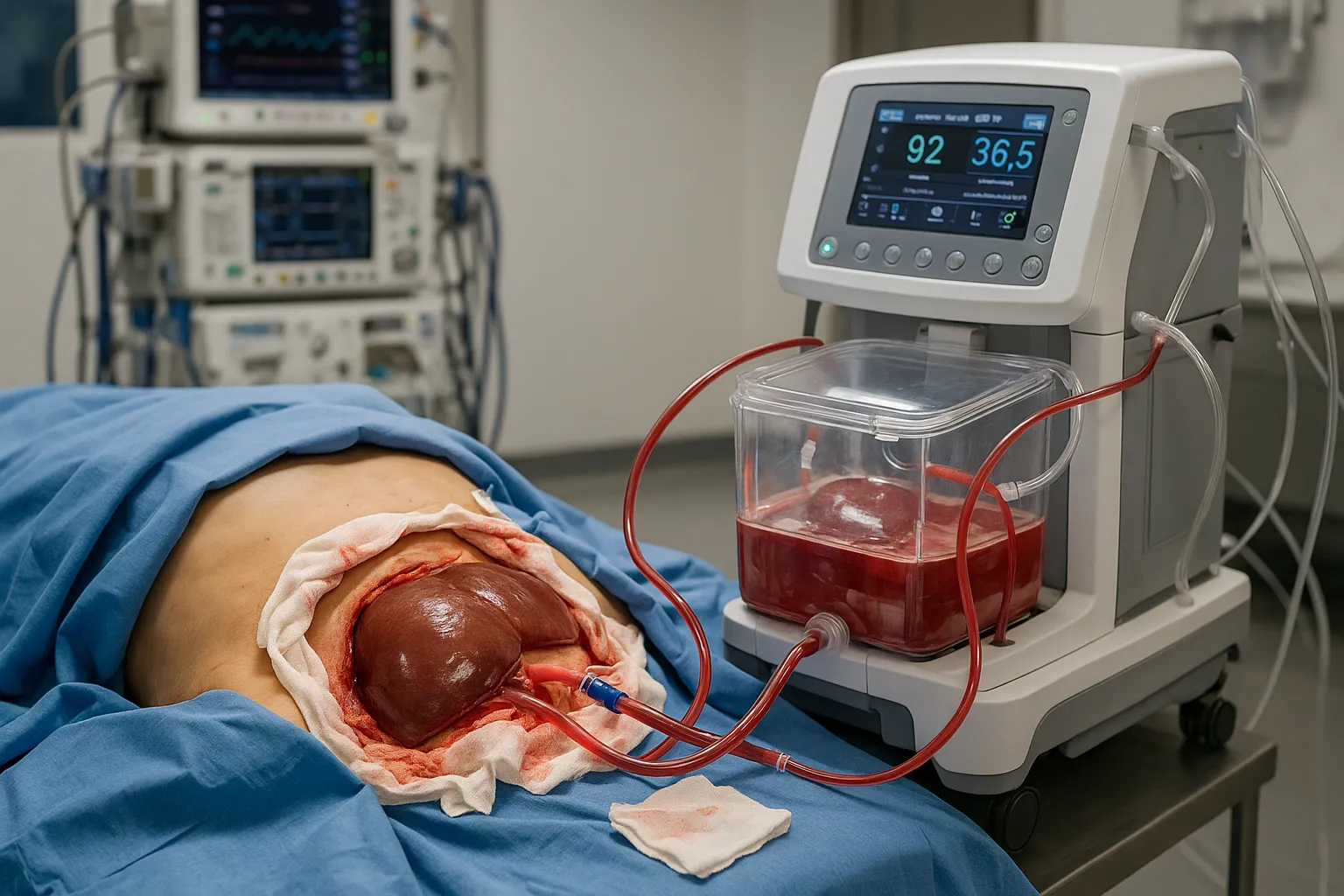
A pivotal development in organ transplantation has emerged, as an independent NICE committee has undertaken a thorough evaluation of a novel procedure aimed at enhancing the viability of donated livers. This technique, known as in-situ abdominal normothermic regional perfusion (NRP), involves the use of a sophisticated machine that circulates oxygenated blood through the liver while it remains in the donor’s body for approximately two hours. This innovative approach is designed to mitigate damage sustained by the liver, offering an opportunity for it to recover while under observation, enabling medical teams to perform essential assessments before the organ is procured.
The prevailing practice involves static cold storage, wherein donor livers are chilled and stored in ice immediately post-retrieval. While this method has been the standard for many years, it has significant downsides—most notably, the cessation of blood flow and oxygen that can lead to irreversible injury to the organ. In contrast, the recent recommendations from the NICE committee represent a significant advancement in organ preservation techniques.
Concurrently, NICE has also provided draft guidance advocating the use of specialist liver preservation machines designed for external storage. These machines facilitate the pumping of a specially formulated solution through the liver’s blood vessels, thereby preserving its functionality and integrity prior to transplantation. This dual approach marks a milestone in the UK’s organ transplant strategy, focusing on maximising the use of donor organs that might otherwise be discarded.
Statistics reveal a concerning trend: between April 2024 and March 2025, 727 livers were donated following circulatory death in the UK, yet only 309 of these organs were successfully transplanted. This translates to a discouraging 58% of donated livers going unused, primarily due to fears regarding potential damage from interrupted blood flow. As of the end of March 2025, the waitlist for liver transplants in the UK included 584 adults, highlighting the urgent need for improved organ utilisation.
Experts from NICE suggest that broader implementation of NRP could result in approximately 150 additional liver transplants annually, a significant figure in the context of organ shortages. Dr Anastasia Chalkidou, who serves as the director of the HealthTech programme at NICE, emphasised the critical need to address the high rates of unused donated livers. She stated: “Too many donated livers are currently going unused, and too many people are dying while waiting for a transplant. The evidence shows this procedure works as well as, or better than, existing methods and has a good safety record.”
The assessment from NICE was unprecedented, as it marks the first occasion the committee has evaluated NRP for any organ. Both Dr Chalkidou and Professor Rick Body, the chair of NICE’s Interventional Procedures Advisory Committee, have expressed confidence in the procedure’s benefits. Professor Body noted that rigorous evidence from numerous observational studies indicates consistency in findings that favour NRP over traditional methods, particularly in its ability to provide an objective assessment of liver function prior to removal. This capability is significant in promoting equitable access to viable organs for transplantation, reducing variations in clinical decision-making processes across the country.
Personal narratives highlight the potential impact of these advancements. Jim Kilpatrick, a liver transplant recipient from Donaghadee in Northern Ireland and chair of the Royal Victoria Hospital Liver Support Group, highlighted the importance of expanding avenues for viable organ retrieval. He remarked on the frustrations faced by patients who often wait several years for a transplant, expressing hope that the introduction of more usable livers could be life-changing. “Knowing that there is another opportunity for a liver which might previously have been deemed unusable is a huge step forward,” he stated, reinforcing the significance of technological progress in organ transplantation.
Similarly, Vanessa Hebditch, the director of policy and communications at the British Liver Trust, expressed optimism about the draft guidance, emphasising the desperate situation of patients with advanced liver disease. “Too many people with advanced liver disease spend months living with uncertainty while waiting for a suitable donor liver, and sadly every year people die whilst waiting for a life-saving transplant. This is encouraging because it supports an innovative approach that could help make more donated livers be viable and available for transplantation,” she said.
At present, NRP is employed at eight of the ten organ retrieval centres across the UK, yet it is utilised consistently in only about three of these locations. The inconsistency in access to this method indicates that a patient’s opportunity to benefit from NRP can significantly depend on their geographical location. NICE’s guidance aims to rectify this inconsistency, allowing transplant teams to employ the procedure more uniformly, thereby fostering increased fairness in the allocation of donor livers.
Looking forward, NHS Blood and Transplant has announced plans to integrate NRP as standard practice by 2026, with funding support from the Department of Health and Social Care alongside the health departments of Scotland, Wales, and Northern Ireland. Anticipations are set for the implementation of NRP to be available in all ten abdominal retrieval centres by 2027.
The draft guidance is currently under consultation, inviting observations from patients, families, healthcare professionals, and the public, which will conclude on 27 July 2026. Subsequently, a second committee meeting is planned for 10 September 2026 if necessary, prior to the final guidance publication later in the year. This collaborative approach underscores the importance of community input as the healthcare sector strives to enhance organ transplant capabilities for the benefit of countless patients awaiting life-saving procedures.
Our Thoughts
The implementation of in-situ abdominal normothermic regional perfusion (NRP) offers a progressive approach to optimizing liver transplants; however, prior to this, the high percentage of unused donated livers indicates systemic shortcomings in current practices. Key safety lessons include the necessity for consistent adoption of innovative techniques like NRP across all organ retrieval centers to ensure equitable access and utilization of donor organs.
Current UK legislation under the Health and Safety at Work Act 1974 may have been breached by failing to employ best practices in donor liver preservation, which could have mitigated the risk of liver damage due to interrupted blood flow. The variability in the application of preservation techniques across different centers could contravene principles of safety and patient care, potentially leading to avoidable deaths.
To prevent similar incidents, it is essential to standardize training and protocols related to donor organ preservation techniques, ensuring that all medical facilities comply with the latest safety standards. Enhanced communication and collaboration among healthcare providers could further foster a culture of safety and innovation, ultimately increasing the number of viable organs for transplantation.