















Story Highlight
– Meta introduces new safety tools for vulnerable users.
– Parent Alerts notify of teens discussing self-harm risks.
– Notifications require manual review before being sent.
– Global rollout planned for Instagram Parental Supervision.
– Emergency response system developed for imminent crises.
Full Story
Meta has announced significant updates to its digital safety features, focusing on better protection for younger users in various international regions. This change aims to enhance how the company’s systems handle sensitive topics, particularly those surrounding mental health and personal safety, as scrutiny from regulators and advocacy groups intensifies.
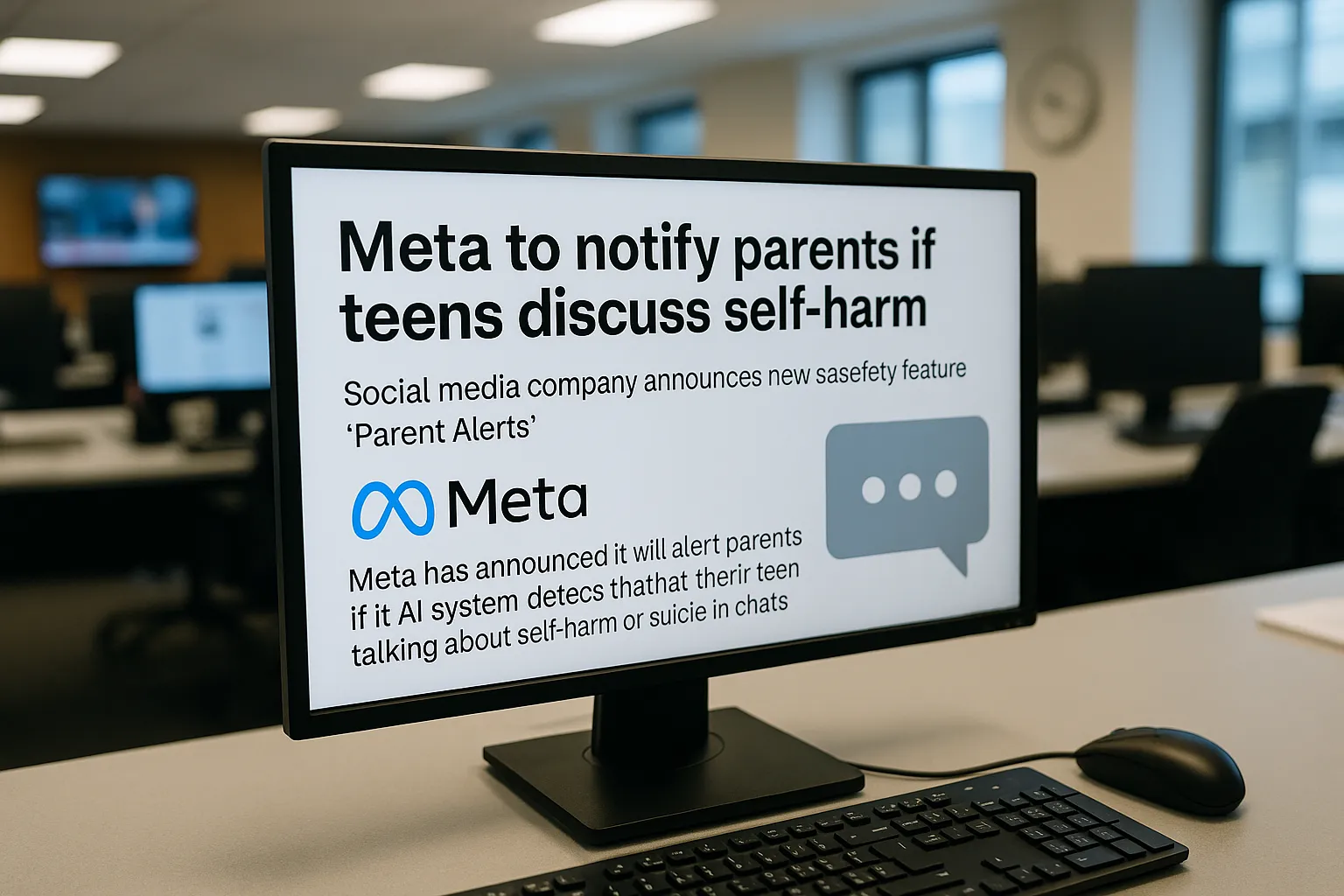
The cornerstone of this new initiative is the introduction of “Parent Alerts.” Under this scheme, Meta will notify parents if their teenage children discuss issues related to self-harm or suicidal thoughts during engagements with the company’s AI chatbot. In an effort to ensure safety, if conversations are deemed to contain potential threats of self-injury, Meta is also developing a protocol that will directly involve emergency services.
The announcement made on Thursday reflects a broader trend in the technology sector, as companies face increasing demands from families and regulatory bodies to bolster protections for vulnerable populations online. By developing a dedicated AI tool that detects discussions of self-harm among teenagers, Meta becomes part of a larger conversation about the responsibilities of tech firms in safeguarding users dealing with mental health crises.
Meta’s blog post emphasized the sensitivity surrounding these alerts. “We understand how distressing these alerts may be for a parent to receive. That’s why, as we continue to improve our detection, all chats flagged by our AI will be manually reviewed before an alert is sent,” the company stated. This means that the system will leverage human oversight to assess flagged conversations to ensure that alerts are only sent when necessary. The policy, which aims to be cautious in ambiguous situations, may occasionally result in parents being notified even without a clear cause for concern—a decision the company believes is warranted given the risks involved.
Current capabilities already allow families in the UK, US, Australia, and Canada who are using Instagram’s Parental Supervision function to receive alerts regarding their teenager’s discussions about self-harm. A wider rollout to other regions is anticipated by the end of 2026, broadening the reach of these protective measures.
This latest addition complements existing features where parents receive alerts about their children’s repeated searches for self-harm or suicide-related content on Instagram. Additionally, the platform allows parents to review weekly summaries that cover discussions their child has had with Meta’s AI, thereby offering further insights into potential mental health concerns.
To enhance the protective landscape for teenagers, Meta has also extended its ‘Limited Content’ setting to the AI chatbot experience, which imposes tighter restrictions on the conversations that minors can have. Previously, the AI was already programmed to block discussions of romantic, sexual, or alcohol-related topics. With this expansion, the AI will also refuse to engage in a broader spectrum of subjects deemed inappropriate for younger users.
In a parallel development, Meta is working on a system designed to facilitate intervention during critical moments, such as potential suicide crises. Building on already established safety features on Facebook and Instagram, which have prompted over 19,000 wellness checks globally, the new system is being crafted with input from 75 mental health professionals focused on youth care. Meta’s collaboration with its AI Wellbeing Expert Council, the Suicide and Self-Harm Advisory Group, and youth advisors has played a critical role in refining the feature. This professional insight has been vital in training the AI to effectively validate and acknowledge the emotions expressed by teenagers, ensuring that conversations are handled with the sensitivity needed during such discussions.
The integration of these safety features marks a significant evolution in how Meta approaches digital interactions among vulnerable groups. As discussions surrounding mental health continue to gain prominence, the emphasis on responsible usage of AI tools reflects a commitment to addressing the challenges associated with teen interactions in the digital ecosystem.
With this initiative, Meta aims not only to safeguard teenagers online but also to set a precedent for other companies in the tech industry to follow, as they navigate their own policies regarding vulnerable users. The changes emerging from those dialogues raise significant questions about how conversations around mental health should be managed, monitored, and supported in a technology-driven society that increasingly relies on artificial intelligence.
In a world where social media plays an integral role in young people’s lives, the importance of maintaining a safe online environment has never been more crucial. As Meta continues to evolve its policies and practices, the commitment to addressing the emotional wellbeing of its users stands as a priority, reflecting a growing acknowledgment among tech companies of their role in supporting mental health within their platforms.
Our Thoughts
The introduction of Meta’s “Parent Alerts” highlights significant safety concerns relating to the mental health management of young users. To mitigate risks associated with such interactions, Meta should have undertaken a comprehensive risk assessment as per the Management of Health and Safety at Work Regulations 1999. This would ensure that the potential psychological impacts of AI interactions on teenagers are thoroughly evaluated.
Key lessons include the necessity for robust training and monitoring systems for AI algorithms to responsibly handle sensitive topics, complying with the Health and Safety at Work Act 1974, which mandates providing a safe environment for users. There is also a need for clarity in communication about the distress such notifications may cause for parents, potentially violating the principle of duty of care outlined in UK health and safety legislation.
Additionally, improving user privacy and data handling practices is critical, as per the General Data Protection Regulation (GDPR), especially when dealing with vulnerable groups. Comparable incidents could be prevented by implementing stricter oversight mechanisms and continuously updating protocols based on feedback from mental health professionals.