












Story Highlight
– Nurses are collapsing from heat while treating patients.
– Hospital conditions exceed 30C, impacting patient welfare.
– Calls for improved ventilation and air conditioning systems.
– NHS seeking £100m for building maintenance upgrades.
– Health Secretary emphasizes heatwave preparedness measures needed.
Full Story
Nurses in the UK are facing severe challenges due to soaring temperatures during shifts, with reports of alarming health incidents and deteriorating working conditions. As the country approaches what is anticipated to be its warmest summer on record, the Royal College of Nursing (RCN) has raised significant concerns regarding the well-being of its members and their patients.
The RCN has documented a range of distressing experiences from nursing professionals responding to its advice line. Chief Executive and General Secretary Professor Nicola Ranger expressed grave concern, stating: “When nursing staff are collapsing, feeling dizzy, sick or even being admitted to the very hospitals they work in because their workplaces cannot handle the heat, it shows just how badly they are being failed.” Some nurses have reported collapsing from dehydration while working long shifts in wards lacking adequate ventilation.
The situation is compounded for pregnant nurses and those with pre-existing health conditions, with reports indicating that excessive heat has led some to experience seizures. An alarming testimony included a nurse commenting on the extreme workplace conditions, stating the environment was “not fit for humans.” Another echoed this sentiment, describing their surroundings as “unbearably hot.”
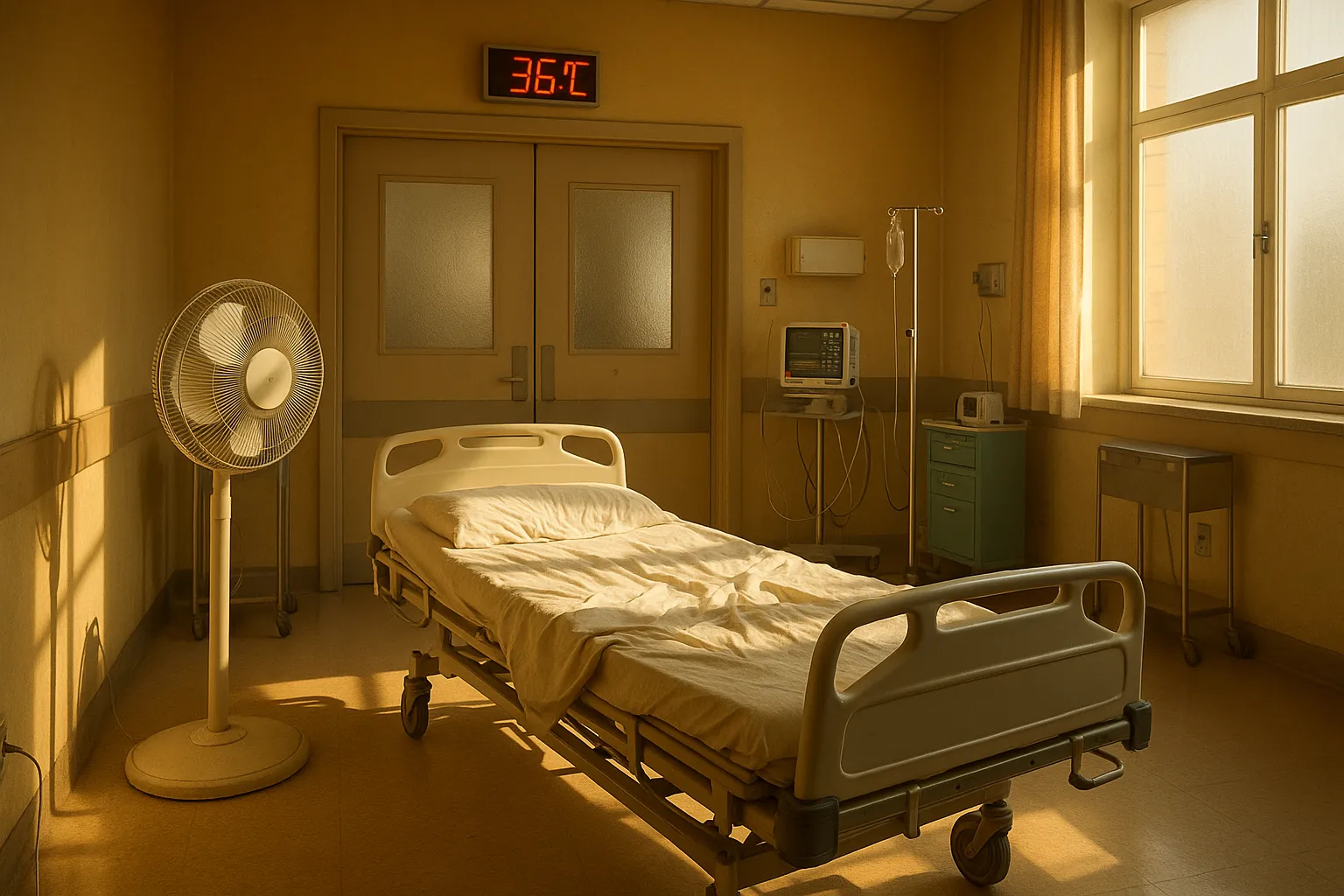
Numerous incidents point to the inadequacy of infrastructure in many healthcare facilities, where malfunctioning air conditioning and inadequate ventilation exacerbate the heat. Some nurses are unable to even open windows, compounding their discomfort during shifts. One nurse mentioned working in an area where thermometer readings exceeded 36C, leading to feelings of nausea, dizziness, and faintness. A community health centre nurse remarked: “It gets to the point you dread going to work, especially when wearing PPE and providing patient care. We drip with sweat from head to toe.”
Nurse feedback indicates growing anxiety over the welfare of patients. One reported that heat significantly impacts recovery for surgical patients. Another highlighted the risks posed to elderly individuals, expressing that staff are reaching their limits with the lack of support from higher management.
Professor Ranger called for urgent action from employers, urging them to uphold their legal responsibilities to create safe working conditions. This entails addressing heat-related risks through measures such as enhancing ventilation, installing air conditioning systems, facilitating access to hydration, and ensuring that suitable uniforms are provided, especially for pregnant workers or those with health vulnerabilities.
Ranger emphasised that these issues should serve as a wake-up call. She noted the broader impact of inadequate NHS infrastructure, stating, “Swathes of the NHS and social care estate are in disrepair following decades of underinvestment and are utterly unprepared for extreme temperatures. It’s becoming an impossible and inhumane place to work or receive care, with vulnerable patients, including the elderly and those recovering from surgery, receiving care in temperatures that risk making them sicker. It’s unacceptable.”
In response to these mounting pressures, the NHS has been advised to approach the effects of increasing heatwaves with the same level of preparation it reserves for winter conditions. Health Secretary Yvette Cooper has reiterated the importance of this proactive stance.
Matthew Hopkins, director at the NHS Alliance ambulance and acute network, mentioned the pressing need for increased capital funding from the Government to address the maintenance woes of aging hospital buildings. Speaking on the NHS Alliance’s Health on the Line podcast, he explained, “A lot of our members that are running hospitals that are very old and where infrastructure is really under pressure are carrying significant levels of backlog maintenance… that totals, in some cases, more than £100m worth of cost.” He further noted that hospital boards must regularly weigh the risks of crucial repairs, such as fixing roofs versus investing in cooling systems that would improve patient and staff comfort.
The necessity of cooling solutions in healthcare facilities has been underscored by the Climate Change Committee of MPs, which has urged the Government to ensure that hospitals and care homes implement adequate cooling measures by 2035. These recommendations cover a spectrum of solutions from shading systems to air conditioning installations, aiming to future-proof against severe heat.
Ruth Wilkinson, head of policy at the Institution of Occupational Safety and Health, also commented on the difficulties faced by indoor workers such as nurses. “Indoor workers, like nurses, can find it just as challenging to work in extreme heat as outdoor workers,” she noted, highlighting factors such as poor ventilation and inadequate cooling systems that are often characteristic of outdated building designs. Wilkinson pointed out that heat stress can escalate risks, making it harder for individuals to work efficiently and safely. “Employers can take proactive steps to manage these risks and support workers. These can include adjusting work hours, providing cooling stations, and encouraging hydration,” she advised.
The situation underscores a critical need for the healthcare sector to adapt and evolve in response to the dual challenges of climate change and public health. As temperatures rise, both the well-being of nursing staff and the health of patients depend on immediate and effective interventions that address these concerns head-on.
Our Thoughts
The reported incidents involving nurses collapsing due to excessive heat highlight significant breaches of UK health and safety legislation, specifically the Health and Safety at Work Act 1974 and the Workplace (Health, Safety and Welfare) Regulations 1992. These regulations require employers to ensure the health, safety, and welfare of employees, including providing a comfortable working environment that mitigates risks like extreme temperatures.
To prevent future occurrences, hospitals and health care facilities should have implemented the following measures: regular risk assessments to address environmental conditions, installation of effective air conditioning and ventilation systems, and provision of adequate hydration facilities. Furthermore, ensuring that uniforms are suitable for extreme heat conditions could have reduced risks.
The Royal College of Nursing’s concerns reflect an urgent need for investment in infrastructure to address these issues, especially in older hospital buildings. In preparation for extreme temperatures, compliance with guidelines to manage heat stress and provide suitable working conditions must be prioritized, thereby safeguarding both staff and patient welfare.