












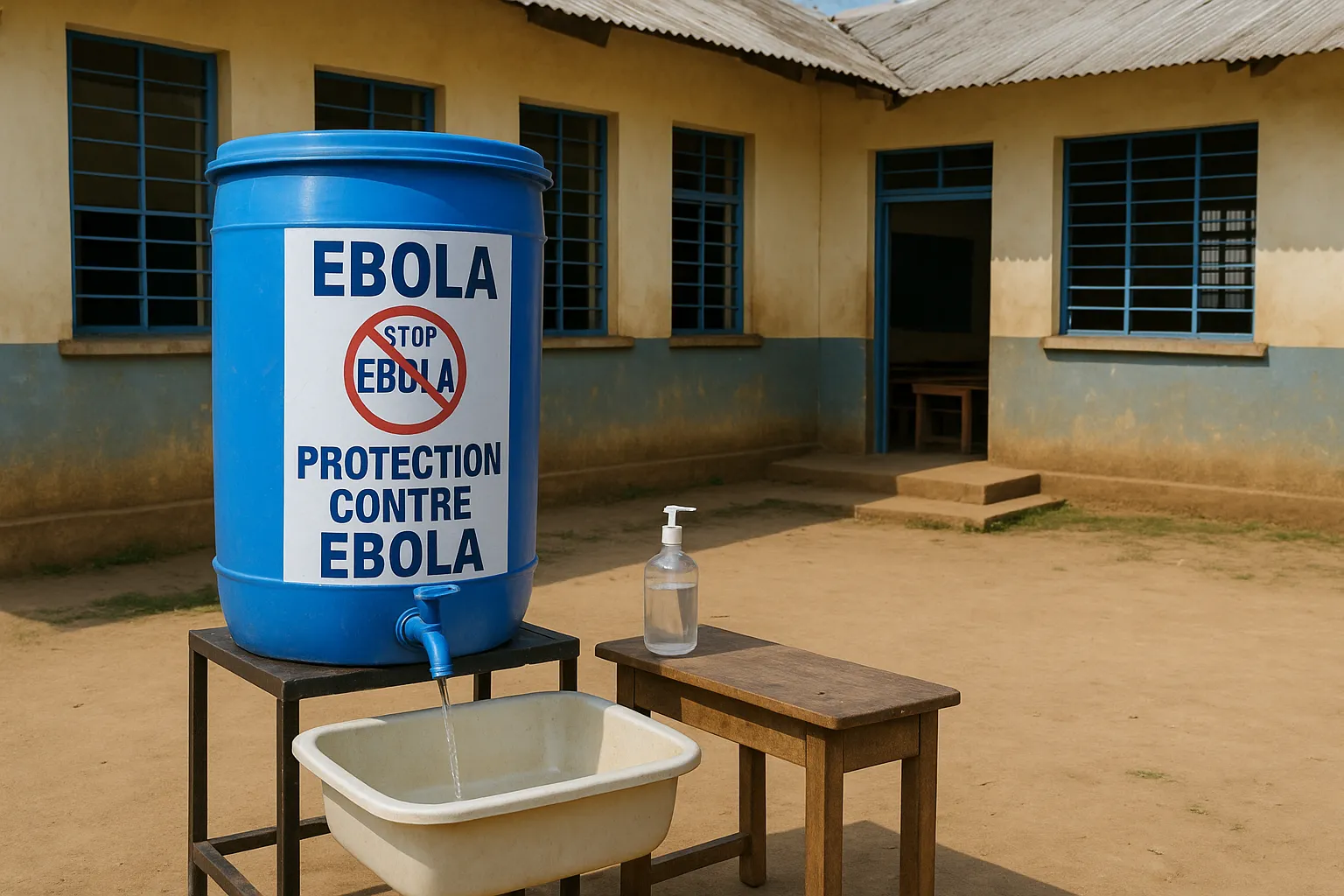
Story Highlight
– Parents and teachers call for school reopening delay.
– Congo’s Ebola outbreak has 5,713 confirmed cases.
– Children under 4 face 60% case-fatality rate.
– Authorities urged to prioritize health over school resumption.
– Community trust and acceptance crucial for outbreak control.
Full Story
Authorities in Congo face increasing pressure from parents and educators to reconsider the imminent reopening of schools amid a rapidly escalating Ebola outbreak. The situation is particularly dire in Ituri province, where the outbreak has been described as the most severe in the recorded history of the disease, with a staggering 5,713 confirmed infections and 2,744 fatalities reported by health officials.
Schools are scheduled to resume operations across the country on September 1. However, concerns voiced by parents and educators in the affected regions underscore a persistent unease about the safety of children in light of the continuing health crisis. The available data indicates that children aged four and under are particularly vulnerable, experiencing a case-fatality rate of 60%, making any decision regarding school reopening even more critical.
Fazila Rebecca, a teacher in Bunia, the capital of Ituri, expressed the sentiments of many when she stated, “We want to resume classes, but not at the cost of our lives.” She underscored the risks associated with returning to classrooms while the outbreak prevails and protective measures appear insufficient.
In a meeting convened on Tuesday, the local teachers’ union in Bunia called on the authorities to thoroughly evaluate the Ebola crisis before implementing any plans to return to school. Budju Lobo Isaac, a representative of the union, articulated their stance, saying, “We are not opposed to the resumption of classes, but we believe that the health and safety of teachers and students must be a priority.”
Despite these calls for caution, Ituri’s authorities have yet to respond to these concerns, leaving many feeling anxious about the potential implications of reopening schools during such precarious times.
The spread of Ebola in eastern Congo has been exacerbated by a confluence of compounding factors, such as ongoing insecurity, displacement of populations, strikes among health workers, and considerable movement within communities. The World Health Organization (WHO) has classified the outbreak as uncontrolled, indicating that its trajectory may soon surpass that of the devastating West Africa outbreak from 2014 to 2016, which resulted in over 11,000 deaths.
Although the current Ebola outbreak was officially declared in mid-May, it is believed to have been circulating since February, spreading from three health zones to nearly 60 and with the majority of cases occurring outside of monitored contact networks. This unregulated community transmission complicates containment efforts significantly.
A further challenge lies in the fact that the strain of the virus causing this outbreak, known as the Bundibugyo virus, currently does not have any approved vaccines or treatments. Nonetheless, clinical trials for potential vaccines and therapies are being conducted in the region, yet the availability of results and effective measures remains uncertain.
Control measures implemented by the government—such as restrictions on public gatherings, social distancing guidelines, and airport closures—have profoundly affected everyday life in the six provinces impacted, particularly Ituri, which has been further destabilized by ongoing violence from rebel groups. While the government has initiated some health and sanitary provisions in affected areas, advocacy groups insist that more action is necessary to foster trust within the community.
“There are substantial practical challenges, but community acceptance of health interventions is vital,” commented Greg Ramm, the director for Save the Children in Congo. He emphasized the urgent need for comprehensive information and resources, aiming to ensure that every school, teacher, and family can navigate the reopening safely.
In the heart of Bunia’s central market, parent Espérance Dz’venga is among many grappling with the dilemma of school reopening. While she hopes for her children to return to their classrooms, her priority remains their health. “As a parent, I want to see my children in school, but — like many other parents — what I want most is for them to come home healthy,” she stated. Her concerns reflect a shared anxiety about sending children back to a potential exposure site, fearing that they could return home carrying the illness.
As the situation continues to unfold, families and educators remain caught in a web of hope for education to resume and an equally fervent desire for safety and health amidst an escalating crisis. Advocates and community leaders now look to the authorities for decisive actions that will protect lives while addressing the indispensable need for education during these tumultuous times.
In this environment of uncertainty, the balance between safeguarding health and ensuring the continuity of education remains a complex yet crucial challenge. The community’s call for cautious deliberation resonates deeply, highlighting the profound interconnectedness of health and education in these perilous times.
Our Thoughts
The article highlights the urgent health risks associated with the ongoing Ebola outbreak in Congo, particularly affecting schools in the Ituri province. To avoid such a situation, several preventive measures could have been implemented. Firstly, under the Health and Safety at Work Act 1974, authorities should have conducted thorough risk assessments prior to the planned reopening of schools to ensure the health and safety of students and staff.
Engagement with local communities to build trust and ensure compliance with safety protocols is crucial. This aligns with the Management of Health and Safety at Work Regulations 1999, which mandate sufficient information, instruction, and training regarding risks. Additionally, given the rapidly spreading virus and high transmission rates, the decision to reopen schools should have been reconsidered until containment measures were effectively established to mitigate risks.
Increasing communication and resources about protective measures could have supported safer conditions. Ultimately, the focus on community involvement and adherence to regulations could significantly aid in preventing similar outbreaks and ensuring safer school environments during public health crises.