
















Story Highlight
– Duke and Duchess of Sussex arrive in Birmingham, UK.
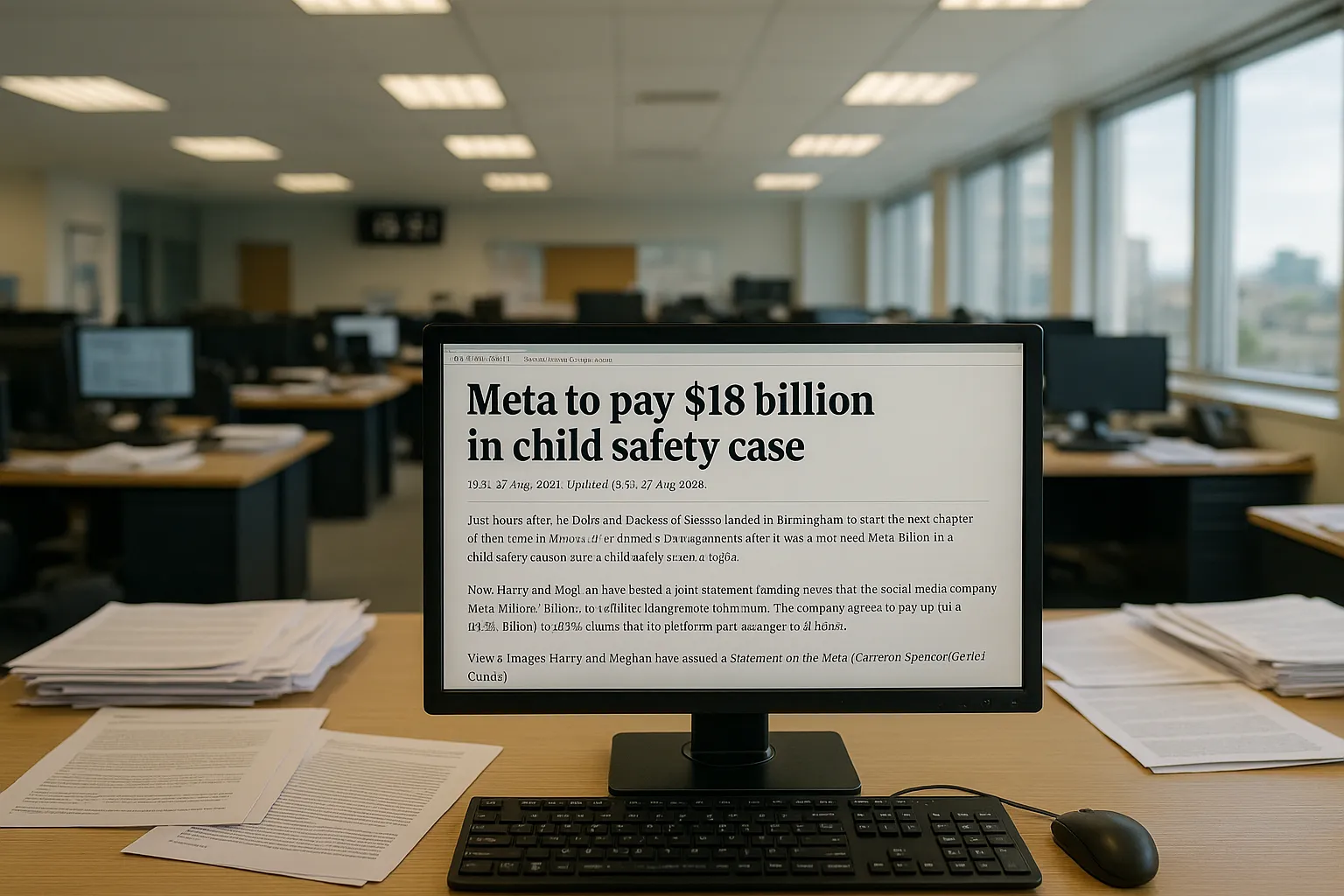
– Meta to pay up to $18 billion for child safety.
– Harry and Meghan express disappointment in Meta’s settlement.
– New rules include social media usage restrictions for children.
– Couple advocates for stricter online regulations for kids.
Full Story
Prince Harry and Meghan Markle, the Duke and Duchess of Sussex, have made headlines once again as they arrived in Birmingham to begin a new chapter in their lives. Just hours after their landing, the couple issued a joint statement reacting to significant news regarding child safety online.
On a Wednesday afternoon, the Sussexes, accompanied by their two children, Archie, aged seven, and Lilibet, aged five, touched down at Birmingham Airport. This return to the UK follows their recent announcement that they would be moving back to Harry’s home country. Excitement surrounded their arrival as they settled in for what is anticipated to be a long-term stay, with their children set to begin school in September.
As part of their first public pronouncement since arriving, Harry and Meghan addressed the recent settlement reached by Meta, the parent company of platforms such as Facebook and Instagram. Meta has agreed to pay up to $18 billion (£13.3 billion) as part of an agreement to resolve claims that its services put children at risk. The couple’s statement condemns the company’s decision to negotiate a settlement instead of facing trial, which they believe could have led to greater accountability.
In a statement posted on their official website, the Sussexes expressed their disappointment that Meta was able to escape a trial by opting for a monetary settlement. They stated, “The historic trial against Meta over claims that its products endanger children has resulted in a settlement in which they will pay up to $17.1 billion (£12.5 billion). The settlement requires Meta to pay financial penalties for violating federal child privacy and state consumer protection laws.” They emphasised that Meta deliberately chose to settle as a means of avoiding a trial that could have held them accountable for their actions.
Harry and Meghan highlighted the financial implications of the settlement by noting that Meta has the resources to pay such amounts due to its longstanding data-extraction business model. They claimed, “Reports estimate Meta will make the equivalent of the $17 billion payout back in profit in the next 30 days.” Their statement points towards a broader concern regarding the practices these tech companies have employed, particularly in relation to vulnerable users such as children.
The couple outlined several measures that Meta has agreed to implement as part of this settlement, illustrating their commitment to enhancing online safety for younger users. Notable among these changes is the restriction of usage for minors between midnight and 6 am, aimed at reducing potential harm. Furthermore, the company will eliminate notifications during school hours and remove harmful “beauty filters” believed to negatively impact mental health. Additionally, there will be a move towards providing users with an optional chronological feed, allowing individuals to bypass algorithm-controlled content recommendations.
In referencing the magnitude of the situation, the Sussexes stated: “This result clearly signals that Meta and social media companies understand they are up against an immovable force of parents, survivors, and advocates who will not back down until we see change in how our young people interact with online spaces.” They viewed the settlement as a noteworthy step forward for advocates of safer online environments, although they noted that it is far from a resolution to the problem.
The Duke and Duchess of Sussex have consistently been vocal supporters of stronger regulations surrounding children’s interactions with social media. Earlier this year, Harry and Meghan commented on a governmental initiative in the UK aimed at banning certain social media platforms for users under the age of 16, labelling it “a welcome step forward.” However, they insisted that additional measures are necessary to comprehensively protect children from harmful online content.
In a recent speech at the opening of the Lost Screen Memorial in Geneva, Meghan described the issue of children’s online safety as “a public health issue,” urging global leaders to take more decisive actions. This solemn acknowledgment of the dangers posed by digital environments reflects the couple’s ongoing commitment to advocating for children’s well-being.
During a previous campaign for social media reforms addressing children’s safety, the couple shared personal insights regarding their own experiences as parents. At the World Mental Health Day Festival in October, Meghan discussed the anxiety they face over online risks, highlighting the importance of protecting their children as they grow older.
As the Sussexes continue to establish their lives in the UK, local engagements and advocacy work are likely to feature prominently in their plans. Their arrival was marked by a notable absence of taxpayer-funded security, a departure from their previous roles as working royals. Instead, they relied on a private security team, underscoring their pursuit of a more independent lifestyle.
With their children now enrolled in British schools, the Sussexes are poised to immerse themselves in their community. As they embark on this new phase in their lives, their ongoing campaign for child safety online remains a core aspect of their public persona, reflecting their dedication to addressing issues that impact families and children worldwide.
As the conversation around online child safety continues to evolve, Harry and Meghan’s contributions to the dialogue may prove influential in shaping future policies and practices in the UK and beyond. Their return to Britain does not merely signify a personal journey for the family but highlights their commitment to advocating for critical social issues affecting the next generation.
Our Thoughts
The situation regarding Meta’s settlement over child safety issues highlights significant gaps in safety regulations in the context of online environments. Firstly, there needs to be increased enforcement of the UK’s Age Appropriate Design Code under the Data Protection Act, which mandates that services likely to be accessed by children must meet specific safety standards. More proactive measures could include mandatory safety audits and stringent penalties for non-compliance.
The incident underscores the necessity of comprehensive legislation to protect children from harmful content online, reinforcing the UK Government’s Online Safety Bill. By setting clearer guidelines and enforcing accountability on social media companies, many risks could be mitigated.
Further, companies like Meta must adopt robust risk assessment protocols to evaluate the impact of their platforms on child users, aligning with the Health and Safety at Work Act 1974, which emphasizes the welfare of all users, especially vulnerable populations.
Collaboration between tech firms, regulators, and advocacy groups could facilitate better prevention strategies against similar incidents, ensuring that children are safeguarded from potential online harms. Overall, the lessons suggest a critical need for concerted efforts to bridge regulatory gaps and enhance child online safety standards.