















Story Highlight
– UK considers legal sale of CBD products soon.
– FSA backs three CBD products for consumer sale.
– Products must carry warning labels and intake limits.
– Market value of CBD products estimated at £386 million.
– FSA’s safety assessment differs from European regulators’ limits.
Full Story
The landscape of cannabis-derived products in the UK is poised for significant transformation, as food regulatory authorities have recently endorsed the sale of cannabidiol (CBD) products. This landmark decision represents a pivotal shift towards clarity within a market that has for years been ensnared in a complex regulatory framework.
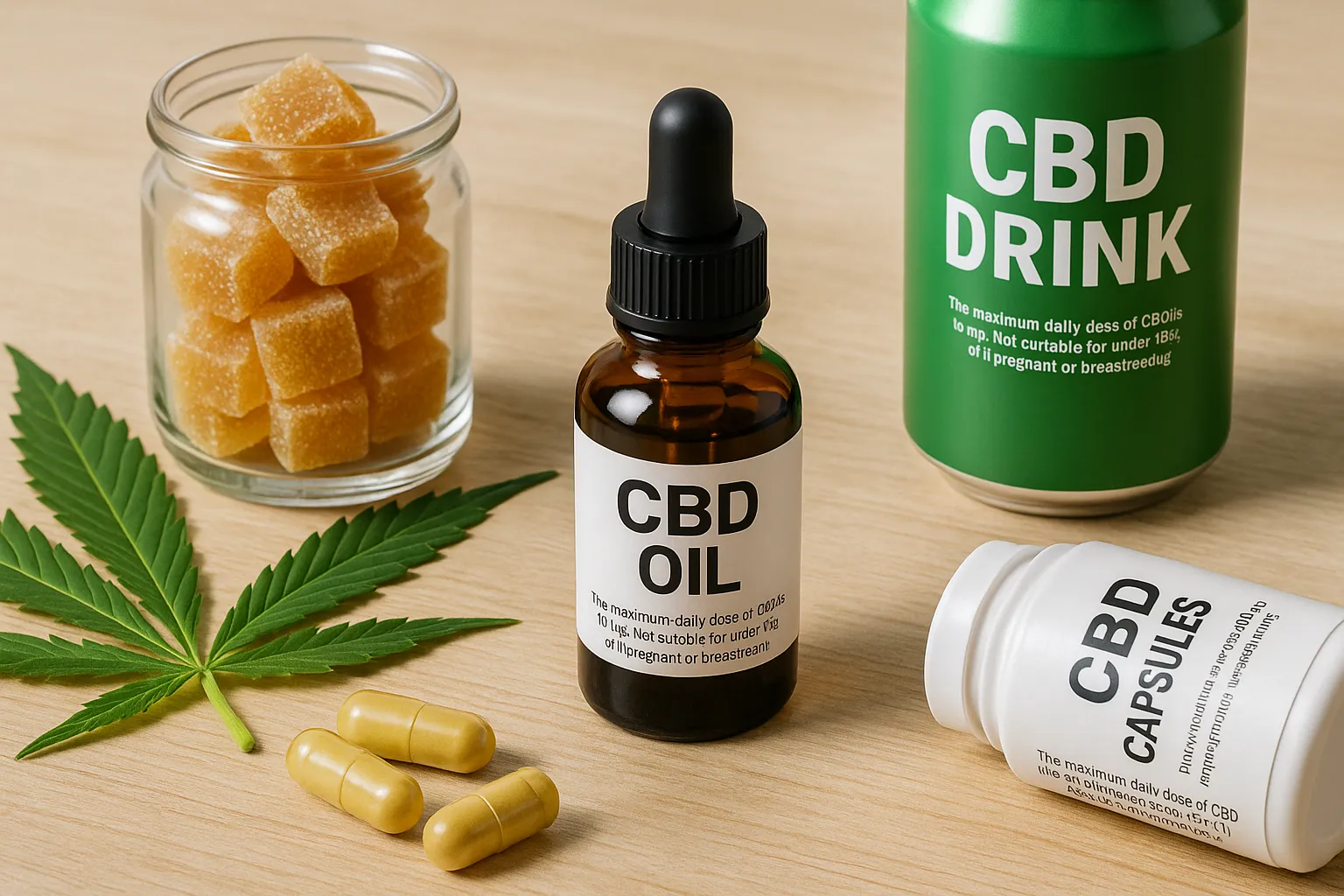
The Food Standards Agency (FSA) is preparing to recommend the legal approval of three specific CBD products, marking them as the first to successfully navigate the rigorous safety assessment process. If endorsed at an upcoming board meeting, these products will be categorised as “novel food.” This classification will allow for the lawful sale of CBD oils, confections, beverages, and dietary supplements, further normalising their presence in retail spaces across the nation.
Under this new regulatory regime, products will come with clear labelling, including warnings that advise consumers of the general limit of 10mg of CBD per day. Additionally, labels will highlight that these products are not suitable for individuals under 18, pregnant or breastfeeding women, and those who are immunosuppressed or attempting to conceive.
The three products under consideration—designated RP7, RP350, and RP427—are noted for their high purity levels, containing at least 98% CBD. They are expected to serve as foundational ingredients, enabling the launch of a diverse array of new CBD-infused items. Some estimates suggest that the UK CBD market currently holds a valuation of approximately £386 million, fueled by rising consumer interest in purported benefits for wellness and mood enhancement. A FSA study revealed that about one in ten UK adults report using CBD products, underscoring the growing acceptance and demand for such items.
Cannabidiol, distinct from THC—the compound associated with the psychoactive effects of cannabis—has surged in popularity as a wellness product. While CBD is derived from the same plant, it does not elicit the same intoxicating effects, and can even be produced through synthetic means. The products given the green light by the FSA are highly refined, adhering to strict regulations concerning acceptable levels of THC and other cannabinoids.
If the FSA’s recommendation gains ministerial approval, it could signal the end of a prolonged period of uncertainty for the CBD industry. For over a decade, CBD products have been available in the UK, yet the legal framework governing their sale has remained convoluted. Ideally, items in this category should have secured pre-market authorisation following a thorough safety evaluation. However, to mitigate disruption, the FSA established a temporary system allowing existing products to remain on the market—provided they were connected to credible authorisation applications and satisfied specific criteria. This led to a scenario in which the market was effectively tolerated, even if not entirely sanctioned.
The new proposals put forth by the FSA indicate a potential conclusion to this longstanding ambiguity. Products will now be mandated to adhere to stringent conditions including limitations on THC levels, comprehensive safety information, and clear consumer guidance. Among the compulsory labelling will be the statement: “The maximum acceptable daily intake (ADI) of CBD for adults is 10 mg. Do not exceed more than a single 10 mg CBD product per day.” Additional warnings will specify that these products are unsuitable for those under the age of 18, as well as for pregnant or breastfeeding women, and recommended the need for consultation with healthcare professionals for individuals who are taking other medications or those with weakened immune systems.
Notably, the regulatory stance of the FSA diverges from that of some European counterparts. The European Food Safety Authority (EFSA) has provisionally established a safer daily dosage of roughly 2mg for a 70kg adult, a figure significantly lower than the FSA’s 10mg recommendation. However, the FSA maintains confidence in its evaluation, asserting it is founded on thorough scientific assessment.
The imposition of these regulations not only aims to enhance consumer safety but also brings a long-awaited standardisation to the CBD market. The developing framework could usher in a new era for the industry, shifting from an environment of uncertainty and potential legal pitfalls to one characterised by legitimate commercial viability and consumer confidence.
The anticipated influx of legally sanctioned CBD products onto the market presents a promising opportunity for businesses, fostering innovation and potentially leading to the introduction of a wider array of products. This includes CBD-infused foods, drinks, and dietary supplements that can be marketed with clearer guidance for consumers.
As the CBD market continues to evolve in the UK, stakeholders from various sectors are keenly monitoring the FSA’s upcoming assessments. With consumer interest surging for wellness products of all types, the implications of formal regulatory approval could be far-reaching, impacting both the health and economic landscapes.
This imminent regulatory shift heralds a significant adjustment for the nascent CBD industry and offers the potential for new growth opportunities, alongside further scrutiny regarding consumer safety and product efficacy. As a culmination of years of uncertainty, this development paves the way for a more defined and structured approach to the sale and distribution of cannabis-derived products in Britain.
Our Thoughts
To mitigate risks associated with the sale of CBD products, the following measures could have been implemented more rigorously. Firstly, adherence to the relevant UK health and safety legislation, such as the Food Safety Act 1990 and the Food Labelling Regulations 1996, should have been enforced more stringently prior to the recent clarity in regulations. The establishment of a stringent pre-market approval process for CBD products would help ensure consumer safety by addressing safety assessments comprehensively, thereby minimizing the risks linked to unregulated sales during the interim period.
Additionally, clearer communication of potential risks and appropriate dosage limits could have been established sooner, ensuring consumers were informed adequately. The requirement for comprehensive product testing to confirm purity levels and a strict monitoring system for compliance with safety standards would align better with the principles of the Health and Safety at Work Act 1974, promoting safer consumer practices.
Lastly, further education on the implications of CBD usage for vulnerable groups, notably under-18s and pregnant women, would enhance consumer awareness and safety. Implementing these strategies could prevent similar regulatory ambiguities and health risks in the future.