















Story Highlight
– Derry City and Strabane District Council supports BDS movement.
– Event not organized by the council.
– Triathlon Ireland secured funding for the event.
– Funding sourced from National Event Fund.
– BDS policy adopted by council in 2016.
Full Story
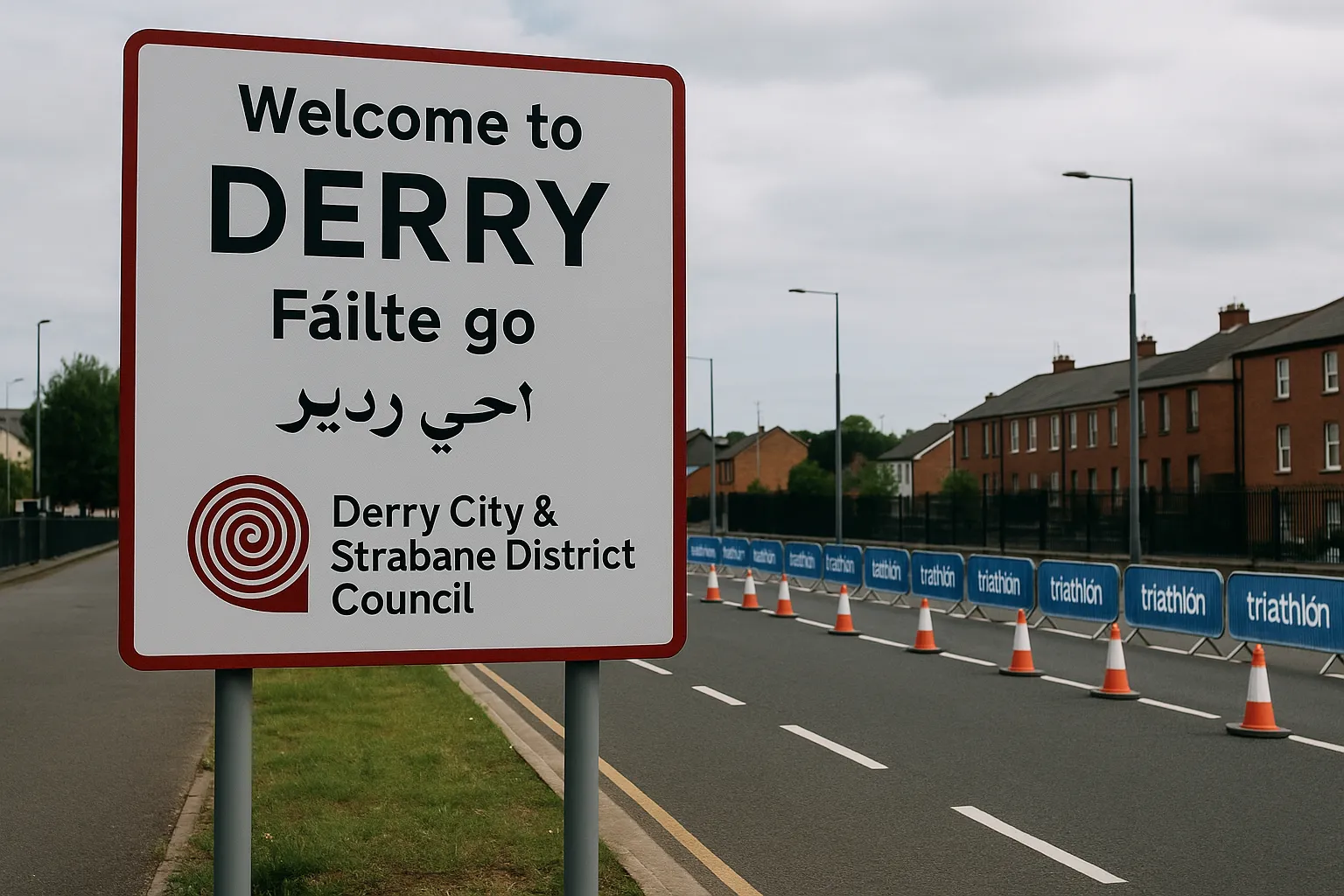
Derry City and Strabane District Council has recently clarified its position regarding an upcoming triathlon event, emphasising that the local authority is not the organiser. The council, which previously adopted a formal stance endorsing the Boycott, Divestment and Sanctions (BDS) movement in 2016, outlined that Triathlon Ireland is responsible for the event, having acquired financing via the National Event Fund.
The initiative taken by Derry City and Strabane District Council to support the BDS movement has been a point of local and national debate. The BDS movement aims to pressure Israel to comply with international law concerning Palestinian rights through economic measures, cultural boycotts, and other forms of activism. The council’s decision back in 2016 to adopt this policy reflects its commitment to advocating for human rights, a stance that has garnered both support and criticism from various sectors of the community.
In light of its recent statement, the council sought to clarify any misconceptions that may arise from the organisation of the triathlon. Officials reiterated that while the council stands by its BDS policy, it plays no role in the logistics or management of events financed through external bodies such as Triathlon Ireland. This is an essential distinction as the council continues to navigate its role as a facilitator of sports and events within the region while maintaining its political and ethical commitments.
Triathlon Ireland, which is tasked with the execution of the event, received significant funding aimed at promoting sports and physical activities across Northern Ireland. This funding, obtained from the National Event Fund, is designed to enable various sporting events that can enhance community engagement and encourage healthy lifestyles. The involvement of Triathlon Ireland may lend a focus on inclusivity and accessibility, mirroring broader trends in sports management aimed at engaging diverse participants.
Local perspectives on the council’s approach to the BDS movement continue to vary. Some community members laud the council’s commitment to human rights, viewing the support of BDS as an essential part of advocating for social justice. These advocates argue that the global context of the BDS movement is reflective of ongoing struggles faced by marginalised communities worldwide, making local endorsements significant.
Conversely, critics of the BDS policy express concerns that such positions could deter investment and tourism within the region. Fears have been raised regarding the potential impact on sports and other events, which could suffer from diminished participation or sponsorship as a result of the council’s political affiliations. These voices highlight the complex balance that local authorities must strike between advocacy and economic viability.
Sports events like the upcoming triathlon have historically been seen as unifying activities, which transcend political discourse. The triathlon is expected to draw a diverse array of participants from various backgrounds, fostering community spirit and encouraging local engagement in sports. Supporters argue that such events should be insulated from political controversies, serving purely as an opportunity for recreation and competition.
In an interview, a local athlete expressed excitement regarding the event, noting, “Sports have an incredible capacity to bring people together, regardless of personal beliefs. I hope we can focus on the positivity that comes from competing and connecting as a community.” This sentiment underscores the hope that the triathlon will provide a platform for unity amidst broader debates surrounding politics and sports.
The role of funding in facilitating sports events is another angle that has prompted discussion among local leaders. With constraints on budgets, securing external funding is increasingly vital for councils aiming to provide quality events. Fiscal support from national initiatives, such as the National Event Fund, is crucial for implementing diverse sporting activities that cater to a wide range of interests.
Moreover, local councils are often tasked with ensuring that events reflect the characteristics and priorities of their communities. While Derry City and Strabane District Council has garnered recognition for its support of social justice through BDS, it also faces the responsibility of balancing that with the need to maintain robust community activities. Local leaders are attentive to the need for such duality in the current landscape, as they navigate complex socio-political realities.
In real terms, the upcoming triathlon stands as a significant marker for Derry and Strabane, illustrating the potential for sport to serve as a communal bridge amidst challenging conversations around rights and politics. As preparations unfold for the event, the community anticipates not only the competitive engagements but also the conversations and connections that will arise from it.
As the date approaches, it will be critical to monitor the dynamics that emerge from the event, particularly in terms of community engagement and participation. The council’s ongoing dialogue with residents will remain an essential aspect of ensuring that all voices are heard as local governance continues to evolve in response to both social and sporting opportunities.
Our Thoughts
The article does not contain relevant information regarding health and safety incidents or breaches of UK health and safety legislation. Therefore, there are no safety lessons, preventive measures, or regulations to address in this context.