
















Story Highlight
- Asda recalls Front Pocket XBody Bag due to safety risk.
- Product may contain phthalates exceeding permitted limits.
- Prolonged exposure may damage reproductive systems.
- No safety incidents reported; recall as precautionary measure.
- Customers can return for full refund without receipt.
Full Story
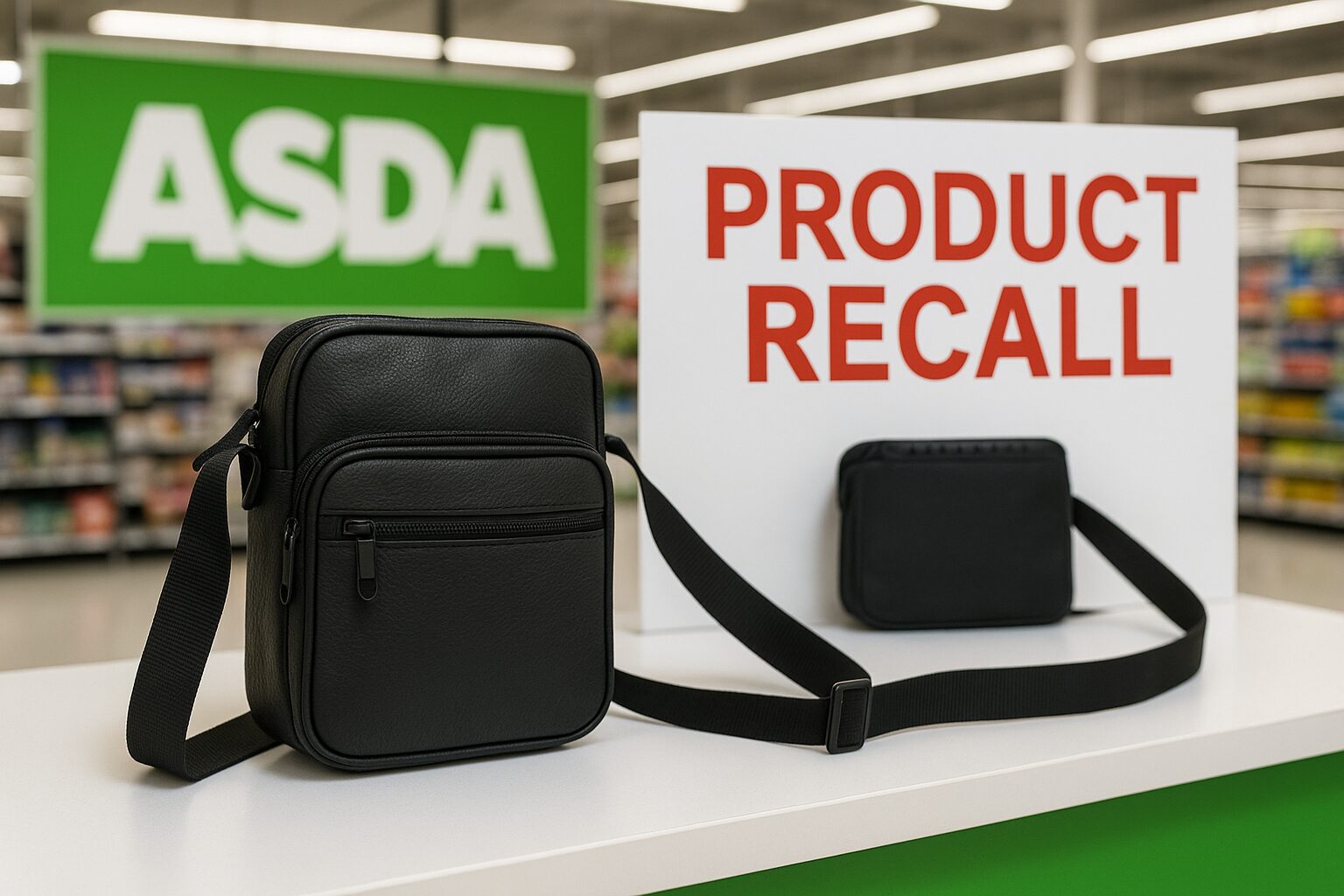
Asda has issued a warning to customers regarding the Front Pocket XBody Bag, which is being voluntarily recalled due to safety concerns. The product, identified by the code 1100265415001, has been found to potentially contain phthalates that exceed the permitted limits. These substances, particularly Di(2-ethylhexyl) phthalate (DEHP), have regulatory restrictions in place due to their potential health risks, which include possible damage to the reproductive system.
While the product had initially passed all safety tests at shipment, subsequent testing revealed the concern, prompting Asda to take precautionary measures. No safety incidents related to this issue have been reported thus far. Asda stated, “While no safety incidents have been reported, we are taking this action to ensure compliance with applicable regulations and to maintain our commitment to consumer safety.” Customers who have purchased the bag are advised to return it to their nearest Asda store for a full refund, with no receipt required.
In a similar safety alert, Tesco has also informed customers to stop using the F&F Home Glass Latte Mug due to a manufacturing issue that could cause the glass to break during normal use, posing a risk of injury. This recall affects all batches sold between September 2025 and August 2026. Tesco has urged customers to return the mugs to any store for a full refund, again without requiring a receipt. The supermarket reassured customers that no other products are affected by this recall and expressed regret for the inconvenience caused to shoppers.
Source: read the original report.
What this means for your site
The incidents involving Asda and Tesco highlight potential lapses in product safety management that could have been mitigated through more rigorous pre-market testing and ongoing compliance checks. Implementing a robust product safety management system, including periodic reassessment of products after their launch, would provide greater assurance of consumer safety and compliance with established standards. Both cases could have benefited from additional scrutiny regarding the materials used in product manufacturing, particularly concerning hazardous substances.
Applicable UK legislation includes the Health and Safety at Work etc. Act 1974, which mandates that employers ensure the health and safety of their employees and members of the public affected by their operations. Furthermore, the General Product Safety Regulations 2005 apply here by ensuring that products placed on the market are safe. To prevent similar incidents, sites should enhance their quality assurance processes by implementing stricter testing protocols that include monitoring for specific hazardous substances like phthalates. Regular training for staff on compliance with product safety regulations can also strengthen overall safety management and consumer preparedness.