














Story Highlight
- Chris Rhodes demolished his half of a Leeds semi-detached home.
- Shivarna Mitra claims her home is now unsellable due to damage.
- Rhodes cited safety concerns for demolishing the property’s walls.
- Ms Mitra underwent cancer treatment while dealing with the dispute.
- Leeds City Council stated Rhodes lacked necessary demolition permissions.
Full Story
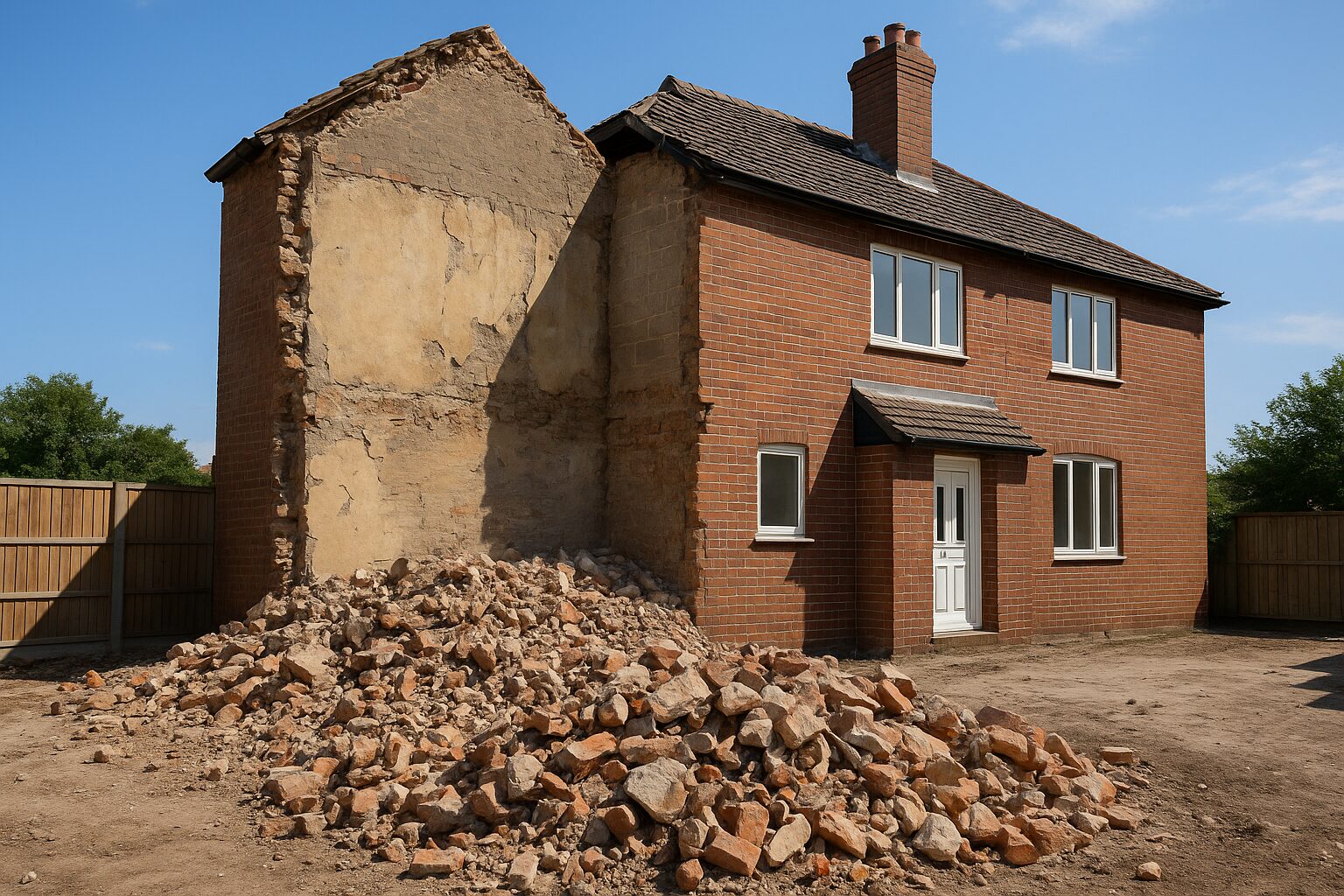
Chris Rhodes has defended his decision to demolish his half of a semi-detached property in Pudsey, Leeds, following allegations from his neighbour, Shivarna Mitra, that the demolition has rendered her home unsellable. Ms Mitra claims that since the demolition, she has experienced significant issues, including damp and mould, which have made her property a health hazard.
Ms Mitra, who purchased her three-bedroom home in May 2021 for £217,000 and invested approximately £80,000 in renovations, described the last four years as a “nightmare.” She reported that the demolition has led to holes in her walls and roof, allowing rain, pests, and rodents to invade her home. In the midst of these troubles, she has been undergoing cancer treatment and has expressed frustration at having to manage these serious issues while dealing with her health.
Mr Rhodes, aged 47 and a self-employed carpenter, bought the neighbouring house in July 2022 for £280,000. He obtained planning permission for two extensions in the summer of 2022, but construction work did not commence until October of that year. According to Ms Mitra, he allegedly misused the planning approvals as justification for demolishing the property, a claim that Mr Rhodes denies.
Mr Rhodes stated that a storm had made the gable wall of the property unsafe. He claimed that following guidance from the Health and Safety Executive (HSE), he deemed demolition necessary to ensure safety for both his family and his neighbour’s property. He commented, “I had a discussion with the HSE, and it was agreed [that pulling the wall down] was necessary and the correct course of action.”
In May 2023, Leeds City Council issued a stop notice regarding the demolition, which Mr Rhodes asserts he complied with. He also stated that he felt he had a legal and moral obligation to ensure safety, despite possible planning ramifications. However, he expressed frustration over what he perceived as a lack of communication from the council regarding his application for a new house, which was eventually refused. A second application for a five-bedroom home received approval in May 2024, but Mr Rhodes later sold the plot with planning permission for £115,000, citing a desire to distance his family from ongoing disputes.
Mr Rhodes refuted claims of aggression towards Ms Mitra, asserting that she had been abusive towards his builders. He also rejected allegations that his contractors caused damage to her property. A spokesperson for Leeds City Council confirmed that Mr Rhodes performed demolition without the necessary permissions and advised Ms Mitra to pursue legal advice regarding her homeowner’s insurance.
The HSE, which visited the site post-demolition, stated there were no breaches of health and safety legislation at the time of their inspection. Currently, Ms Mitra’s insurer has initiated a legal claim, which she stated may take an additional two years to reach court.
Source: read the original report.
What this means for your site
In this situation, several preventative measures could have been taken to avoid the disputes and negative consequences arising from the demolition of the property. First, Chris Rhodes should have submitted a Section 80 Demolition Notice in line with the Town and Country Planning Act 1990, which requires notification to the local planning authority before a demolition takes place. Consulting with structural engineers and making formal assessments of safety risks instead of relying solely on verbal advice could have further clarified responsibilities and reduced misunderstandings. Furthermore, adherence to the Health and Safety at Work etc. Act 1974 was essential for ensuring the health and safety of both the workers and neighbouring properties during demolition. Concrete steps to prevent similar situations include mandating comprehensive risk assessments before commencing any demolition work and implementing ongoing communication with neighbouring property owners regarding planned works and safety measures. Additionally, ensuring all parties are aware of their rights and responsibilities through clear documentation can mitigate potential disputes, leading to a safer working environment and better community relations.