












Story Highlight
– Councillors condemn council’s decision to resume glyphosate use.
– Call for pause until public consultation is completed.
– Letter outlines evidence of declining public realm conditions.
– Concerns about health risks linked to glyphosate usage.
– Demonstration planned against decision before Cornwall Council meeting.
Full Story
A growing number of councillors in Cornwall have voiced strong opposition to a recent initiative by the local council to reintroduce glyphosate for weed control. This decision has been described by critics as an outright “U-turn,” reversing a decade-long policy that sought to eliminate the chemical from Cornwall’s public spaces.
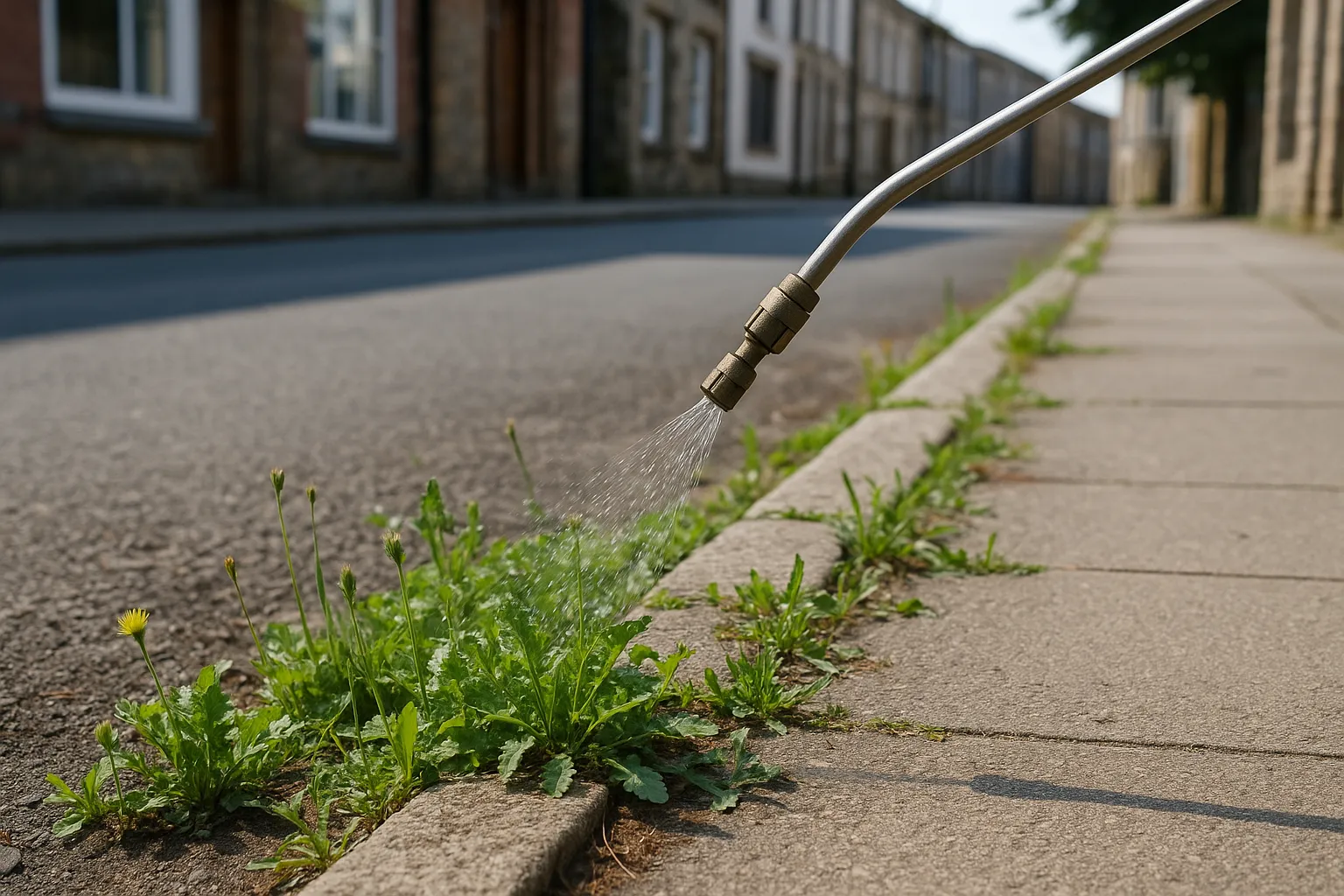
The Cornwall Council, governed by a coalition of Liberal Democrats and Independents, communicated its intentions to town and parish councils in a letter dispatched at the end of March. The correspondence indicated that Cornwall Highways & Environment Services had been instructed to commence a new weed management programme aimed at enhancing public spaces across the region. The cabinet justified this course of action by stating that the cessation of routine weed control in 2013 had led to deteriorating conditions, including increased complaints about overgrown areas, deteriorating pathways, and reduced community pride.
According to the letter, the default approach will involve the use of a diluted glyphosate solution in all urban areas maintained by Cornwall Council. However, it also announced that town and parish councils could choose to opt-out of this programme, provided they could uphold the required standards and protect the integrity of their assets. Councils have been given until 20 April to make this decision, a timeline that many have publicly derided as “unreasonably short.”
In a concerted response to the council’s announcement, Redruth Town Council has called upon all local councils to support a petition opposing the reintroduction of glyphosate. Meanwhile, the Cornwall Wildlife Trust, a prominent local conservation charity, has formally requested a delay in the implementation of these plans and an extension to the opt-out deadline, emphasizing the need for a more comprehensive public consultation.
Cllr James Mustoe, representing Mevagissey and St Austell Bay as a Conservative member, was part of a successful campaign in recent years aimed at designating Cornwall Council as a “bee-friendly authority.” This initiative, led by the late Liberal Democrat councillor Edwina Hannford, resulted in a commitment to eliminate glyphosate and other harmful pesticides from public land, with exceptions only for invasive species control or significant risks to infrastructure.
Reflecting on the latest proposal, Cllr Mustoe remarked, “What the council is now proposing is an absolute reversal of everything it said it was going to do. I understand the desire to maintain tidy public spaces, but there are alternative methods to achieve this without resorting to chemicals that can be harmful to our environment. This is a complete U-turn and appears to be a decision made hastily without considering the long-term effects.”
A protest is set to take place outside County Hall in Truro, coinciding with a full council meeting on 21 April, where council members are expected to discuss a motion against the cabinet’s decision. This motion, introduced by Green Party councillors Drew Creek and Karen La Borde, argues that the choice to reinstate glyphosate treatment represents a significant policy shift with potential ecological, health, and democratic repercussions for Cornwall’s communities.
In support of this motion are councillors from various parties, including Conservative, Green, Mebyon Kernow, and Cornish Independent Non-aligned representatives. It calls for a pause on the planned weed treatment, originally slated to start in May 2026, until a thorough public consultation has occurred. Additionally, the motion critiques the council’s “wholly inadequate” three-week window for town and parish councils to opt out of glyphosate use, particularly highlighting that this period included the Easter holidays. It proposes extending this opt-out timeframe to 30 days following the publication of the consultation findings.
The motion also references concerns raised globally regarding glyphosate, highlighting recent studies that have linked exposure to the chemical with serious health risks, including non-Hodgkin lymphoma. Thousands of lawsuits related to glyphosate use have emerged in the US, with notable payouts already made to affected individuals. Countries such as France, Germany, and Italy have prohibited its use in public areas, while several jurisdictions in the US and Canada have enacted similar restrictions.
Councillors have underscored that the decision to employ glyphosate for aesthetic reasons constitutes a stark reversal of Cornwall Council’s environmental pledges made over the past ten years. Notably, towns such as Wadebridge have taken proactive steps to become glyphosate-free, with other areas like Bude, Newquay, and Perranporth also following suit.
A spokesperson for Cornwall Council defended the proposed initiative, pointing to nearly 2,000 complaints received over the past three years regarding weed growth on pavements and roads. They stated that the council is dedicated to promoting biodiversity while ensuring safe, accessible, and vibrant community spaces. To that end, a £5 million investment over the next three years will focus on tidying up verges and kerbsides, employing targeted weed control methods on hard surfaces.
The spokesperson added, “To help safeguard and restore our natural habitat, we will limit the cutting of most highway verges to once a year, which will aid pollinators and enhance wildflower growth. We will, however, maintain more frequent mowing at critical junctions where visibility is a concern. When it comes to urban roads, we will use a highly diluted chemical solution for targeted weed treatment in areas at risk of pavement damage and narrowing footways.”
This situation continues to evolve, reflecting deeper discussions on public health, environmental stewardship, and community engagement as Cornwall navigates its approach to land management.
Our Thoughts
The article highlights concerns regarding Cornwall Council’s decision to reintroduce glyphosate for weed management after a decade-long cessation. To avoid the backlash and health risks associated with this decision, Cornwall Council could have engaged in a comprehensive public consultation process prior to implementation, as mandated by the Health and Safety at Work Act 1974, which requires meaningful dialogue with stakeholders regarding health and safety impacts.
Key safety lessons include the importance of considering ecological and public health implications before reintroducing potentially harmful chemicals, as indicated by the significant links between glyphosate and health risks. The Control of Pesticides Regulations 1986 requires that pesticide use must be necessary and justified, and evidence suggests that alternative methods could have been explored before resorting to glyphosate.
The rushed three-week opt-out window for local councils raises questions about compliance with the Health and Safety (Consultation with Employees) Regulations 1996, which necessitate adequate time for consultation. To prevent similar incidents, councils should establish thorough risk assessments and engage local communities earlier in decision-making processes surrounding public health and safety initiatives.