














Choose an AI chat
Safety technology from Res Digital
Tragedy of heatstroke highlights urgent need for athlete safety reforms
UK Health and Safety Latest

Tragedy of heatstroke highlights urgent need for athlete safety reforms

by Tara Rowden
September 18, 2026
0

In a tragic incident that underscores the critical need for improved athlete safety protocols, Arizona State University hockey player Matthew...

Read moreDetails
Parents outraged by school’s no-contact policy following detention for high-five

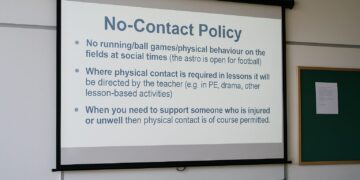
Parents outraged by school’s no-contact policy following detention for high-five

September 18, 2026
New research explores gene therapy potential to combat muscle loss with age

New research explores gene therapy potential to combat muscle loss with age

September 18, 2026
Cornwall considers ban on disposable barbecues amid safety concerns

Cornwall considers ban on disposable barbecues amid safety concerns

September 18, 2026
Nurses warn of dire consequences for patients amid record heat in UK hospitals

Nurses warn of dire consequences for patients amid record heat in UK hospitals

September 17, 2026

Archives

  • September 2026
  • August 2026
  • July 2026
  • June 2026
  • May 2026
  • April 2026
  • March 2026
  • February 2026
  • January 2026
  • December 2025
  • November 2025
  • October 2025
  • September 2025
  • July 2025
  • August 2009

Categories

  • Health and Safety Help
  • News
  • Policies
  • UK Health and Safety Latest
  • About
  • Advertise
  • Policies
    • Privacy Policy
    • Editorial Policy
    • Corrections & Complaints policy
  • Useful Documents
    • Understanding RIDDOR
    • 10 Workplace Safety Failures
    • A Complete Guide to Reporting Safety Incidents in the UK
    • Fire Risk Assessment: Meeting the Regulatory Reform (Fire Safety) Order
    • COSHH Basics: A Practical Guide to Control of Substances Hazardous to Health
    • Working at Height in the UK: The Essentials (WAH Regulations 2005)
    • Asbestos in the Workplace: Control of Asbestos Regulations 2012 (CAR) Essentials
    • Managing Contractors Under CDM 2015: Roles, Duties & Controls
    • DSE & Ergonomics: Healthy Workstations for Office & Hybrid Teams
    • Lock out Tag out LOTO
    • Workplace Transport Safety: Forklifts, Pedestrians & Traffic Management
    • Noise & Vibration at Work: Practical Controls (2005 Regulations)
    • Confined Spaces in the UK: Safe Entry under the Confined Spaces Regulations 1997
  • Contact
  • Agent
Saturday, September 19, 2026
19 °c
London
20 ° Sun
20 ° Mon
17 ° Tue
  • Login
UK Safety News
  • Home
  • News
    • All
    • UK Health and Safety Latest
    Tragedy of heatstroke highlights urgent need for athlete safety reforms

    Tragedy of heatstroke highlights urgent need for athlete safety reforms

    Parents outraged by school’s no-contact policy following detention for high-five

    Parents outraged by school’s no-contact policy following detention for high-five

    New research explores gene therapy potential to combat muscle loss with age

    New research explores gene therapy potential to combat muscle loss with age

    Cornwall considers ban on disposable barbecues amid safety concerns

    Cornwall considers ban on disposable barbecues amid safety concerns

    Nurses warn of dire consequences for patients amid record heat in UK hospitals

    Nurses warn of dire consequences for patients amid record heat in UK hospitals

    Concerns raised over safety and staff training at Welsh mental health wards

    Concerns raised over safety and staff training at Welsh mental health wards

    Care home implements safety measures following choking tragedy

    Care home implements safety measures following choking tragedy

    Hand wash recalled due to microbiological risk in UK stores

    Hand wash recalled due to microbiological risk in UK stores

    West Devon named best place in South West for healthy aging

    West Devon named best place in South West for healthy aging

    Single sex workplace facilities pose challenges for employers as legal clarity remains elusive

    Single sex workplace facilities pose challenges for employers as legal clarity remains elusive

    Trending Tags

No Result
View All Result
UK Safety News
No Result
View All Result
Home News UK Health and Safety Latest

Flight attendant reveals code names for difficult passengers

Michael Harland by Michael Harland
January 26, 2026
in UK Health and Safety Latest
Reading Time: 4 mins read
0
Flight attendant reveals code names for difficult passengers

Story Highlight

– Flight attendants deal with entitled and rude passengers.
– “Precious” signals a disruptive passenger among the crew.
– Different airlines may use varied code names.
– Attractive passengers might receive discreet flirtatious signals.
– Crew refers to passengers by seat numbers for discretion.

Full Story

In the bustling environment of an aircraft, flight attendants encounter a wide spectrum of behaviours from passengers, ranging from courteous to disruptive. A flight attendant, speaking under the condition of anonymity, has shared insight into identifying those problematic travellers whose attitudes can significantly impact cabin operations.

The public perception of a flight attendant’s role often portrays it as glamorous, featuring travels to exotic destinations and serving passengers in a dreamlike setting. Nevertheless, behind this façade lies the challenging responsibility of ensuring safety and managing diverse customer expectations.

During an exclusive discussion, the flight attendant revealed that certain habits and behaviours of passengers—often termed as “icks”—can be tolerated to some extent. However, when a passenger’s attitude becomes particularly troublesome, the crew resorts to a coded term to signal the troublesome nature of the individual. The word “precious” has emerged within cabin crew vernacular as a code for identifying a passenger behaving in an overly demanding or rude manner.

The flight attendant explained, “There are a lot of things and icks from passengers that we can overlook, but if we say the word ‘precious’ it generally means that they’re acting like a ****.” This code is utilized by the crew to communicate discreetly, ensuring that the service level provided to that passenger may be adjusted accordingly.

However, it is important to note that this terminology may vary across different airlines. In a conversation with another flight attendant, it was highlighted that being referred to as a “Philip” indicates a passenger has displeased the crew, potentially resulting in diminished service for the remainder of the flight. This designation originates from a cheeky acronym: PILP, or “Passenger I’d Like to Punch,” albeit the term has now evolved into a more subtle nickname.

Furthermore, the attendants also employ codes to signal when they find a passenger particularly attractive. “This is an old one I’ve heard,” the attendant revealed. “If we find you attractive, we would say ‘cheerio’ when you’re leaving instead of goodbye.” This method maintains a level of professional decorum while allowing crew members to engage in light-hearted banter among themselves.

These coded communications serve primarily to enhance operational efficiency, allowing the crew to address passenger requirements swiftly without causing unnecessary chatter or inconvenience. “If we are referring to passengers, we do not use your name; we use your seat number,” the attendant explained. “So if someone wanted something, we wouldn’t say ‘Mary, sat in row 50, wants a coffee’. We would say, ’50 Delta, 50 Kilo or 50 Charlie’. We use seat numbers and the phonetic alphabet; it’s just easier.”

This practice is not intended to foster anxiety among passengers but rather facilitates a more streamlined service process while avoiding misinterpretations or confusion. However, passengers should be mindful of how their behaviour may encourage specific labels; being labelled a “precious Philip” is certainly a cue to reconsider one’s actions during the flight.

Several discussions have emerged regarding the role of flight attendants, particularly during challenging experiences in the air. Issues such as delays, cramped seating, and the overall stress of travel can sometimes lead to heightened emotions. Flight attendants must navigate these scenarios while adhering to professional standards and maintaining their composure.

Passenger behaviour is a significant topic for cabin crews. Many report that some of the most frustrating interactions stem from individuals who exhibit entitlement or neglect to consider the feelings of those serving them. It is in these moments that the resilience and professionalism of flight crews are truly tested.

Expert opinions in the aviation field have underscored the importance of respectful interaction between airline staff and passengers, advocating for a culture of mutual understanding and courtesy. Lizzie Harrison, an aviation consultant, noted, “It is essential for both crews and passengers to foster a respectful environment. Travelling, in general, can be stressful, and kindness can go a long way.”

As travellers gear up for flights, awareness of one’s conduct can contribute positively to the in-flight experience. Passengers are encouraged to approach cabin staff with politeness and patience, especially in situations where delays or other inconveniences arise.

In an age of increasing public awareness about the pressures faced by service staff, raising consciousness about passenger behavior could lead to more pleasant journeys for everyone involved. Flight attendants strive to ensure that their duties are fulfilled promptly and courteously, but they can only do so with cooperation from passengers willing to engage appropriately.

In conclusion, the dynamics aboard an aircraft extend far beyond delivering meals and ensuring safety. They encompass a spectrum of human interactions where understanding and respect are key. The next time you step aboard a flight, consider the subtleties of cabin crew communication, and perhaps adopt a more courteous approach to enhance the travel experience for all.

Our Thoughts

The article highlights the challenges flight attendants face when dealing with disruptive passengers, indicating a need for improved passenger conduct and staff management. To avoid such situations, airlines could implement comprehensive training programs focused on passenger behavior management and conflict resolution. This would enhance cabin crew’s ability to handle difficult interactions without resorting to code words that may stigmatize passengers.

Key safety lessons include the importance of effective communication and mutual respect between passengers and cabin crew. Airlines should also ensure that all staff are aware of the appropriate procedures to follow when encountering disruptive behavior, in line with the Health and Safety at Work Act 1974, which mandates a duty of care to protect both employees and customers.

While there are no explicit breaches of regulations mentioned, the use of disparaging code words could contribute to a hostile work environment, potentially breaching the Equality Act 2010, which requires organizations to prevent harassment. To prevent similar incidents, airlines could foster a culture of open dialogue and respect, encouraging passengers to engage in courteous behavior while providing training for staff on appropriate response strategies.


SummarizeShare35Share198SendSend
Safety technology from Res Digital
Michael Harland

Michael Harland

Related Posts

Council officer pleads guilty to food safety fraud

Council officer pleads guilty to food safety fraud

by Jade Anderson
August 24, 2026
0

Lily Yirenkyi, a former environmental health officer with Thurrock Council, has been sentenced after pleading guilty to 13 counts of...

New study raises safety concerns over pesticide linked to brain development issues

New study raises safety concerns over pesticide linked to brain development issues

by Michael Harland
July 1, 2026
0

A new study from Stockholm University has unveiled alarming neurotoxic effects associated with fluazinam, a widespread fungicide, contradicting earlier findings...

Useful Documents

  • Understanding RIDDOR
  • 10 Workplace Safety Failures
  • A Complete Guide to Reporting Safety Incidents in the UK
  • Understanding RIDDOR
  • Fire Risk Assessment: Meeting the Regulatory Reform (Fire Safety) Order
  • COSHH Basics: A Practical Guide to Control of Substances Hazardous to Health
  • Working at Height in the UK: The Essentials (WAH Regulations 2005)
  • Lock out Tag out LOTO

Recent Posts

  • Tragedy of heatstroke highlights urgent need for athlete safety reforms
  • Parents outraged by school’s no-contact policy following detention for high-five
  • New research explores gene therapy potential to combat muscle loss with age
  • Cornwall considers ban on disposable barbecues amid safety concerns
  • Nurses warn of dire consequences for patients amid record heat in UK hospitals

Recent Comments

  1. Lendy Araujo on Oil spill at Piper Bravo deemed potentially catastrophic by safety regulator
  2. Piper Douglas on Worker dies due to inadequate machinery safety measures
  3. Simon Barrett on Honeymoon ruined by illness as newlywed suffers severe infection in Cape Verde
  4. Nolan Barrett on Work-related ill health in Great Britain remains a concern after pandemic peak
  5. Dylan Reeves on Sickness rates among Scottish police officers soar to troubling levels
UK Safety News

Copyright © 2026
UK Safety News

Navigate Site

  • About
  • Advertise
  • Policies
  • Useful Documents
  • Contact
  • Agent

Follow Us

Welcome Back!

Login to your account below

Forgotten Password?

Retrieve your password

Please enter your username or email address to reset your password.

Log In
No Result
View All Result
  • Home
  • News

Copyright © 2026
UK Safety News

This website uses cookies. By continuing to use this website you are giving consent to cookies being used. Visit our Privacy and Cookie Policy.