












Story Highlight
- Gas workers plead not guilty to gross negligence manslaughter charges.
- Explosion on 10 December 2022 killed ten residents at Haut du Mont.
- Prosecution claims gas pipes were worked on exceptionally badly.
- Gas company Island Energy faces health and safety charges in court.
- Trial reveals multiple failures in safety protocols by Island Energy.
Full Story
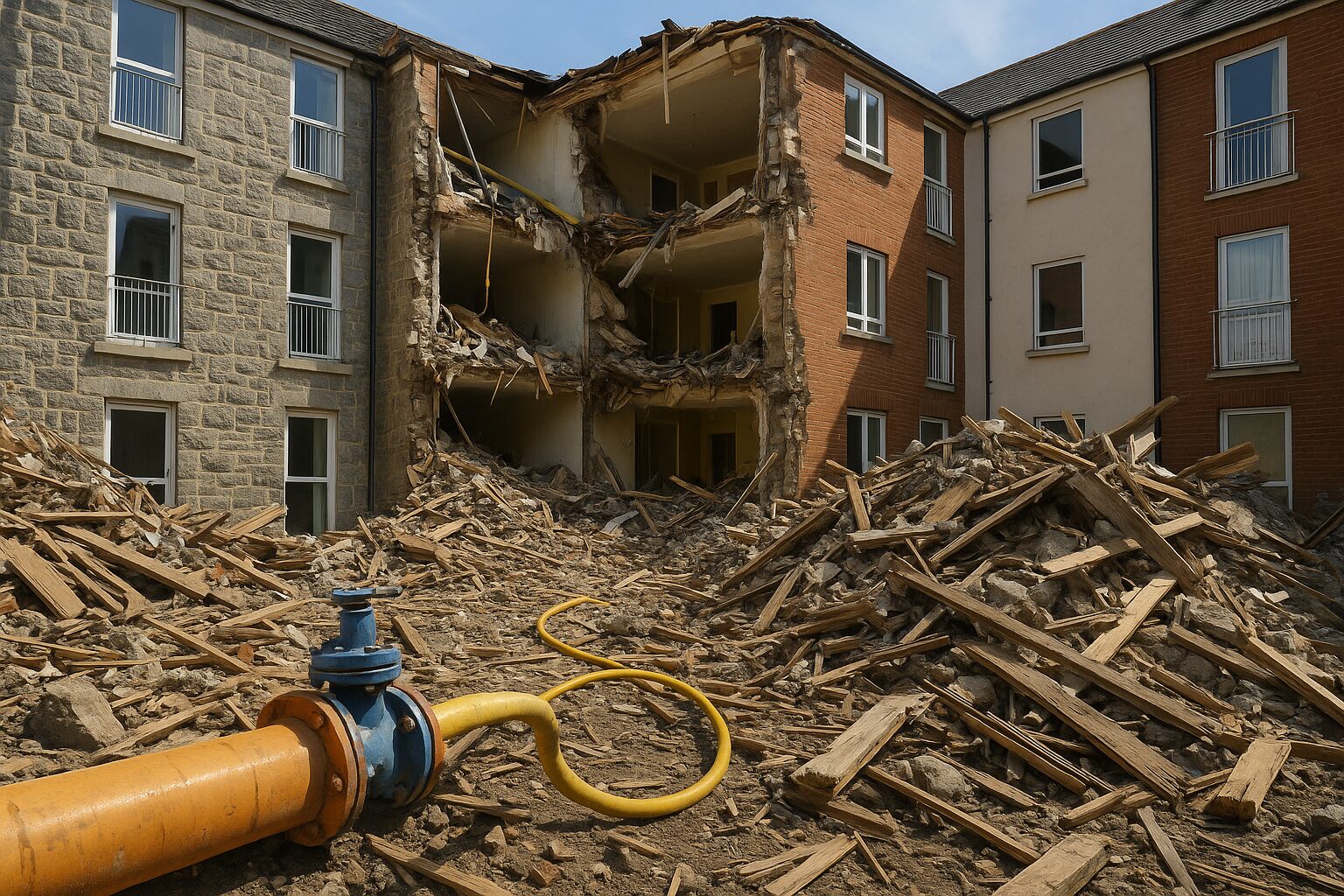
Work conducted on gas pipes prior to a fatal explosion in Jersey was described in court as being performed “not just carelessly but exceptionally badly.” Three gas workers, Lee Ward, 59, Neil Armstrong, 58, and John Wright, 60, each pleaded not guilty to 10 counts of gross negligence manslaughter following the deaths of ten residents at Haut du Mont flats in St Helier on 10 December 2022. The case is being tried alongside a health and safety case against Island Energy, represented by chief executive Graeme Millar, who has also pleaded not guilty to two counts of failing to ensure safety during the incident.
The deceased included Peter Bowler, 72; Billy Marsden, 62; Derek Ellis, 61; Sylvia Ellis, 73; Ken Ralph, 72; Jane Ralph, 71; Romeu De Almeida, 67; Louise De Almeida, 64; Raymond Brown, 71; and Kathy McGinness, 73, who died in hospital on 25 December 2022 after living nearby.
Prosecutor Advocate Simon Thomas stated that gas escaped from pipes worked on by the defendants the day before the explosion. He claimed Island Energy “failed to ensure the health and safety” of the public and its staff by not properly supervising or checking the work. Thomas remarked that the explosion was an incident that “was waiting to happen.”
The prosecution presented evidence that Island Energy had planned to disconnect the gas supply entirely from the Haut du Mont flats, which were managed by Andium Homes. At the time of the explosion, the flats had ceased using gas, although gas remained in the pipes. The prosecution outlined how Armstrong had begun the work in August and, on 9 December, encountered difficulties that led to the abandonment of proper procedures.
Thomas stated that Armstrong and Wright incorrectly assumed the location of a branching pipe and cut into it without proper excavation, resulting in a disruption to the gas supply. Following the work, Armstrong assured that gas supply had been halted. However, the St Helier Yacht Club reported losing gas, alarming both the company and residents.
Armstrong reportedly felt “pressured” to restore the gas supply and neglected to conduct necessary safety checks on the pipework. The prosecution indicated that at least one valve remained open and that a pressure test, which could have ensured no leaks, was not performed despite being advised by senior managers.
The gas eventually leaked into the Haut du Mont flats, leading to an explosion at around 04:00, the cause of which is still under investigation. Thomas highlighted a series of “missed opportunities” by Island Energy and related services to prevent the disaster. Additionally, the States Employment Board has pleaded guilty to offences under Health and Safety law related to failings during the emergency response.
The trial, which is expected to last at least two months, continues at Jersey’s Royal Court.
Source: read the original report.
What this means for your site
In the aftermath of the tragic explosion in Jersey, it is evident that significant lapses in safety management led to catastrophic outcomes. To prevent similar incidents, companies should rigorously adhere to the Health and Safety at Work etc. Act 1974, which outlines the duty to ensure the health and safety of employees and the public. Additionally, the Management of Health and Safety at Work Regulations 1999 must be observed, with comprehensive risk assessments and method statements implemented prior to any work on gas infrastructure.
Specific failures included improper supervision, lack of pressure tests on the pipework, and inadequate understanding of the gas supply layout. These oversights could have been mitigated by implementing mandatory training protocols for staff on safety procedures and emphasizing the importance of conducting pressure tests post-repairs to ensure no leaks before gas reintroduction. Furthermore, enhancing managerial oversight during critical operations, particularly by ensuring that sufficiently experienced personnel are present, would reduce the risk of negligence and maintain compliance with relevant health and safety legislation.