












Story Highlight
– Over 30 children’s toys recalled in UK due to asbestos.
– Contaminated play sand sold by Hobbycraft identified as source.
– Other major retailers also recalled numerous unsafe products.
– Asbestos poses serious health risks, potentially causing cancer.
– UK recalls prompted by Guardian report and consumer safety concerns.
Full Story
A significant recall of over 30 children’s toys across the UK has been initiated following reports of toys containing contaminated play sand supplied by Hobbycraft, which has been found to contain asbestos. This alarming news comes after a series of other product recalls in recent months from various retailers, including Tesco, Primark, Matalan, and Marks & Spencer, highlighting growing concerns over product safety.
Asbestos, a substance known for its serious health risks, can lead to cancer if inhaled, and the sale of any products containing it is prohibited in the UK. It appears that the contaminated sand came from mines in China, where the substance can naturally occur, and the regulations regarding labelling may not be as stringent.
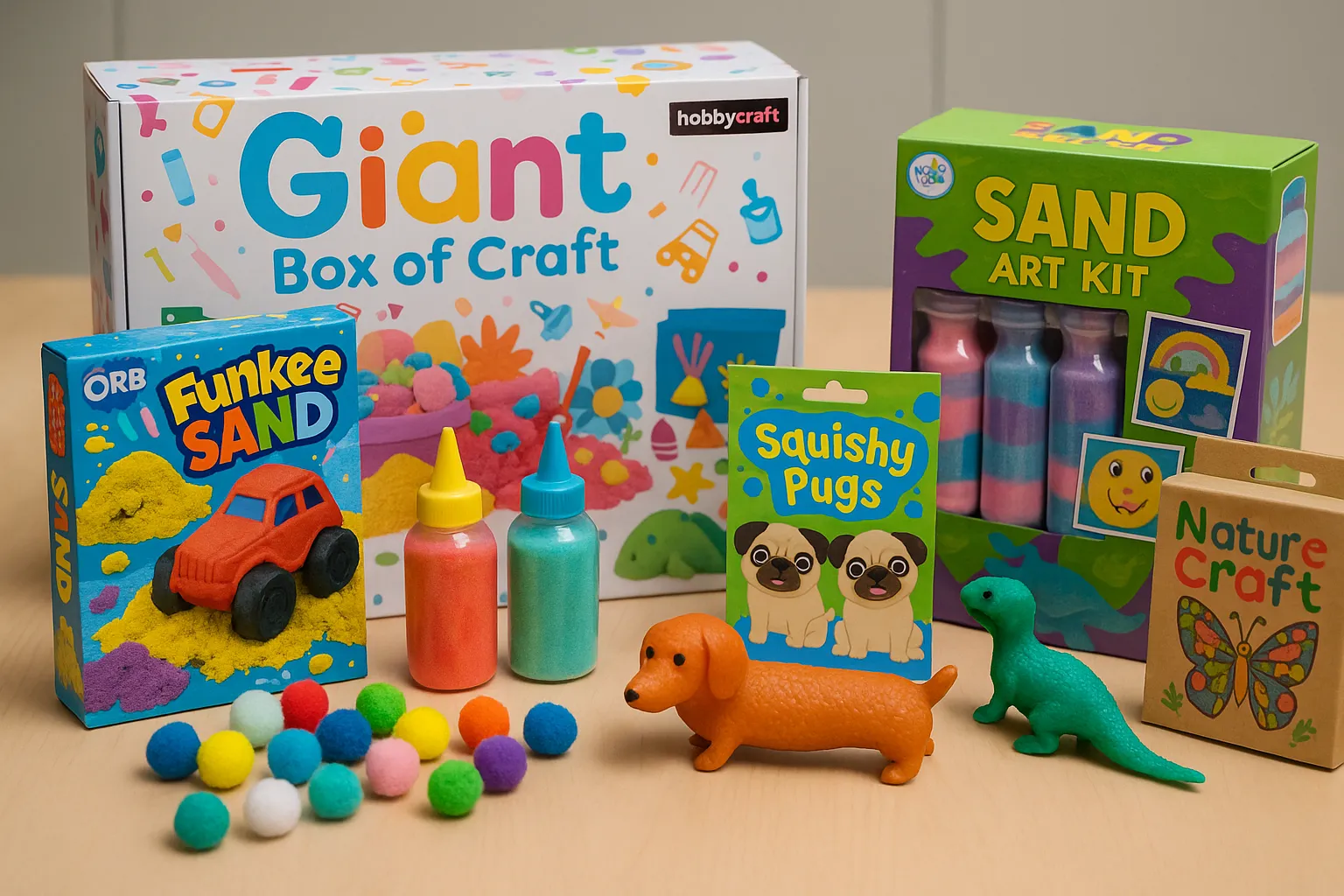
The issue came to light when the Guardian reported in January that Hobbycraft had removed its Giant Box of Craft kits from its shelves after a customer raised concerns about the presence of asbestos in the coloured sand included in the kits. The retailer stated that they had not received any warnings from UK authorities regarding a potential risk and maintained that there was no evidence suggesting harm had come to their customers.
Following this incident, the Office for Product Safety and Standards (OPSS) advised traders about the best testing methods to employ, leading to a marked increase in testing requests from stores and manufacturers. The consumer advocacy group Which? has pointed to the recent surge in recalls as indicative of a significant breakdown in safety protocols. Sue Davies, the head of consumer protection policy at Which?, asserted, “The Office for Product Safety and Standards needs to take action and ensure proper checks are being carried out to keep dangerous products off the shelves,” stressing the necessity for scrutiny of toys sold in online marketplaces where regulation is less rigorous.
Questions have arisen regarding the efficacy of lab testing methods that were traditionally employed by manufacturers before the Hobbycraft recall. In many instances, products that were previously certified as safe were later discovered to contain trace amounts of asbestos when subjected to more reliable testing.
This situation is not isolated. Globally, similar concerns over contaminated play sand have resulted in government-led recalls, with school closures noted in Australia and New Zealand. Despite the gravity of these incidents, certain related products remain on sale in both UK high street retailers and online.
In the wake of the Guardian’s exposé, Hobbycraft acted swiftly by issuing a nationwide recall of the craft box just two days after the report. Customers were advised to safely double-bag the contaminated bottles and consult their local councils regarding disposal. The company has since expanded the recall to include an additional four craft sets that also contain the problematic sand.
Criticism has been directed at the UK government for failing to effectively address the risks posed by hazardous toys. Laurie Kazan-Allen, of the International Ban Asbestos Secretariat, commented, “It took an article in the Guardian to force the UK authorities to engage with the potential threat to public health,” indicating that the subsequent recalls were largely instigated by testing conducted by manufacturers rather than by proactive measures taken by the government.
The current landscape of post-Brexit health and safety legislation has altered the regulatory framework significantly, as it requires exporters and retailers to test their products for hazards like asbestos and report findings to the OPSS. In a statement, the government clarified that the responsibility for ensuring product safety lies with individual companies.
In response to these unsettling developments, Kate Dearden, the minister for product safety, expressed her astonishment at the situation, affirming, “It is staggering toys are being sold with asbestos.” She elaborated on the government’s commitment to enhancing consumer protection and their collaborative efforts with the EU, Trading Standards, and the toy industry to ensure that any products that test positive for asbestos are immediately removed from circulation.
The recall list of affected toys has grown considerably since January, illustrating the scale of the issue. Products impacted include a diverse range of toys such as Smyths toys dig products, HTI Toys Stretcherz Toys, and various kits for sand art and sensory activities. Notably, many of these items were available through popular online platforms, raising additional concerns regarding the extent of regulation in ecommerce.
Consumer safety advocates are calling for urgent reforms to reinforce regulations surrounding the sale of children’s products, particularly in the wake of these troubling findings. The lack of stringent oversight may leave children vulnerable to hazardous materials that should not be present in toys designed for play and learning.
In summary, the unearthing of asbestos contamination in children’s toys raises serious questions about product safety measures in the UK and highlights an urgent need for improved regulations. With multiple recalls prompt by a mixture of consumer awareness and testing efforts, stakeholders are calling for a more robust system to protect the health of children across the nation and ensure that hazardous items do not find their way onto shop shelves.
Our Thoughts
To avoid the contamination of children’s toys with asbestos, several key preventative measures could have been implemented. Firstly, retailers like Hobbycraft must enhance their due diligence when sourcing products, ensuring suppliers adhere to stringent safety standards. Regular testing for hazardous materials, especially for products sourced from regions with less rigorous regulations, is crucial; UK legislation, such as the General Product Safety Regulations 2005, mandates that products should be safe for consumers.
In this case, there was a breach of the Regulation 4 of the General Product Safety Regulations, which requires suppliers to ensure that products are safe before placing them on the market. The reliance on inadequate testing methods has highlighted a significant failure in compliance with safety regulations, emphasizing the need for robust testing protocols.
Furthermore, authorities should have acted proactively based on existing global warnings from other countries about similar hazards, potentially avoiding the situation altogether. Improved coordination between manufacturers, retailers, and UK regulatory bodies can prevent the reoccurrence of such incidents, ensuring that dangerous products are kept off the market and consumer safety is prioritized.