
















Story Highlight
– 65% of schools report unfit toilets for students.
– 41% find inadequate facilities for special education needs.
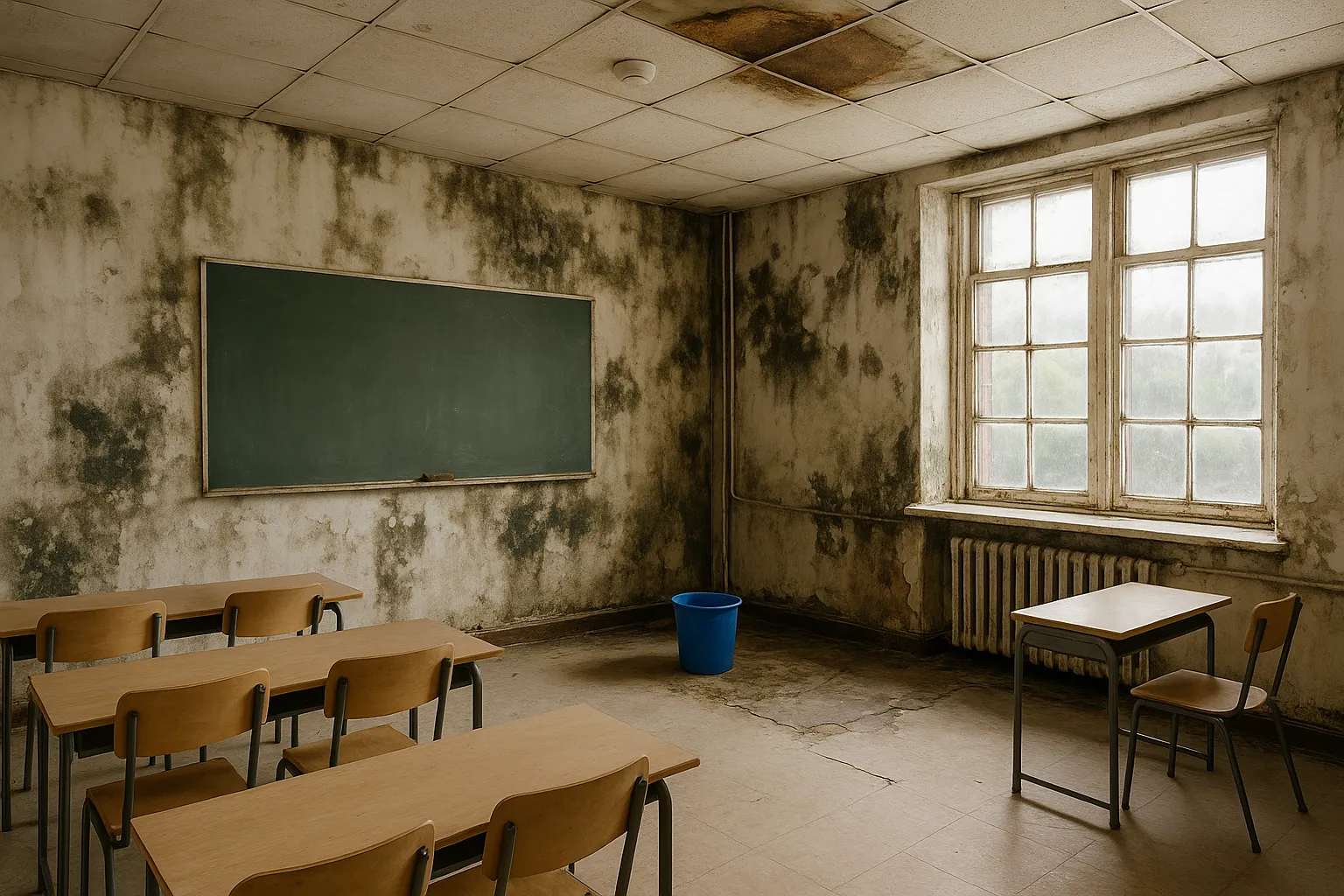
– Many schools face mould, leaks, and structural issues.
– £1 billion government plan falls short of repair needs.
– Parents encouraged to discuss funding with school leaders.
Full Story
A substantial proportion of UK schools are grappling with serious infrastructural issues, rendering many of their facilities unusable or unsafe for students. A recent survey by the National Association of Head Teachers (NAHT) highlights the extent of these problems, revealing concerning findings about the conditions within schools across the nation.
Conducted in February 2026, the survey included responses from 326 school leaders, who reported a range of significant issues within their school buildings. Among the most alarming grievances documented were mould infestations, structural failures, the presence of asbestos, and ongoing leaks that impede learning and pose safety risks. One headteacher poignantly described the state of their school: “We have rooms that are closed to children, walls covered in mould, a leaking roof, sinking floorboards, unfit windows and a condemned playground.”
Perhaps the most striking revelation from the survey is that 65% of respondents indicated that their toilet facilities were unfit for use, with another 8% reporting the complete closure of these essential amenities. Additionally, concerns about facilities for students with special educational needs and disabilities (SEND) were prominent, with 41% of headteachers stating that these provisions were inadequate. Alarmingly, 7% of schools reported entire blocks being shuttered, while an overwhelming 96% of headteachers expressed that funding available for capital improvements fell woefully short of addressing these critical issues.
The survey further revealed that two out of five headteachers with unusable facilities reported that outdoor spaces were also unfit for educational use. This situation is particularly troubling for students who rely on specialist educational provisions, as inadequate physical spaces can significantly hinder their learning experiences.
Paul Whiteman, NAHT’s general secretary, described the conditions faced by many schools as “desperate.” He underscored the frustration of school leaders who are forced to manage dilapidated environments characterized by draughty classrooms and leaking roofs, all while navigating a funding system that makes the repair processes excessively slow. Whiteman remarked, “Some of the stories we have heard from school leaders about the state of their buildings, and their struggles to secure the funding needed to rectify things, really beggar belief.” He emphasised the fundamental rights of both children and educators, stating that they should not have to work in “draughty, crumbling buildings,” as this can jeopardise their learning, health, and overall safety. “Children deserve modern, fit-for-purpose schools,” Whiteman added, lamenting that many are left to cope with ageing buildings that are neither warm nor watertight.
The impact of deteriorating facilities is acutely felt by those at the forefront of education. Steve Hitchcock, headteacher at St Peter’s CE Primary School in Budleigh Salterton, Devon, and secretary of the NAHT’s Devon branch, described feeling trapped in a cycle of ongoing repairs without resolution. Hitchcock explained, “I need to replace old temporary classrooms. I have to throw good money after bad just to keep repairing leaks and issues.” He indicated that limited financial resources compel him to forgo crucial repairs such as carpeting and decorating, relying heavily on fundraising efforts and local charity grants merely to keep basic maintenance afloat.
In response to the ongoing concerns surrounding educational facilities, the Department for Education announced a ten-year strategy aimed at rejuvenating school infrastructure, which includes a financial commitment of £1 billion. Of this sum, £700 million is specifically designated for maintenance projects across schools and colleges. A spokesperson from the Department stated, “We are already turning the page on years of decline in the school estate — fixing a legacy of neglect, committing to removing Raac for good and delivering a decade of national renewal.”
Despite these promises, experts have raised doubts regarding the adequacy of the proposed funding, with the National Audit Office estimating that the total repair costs for school buildings could reach as high as £13.8 billion. Concerns have been echoed by Members of Parliament serving on the Education Select Committee, who highlight the significant risks that continue to linger within the educational infrastructure landscape.
The NAHT is preparing to put forward a motion at its upcoming conference in Belfast that calls for fully funded capital spending to ensure that schools can adequately address their maintenance needs.
Parents are likely already familiar with the frustrations highlighted in the survey, as they navigate the reality of organising fundraisers for school events, purchasing raffle tickets, and contributing to summer fairs, all the while witnessing the transformation of temporary structures into permanent inconveniences. With the survey quantifying their concerns, it becomes evident that the buildings housing students for over 30 hours a week fall short of necessary standards, and crucial funding for repairs is in scant supply.
If parents discover that their child’s school has closed-off areas or non-operational facilities, they are encouraged to engage with school leaders or governors regarding ongoing funding bids. There are opportunities for schools to apply for capital improvements through the Condition Improvement Fund, but, as highlighted by this survey, the available resources are insufficient in meeting the growing demands for maintenance and upgrades.
Furthermore, the issue of mould poses a significant health risk, particularly for students with asthma or other respiratory challenges. Parents have every right to inquire about the steps being taken to address the physical condition of school buildings, a crucial aspect of safeguarding their children’s health and educational environment.
Our Thoughts
To avoid the issues highlighted in the article regarding school facilities, proactive measures could have been implemented to prioritize regular building inspections and maintenance checks. Compliance with the Health and Safety at Work Act 1974 mandates that employers ensure safety and health standards are upheld, which includes maintaining a safe environment for students.
The presence of mould, structural failures, and asbestos indicates potential breaches of the Management of Health and Safety at Work Regulations 1999, which require employers to assess and manage risks effectively. Inadequate facilities, particularly for SEND students, further emphasize the lack of adherence to the Equality Act 2010, which requires schools to ensure accessibility and adequate provision for all students.
The funding shortages reported also suggest a failure to allocate adequate resources necessary for maintaining school infrastructure, highlighting a need for better financial planning and government investment in school facilities. Preventing such incidents in the future involves establishing a dedicated budget for ongoing maintenance, responding promptly to issues like leaks and mould, and ensuring all school buildings comply with UK health and safety regulations to provide a safe learning environment for all children.