














Story Highlight
– New study shows no autism link to MMR vaccine.
– Research analyzed data from over 2.5 million children.
– MMR vaccination rates declining amid rising measles cases.
– Confusion surrounds public messaging on vaccine safety.
– Previous discredited study influences ongoing vaccine misinformation.
Full Story
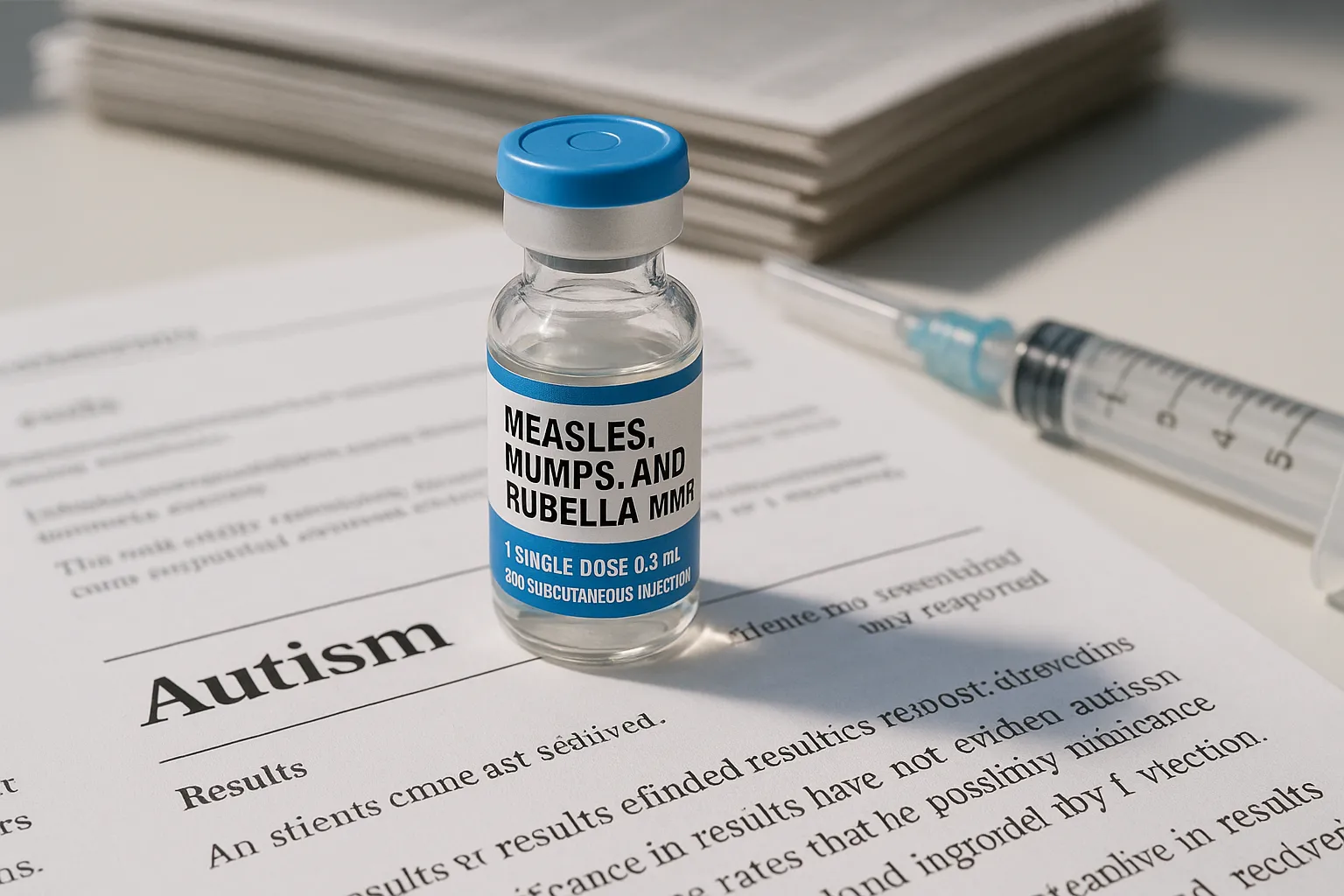
Research recently published indicates no correlation between receiving the measles, mumps, and rubella (MMR) vaccine before the age of two and the subsequent diagnosis of autism. This conclusion emerges from a comprehensive study encompassing over 2.5 million children in the United States, conducted by a team of medical researchers at the University of Washington.
The findings provide further reinforcement of the existing body of evidence that advocates for the safety of the MMR vaccination, aligning with the positions held by respected health organisations such as the World Health Organization (WHO). Earlier this year, the WHO reaffirmed that there is no substantiated evidence to suggest a causal relationship between vaccines and autism.
This research arrives during a challenging period for public health in the U.S., particularly in relation to childhood vaccinations, including the MMR vaccine. Federal statistics reveal a troubling decline in vaccination rates that began prior to the COVID-19 pandemic, coinciding with a significant rise in measles cases, which have reached levels not seen for 35 years.
Amidst alarming outbreaks across the country, public health messaging has often seemed inconsistent. Health Secretary Robert F. Kennedy Jr., who has previously endorsed unverified treatments for measles, urged people on a recent CNN broadcast to receive the MMR vaccine as protection against the virus. However, he simultaneously raised doubts regarding the extensive research affirming the safety of vaccines in the context of autism, expressing frustration during an interview with CNN’s Dana Bash when pressed about his viewpoints and interactions with former President Donald Trump.
“You are wrong when you say that this issue has been studied,” Kennedy asserted during the tense exchange.
Former President Trump has also expressed an interest in exploring potential links between autism and vaccines, despite the prevailing scientific consensus. At a press conference in September, Trump described the combined MMR vaccine as potentially “bad,” suggesting that it should be administered as separate shots. “We want no mercury in the vaccine. We want no aluminum in the vaccine. The MMR I think should be taken separately. This is based on what I feel,” Trump stated. He added, “It seems to be that when you mix them, there could be a problem. So, there’s no downside in taking them separately. In fact, they think it’s better. So let it be separate.”
While Kennedy has admitted that research supports the lack of a link between MMR vaccination and autism, the debate continues to draw attention, especially given the historical context. The MMR vaccine has been the subject of extensive studies globally, and it has often been linked to autism due to a now-discredited study conducted by Andrew Wakefield in 1998. This small-scale study posited a connection between vaccinations and the regression of brain development in children; however, it was later retracted citing significant methodological flaws and has been condemned by the medical community. The American Academy of Pediatrics highlights this incident as a cautionary tale about the spread of misinformation and the challenges associated with rectifying false claims.
The discourse surrounding the MMR vaccine and autism has gained additional scrutiny following updates from the Centers for Disease Control and Prevention (CDC). In a recent revision to its webpage dedicated to vaccines and autism, the CDC stated that while studies have not conclusively ruled out the potential impact of infant vaccines on autism, claims that highlight a connection have often been overlooked by health authorities. The CDC, which operates under Kennedy’s jurisdiction, announced an “inclusive assessment” of the causes of autism, examining possible biological mechanisms and links to vaccination.
Kennedy defended this updated stance by challenging the assertion that vaccines have undergone comprehensive testing to establish their safety concerning autism. “The whole thing about ‘vaccines have been tested and there’s been this determination made’ is just a lie,” he stated. “The phrase ‘Vaccines do not cause autism’ is not supported by science,” he claimed, prompting a backlash from the medical community.
In response to these developments, the American Academy of Pediatrics expressed concern over the CDC’s updated claims, branding the revisions a misallocation of public resources. Dr. Susan Kressly, president of the academy, issued a statement supporting the autism community’s call for urgent action to prevent the proliferation of misinformation.
While it is true that many vaccines have not been individually scrutinised regarding their potential to cause autism, it is crucial to clarify that rigorous testing procedures have been employed on vaccines as a whole. This nuanced discussion has gained traction in recent weeks, particularly from outlets such as the University of Pennsylvania’s Annenberg Public Policy Center’s FactCheck.org, which emphasised the extensive body of research already established to safeguard public health.
As the debate surrounding vaccinations intensifies in the United States, the importance of upholding scientifically backed information becomes increasingly critical. Public health officials and medical professionals continue to advocate for the safety and efficacy of vaccines, urging families to rely on credible resources when making health decisions for their children.
Our Thoughts
The article highlights the misinformation surrounding the MMR vaccine and autism, leading to decreased vaccination rates and increased health risks. Key lessons include the necessity for clear, consistent communication from public officials about vaccine safety to mitigate misinformation. The Health and Safety at Work Act 1974 emphasizes the duty of care owed by employers and public entities to provide accurate information that safeguards public health.
Public health messaging should adhere to established scientific consensus to prevent confusion and promote vaccination. The failure to challenge misinformation effectively may contribute to breaches of public health regulations under the Public Health Control of Disease Act 1984.
To prevent similar incidents, health authorities should employ stronger strategies for public engagement and education, utilizing credible sources to counteract false claims. It is essential for organizations to have protocols in place to monitor and respond to misinformation promptly, ensuring public safety is prioritized.