














Story Highlight
– UK aid spending on education and health to drop 72%.
– FCDO merges budgets into a single “Human Development” directorate.
– Significant cuts risk education access in poorest regions.
– South Sudan faces severe educational impacts from funding reductions.
– Experts warn cuts may lock generations out of education.
Full Story
Britain’s planned reduction in aid directed towards education and health in various countries is set to be significant, with projections indicating a potential fall of up to 72% by the year 2027. Recent reports from the Foreign, Commonwealth and Development Office (FCDO) indicate that funding streams which previously operated separately—focusing on education, health, gender equality, and development—have now been consolidated into a single “Human Development” directorate.
An analysis of the latest FCDO annual report reveals that the overall funding for these combined areas is projected to decrease dramatically from £1.54 billion during the 2024–25 period to approximately £433 million by 2026–27. A partial rebound is predicted by 2028–29, where spending is expected to reach £1.24 billion; however, this figure still falls short by about 20% when compared to the spending levels recorded in 2024–25, particularly when considering inflation adjustments.
This restructuring inherently complicates the tracking of financial reductions across specific programme areas due to the overarching thematic classification in the published accounts. Consequently, some funding may be sourced from other segments of the broader aid budget, obscuring the impact of the cuts to particular initiatives.
Bambos Charalambous, a Labour MP and chair of the All-Party Parliamentary Group on Global Education, voiced significant concerns regarding the implications of these cuts. He stated, “It appears that staggering cuts are being made to education projects in some of the poorest parts of the world – at huge cost to the UK’s reputation, as well as to the life chances of children often living in war zones. That’s a tragedy, but the least ministers can do is come clean about what is happening.”
In a written address to the parliament regarding these aid reductions, Foreign Secretary Yvette Cooper mentioned that the official development assistance (ODA) budget would decline from 0.5% to 0.3% of Gross National Income (GNI) by 2028 in order to increase defence spending. Within this context, she recognised Education Cannot Wait, a multilateral funding initiative, as a “protected commitment.” However, the statement did not elaborate on bilateral educational funding that directly supports the provision of teachers, classrooms, and educational resources in some of the world’s most impoverished nations.
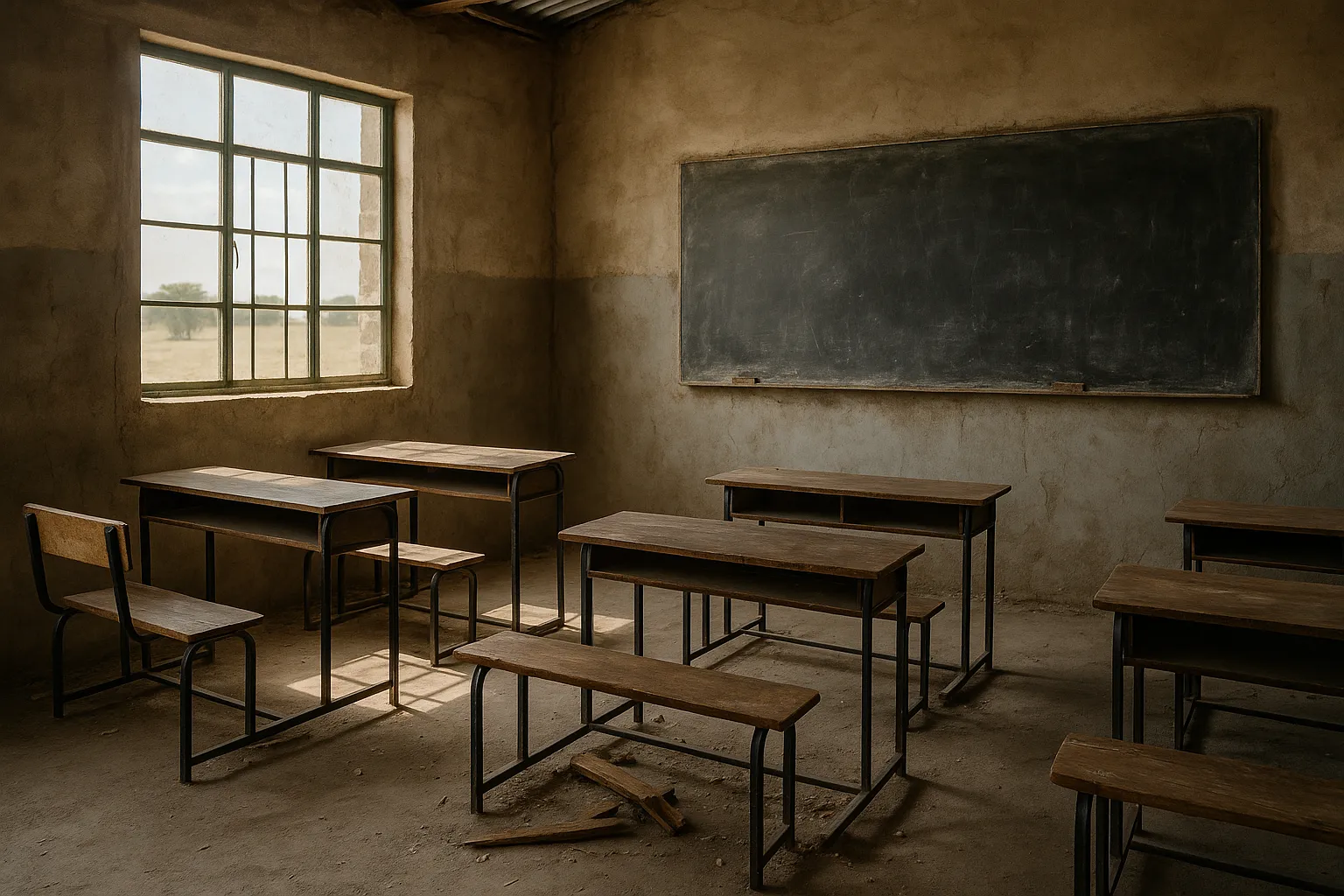
A notable case highlighting this situation is South Sudan, which experiences the highest out-of-school children ratio globally, with an estimated two-thirds of school-age children—approximately 2.8 million—outside the education system. This troubling trend has escalated since renewed conflict erupted in Sudan, causing an influx of over 1.6 million refugees into South Sudan.
The UK’s Girls’ Education South Sudan programme, which had allocated nearly £67 million and helped 1.5 million girls gain access to education since its inception in 2018, concluded in March this year. Its successor, titled Education for All South Sudan (EFASS), has subsequently faced complications, as the tender for the transition has been cancelled amidst a comprehensive review of the FCDO’s budget allocations.
Kuyok Abol Kuyok, South Sudan’s Minister of General Education, expressed concern regarding the project’s future. Last year, he disclosed that UK officials assured him the programme had not been entirely terminated, merely the tender process had been halted, maintaining that the UK remained “in the game.” However, he expressed disappointment, stating: “This is one of the best projects Great Britain is investing in South Sudan. I’m very concerned. Because, look, what is going to happen? Even [former Conservative PM] Boris Johnson ring-fenced this during those difficult days of austerity.”
The International Development Committee reached out to Jenny Chapman, the Minister of State for International Development and Africa, in February after hearing from Minister Kuyok about a proposed 90% reduction in the programme’s funding for the upcoming financial year. Sarah Champion, the committee chair and Labour MP, cautioned that such drastic cuts would “likely see significant regression” in educational advancements, labelling it a “shortsighted own-goal” that jeopardises collaboration with partners striving for long-term sustainability.
In her response, Baroness Chapman did not refute the 90% cut estimate but instead emphasised the transition to EFASS and promised that detailed country-specific allocations would be disclosed in the FCDO’s annual report later in the summer. She reassured that education, health, and humanitarian assistance would “remain priorities” in South Sudan, though the exact methods of achieving this remain vague.
Chanju Mwanza, a senior education advocacy adviser at Save the Children UK, spoke out against the disproportionate reduction in UK educational financing, noting that it essentially undermines the vital support for vulnerable children. “Children consistently tell us that education is their top priority—even amidst crisis—yet with more than 273 million already outside of school globally. Scaling back support now not only risks locking an entire generation out of learning but also diminishes their sense of safety, stability, and hope for the future,” she asserted.
The spokesperson for the FCDO emphasised the ongoing commitment to international development as a cornerstone of UK foreign policy. They articulated the belief that addressing global challenges—such as conflict and instability—while fostering growth and trade, serves both the UK’s interests and those of the nations receiving aid. Furthermore, they conveyed that efforts would be concentrated on ensuring that ODA is impactful, targeting the most marginalised communities, including girls and children affected by conflict, while bolstering educational frameworks within partner countries.
Our Thoughts
No relevant health and safety lessons or regulations can be identified from the article regarding UK health and safety legislation.