













Story Highlight
– London heatwave exceeds 35C, impacting many workers.
– Pub chef adapts menu to avoid using ovens.
– Workers demand maximum temperature regulations for safety.
– Paramedics struggle with excessive heat in uniforms.
– Bus drivers protest poor conditions and ineffective air conditioning.
Full Story
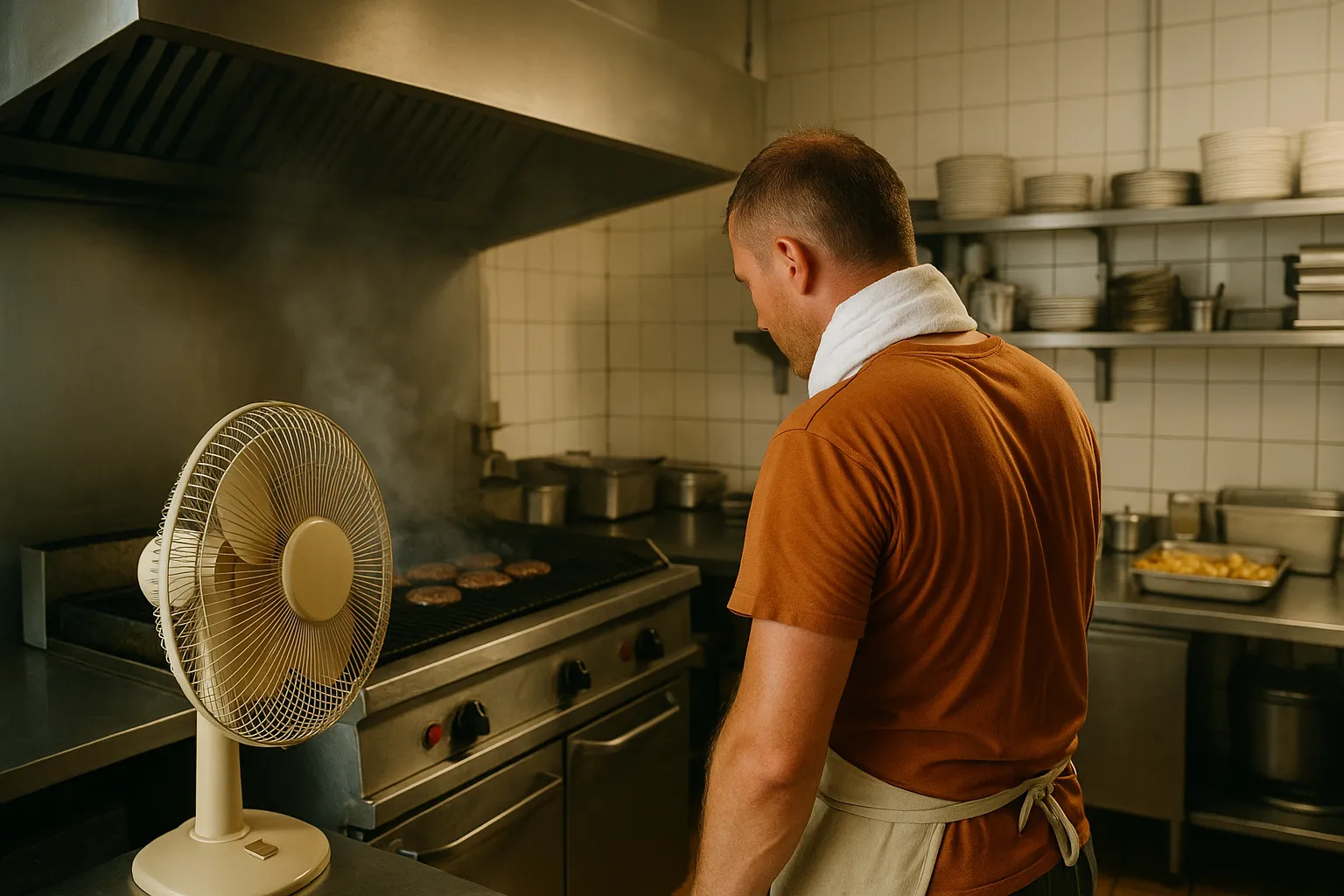
In the bustling heart of north London, the Plimsoll pub’s kitchen is feeling the brunt of the soaring summer heat, with temperatures hitting record highs across the city. Head chef Joshua Swinney, attempting to cope with the oppressive warmth, has resorted to using a frozen tea towel wrapped about his neck to stave off discomfort as he prepares meals.
As the mercury soared above 35C (95F), workers in various sectors without the benefit of air-conditioned environments found themselves struggling against the balmy conditions. In light of the heatwave, Swinney’s team has sought to adapt their menu by introducing cold dishes that do not necessitate hot cooking methods. However, this proves challenging for a venue renowned for its cheeseburger, which requires grilling, forcing chefs to manage the heat while upholding the pub’s culinary reputation.
“Suddenly you realise you have seven salads on and can’t get enough raw fish dishes in there,” Swinney remarked. He expressed that while fans might help, they merely circulate warm air in the kitchen, and due to safety regulations, these fans cannot be used when food is being prepared. He added some staff have resorted to unconventional methods to beat the heat, including an ice bath in a flexible container to cool off.
The situation is not unique to the Plimsoll pub; numerous workers across sectors such as baking, construction, healthcare, and education are reporting alarming conditions as heatwaves persist. A growing campaign is advocating for legal adjustments to enforce a maximum working temperature similar to those found in various European nations.
In Spain, for instance, the regulations stipulate that sedentary work should not occur above 27C, while light physical activity has a maximum of 25C. In Belgium, the thresholds are set at 29C for light physical work, diminishing as the intensity of the work increases, with very heavy physical labor limited to 18C.
Kenny Dinsdale, a construction worker, voiced concerns about the potential life-threatening implications of working under such extreme heat. He cautioned that workers must be vigilant, as failure to do so could lead to severe dehydration or even heatstroke, with the most concerning outcome being death itself. He highlighted that many workers in this industry are older, including himself, as he approaches 65. Dinsdale called for a revised approach to working hours in construction, suggesting a shift towards Mediterranean-style hours to avoid the harshest temperatures of the day.
The baking industry is not exempt from the heat crisis either. Sarah Woolley, chair of the Bakers, Food and Allied Workers’ Union, explained that hotter outdoor temperatures exacerbate the already stifling heat that bakers face in their workplaces filled with hot ovens. Woolley noted that her union has long advocated for legal limits on working temperatures and has observed varied responses from employers.
“Some companies have taken steps to mitigate the heat, such as relaxing uniform policies, ensuring access to cold beverages, and allowing for more frequent breaks, all while maintaining food safety standards,” she shared. In contrast, others, particularly those without union representation, continue to expect employees to perform at standard levels despite the sweltering conditions. Some employers have opted to supply isotonic drinks instead of just ice pops, and even adjusted operational practices by turning off unnecessary equipment that exacerbates the heat.
Essential workers, particularly paramedics, have been vocal about the overwhelming difficulties posed by intense heat during their shifts. One ambulance technician from Birmingham expressed frustration about the relentless heat: “Working in such conditions has been unbearable. It becomes excessively busy during heatwaves. Regardless of temperature, we are required to wear the same uniform, which can make the experience unbearable.”
Another paramedic echoed this sentiment, recalling an instance of carrying a patient down several flights of stairs, stating he had never experienced such intense perspiration in his career. He described the demands of working under these conditions as taxing both mentally and physically.
Sampson Low, head of policy at Unison, emphasised the need for workplace regulations that consider the impact of extreme temperatures on both service demand and employee health: “What’s needed are clear thresholds based on evidence, especially for sectors where work continuity is critical, even during heat waves.”
Bus drivers are similarly feeling the pressure; many are becoming frustrated with the oppressive environment in their cabs where air conditioning is often faulty or non-existent. Some have recently taken part in strikes to protest against unacceptable working conditions, highlighting the failure of management to adequately address the issue.
A bus driver from London shared, “The state of our buses has never been worse. The air conditioning barely functions, and the current heatwave just adds to our struggles. We feel undervalued and visible only as statistics to the bus companies,” expressing his exasperation with the situation. Another driver recounted their experience of working in a cab hotter than the outside air, stating, “Something urgently needs to change. My migraines worsen in the heat, making it unbearable.”
Huma Haq, health and safety lead at the Trades Union Congress, pointed to international examples of heat governance, implying that maximum workplace temperature regulations could benefit the UK’s workforce. She remarked, “The experiences of other countries indicate that establishing maximum limits can serve to protect employees. If these measures can be implemented in hotter climates like Spain, there is no reason we cannot adopt similar protections here.”
As the heat continues to rise, proposals for reforms are gaining momentum, with unions rallying to protect workers from extreme conditions. From bus drivers in London to staff at cultural institutions like the V&A Museum, a collective push for change is underway, advocating for cooler and safer work environments as temperatures soar.
Our Thoughts
The article highlights significant concerns regarding workplace safety during extreme heat conditions, particularly in sectors like hospitality, construction, and emergency services. Key safety lessons include the need for employers to implement adequate measures to protect workers from heat stress, in line with the Health and Safety at Work Act 1974 and the Management of Health and Safety at Work Regulations 1999, which emphasize risk assessment and management.
Relevant breaches may include failing to conduct risk assessments for extreme temperatures and not providing adequate cooling measures or hydration opportunities. Employers should consider introducing flexible working hours, as suggested by construction workers, and ensuring consistent air conditioning and proper ventilation in all work environments.
To prevent similar incidents, a maximum working temperature guideline like those in other European countries should be adopted. This could involve setting thresholds for when work should stop or be modified based on temperature levels. Additionally, employer training on heat-related illness and ensuring proper hydration and rest breaks are critical for maintaining health and safety in extreme conditions.