













Choose an AI chat
Worker dies in Cardiff after company fails to maintain industrial door
UK Health and Safety Latest

Worker dies in Cardiff after company fails to maintain industrial door

by Ellie Cartwright
June 19, 2026
0

A Cardiff-based printing company has been fined £400,000 following the death of maintenance worker Anthony Webb while repairing an industrial...

Read moreDetails
Thousands face potential spinal surgery due to implant recall

Thousands face potential spinal surgery due to implant recall

June 19, 2026
Amber alert issued as southern England braces for extreme heat

Amber alert issued as southern England braces for extreme heat

June 19, 2026
Temporary mobility issues may lead to Blue Badge eligibility in Scotland

Temporary mobility issues may lead to Blue Badge eligibility in Scotland

June 18, 2026
Patients face unprecedented NHS medicine shortages

Patients face unprecedented NHS medicine shortages

June 17, 2026

Archives

  • June 2026
  • May 2026
  • April 2026
  • March 2026
  • February 2026
  • January 2026
  • December 2025
  • November 2025
  • October 2025
  • September 2025
  • July 2025
  • August 2009

Categories

  • Health and Safety Help
  • News
  • Policies
  • UK Health and Safety Latest
  • About
  • Advertise
  • Policies
    • Privacy Policy
    • Editorial Policy
    • Corrections & Complaints policy
  • Useful Documents
    • Understanding RIDDOR
    • 10 Workplace Safety Failures
    • A Complete Guide to Reporting Safety Incidents in the UK
    • Fire Risk Assessment: Meeting the Regulatory Reform (Fire Safety) Order
    • COSHH Basics: A Practical Guide to Control of Substances Hazardous to Health
    • Working at Height in the UK: The Essentials (WAH Regulations 2005)
    • Asbestos in the Workplace: Control of Asbestos Regulations 2012 (CAR) Essentials
    • Managing Contractors Under CDM 2015: Roles, Duties & Controls
    • DSE & Ergonomics: Healthy Workstations for Office & Hybrid Teams
    • Lock out Tag out LOTO
    • Workplace Transport Safety: Forklifts, Pedestrians & Traffic Management
    • Noise & Vibration at Work: Practical Controls (2005 Regulations)
    • Confined Spaces in the UK: Safe Entry under the Confined Spaces Regulations 1997
  • Contact
  • Agent
Friday, June 19, 2026
16 °c
London
17 ° Sat
15 ° Sun
17 ° Mon
  • Login
UK Safety News
  • Home
  • News
    • All
    • UK Health and Safety Latest
    Worker dies in Cardiff after company fails to maintain industrial door

    Worker dies in Cardiff after company fails to maintain industrial door

    Thousands face potential spinal surgery due to implant recall

    Thousands face potential spinal surgery due to implant recall

    Amber alert issued as southern England braces for extreme heat

    Amber alert issued as southern England braces for extreme heat

    Temporary mobility issues may lead to Blue Badge eligibility in Scotland

    Temporary mobility issues may lead to Blue Badge eligibility in Scotland

    Patients face unprecedented NHS medicine shortages

    Patients face unprecedented NHS medicine shortages

    Patients face record NHS medicine shortages

    Patients face record NHS medicine shortages

    Medicine shortages pose life-threatening risks to patients in the UK

    Medicine shortages pose life-threatening risks to patients in the UK

    Residents oppose council’s warning against flag displays during World Cup

    Residents defend flag displays as council warns against public displays during World Cup

    Residents defend flag displays as council warns against public displays during World Cup

    UK issues amber heat health alerts as temperatures soar

    UK issues amber heat health alerts as temperatures soar

    Trending Tags

    • Donald Trump
    • Future of News
    • Climate Change
    • Market Stories
    • Election Results
    • Flat Earth
No Result
View All Result
UK Safety News
No Result
View All Result
Home News UK Health and Safety Latest

British Heart Foundation highlights prohibited items for charity donations

Ellie Cartwright by Ellie Cartwright
March 4, 2026
in UK Health and Safety Latest
Reading Time: 4 mins read
0
British Heart Foundation highlights prohibited items for charity donations

Story Highlight

– British Heart Foundation operates nearly 700 UK shops.
– Extensive list of banned donation items exists.
– Children’s clothing must meet strict safety regulations.
– Unsafe baby equipment like car seats not accepted.
– Personal appliances and weapons also prohibited donations.

Full Story

As the spring cleaning season approaches, many individuals are taking the opportunity to declutter their homes and make trips to local charity shops. The British Heart Foundation (BHF) is a prominent player in the charity retail sector in the UK, operating almost 700 shops across the country. These establishments provide an invaluable service, selling donated items to raise funds for heart health initiatives and other related causes.

While donations are a key aspect of charity operations, not every item is suitable for resale. The BHF has a comprehensive list of goods that they cannot accept due to health, safety, and legal concerns. Understanding what can and cannot be donated can save time and prevent misunderstanding during the donation process.

One of the primary categories of donated goods is clothing. While garments are among the most commonly donated items, the BHF has strict guidelines governing what they will accept. Fancy dress costumes are only allowed if they carry clear flammability labels, indicating that they are either ‘keep away from fire’ or ‘low flammability’ for adults. Children’s fancy dress items must similarly display CE/UKCA marks or other recognised safety certifications.

Nightwear also falls under these regulations; for both adults and children, nightdresses, pyjamas, and robes need to have appropriate flammability warnings. This concern extends to all sleepwear, ensuring that any items sold through their shops meet safety standards. Surprisingly, children’s clothes featuring drawstring hoods are entirely prohibited due to the safety risks they pose. Additionally, handmade knitted garments are not accepted by the BHF, highlighting the need for compliance with established safety protocols.

Furniture donations are another major category, particularly as the BHF runs dedicated furniture and homeware stores. These outlets cater specifically to larger items but come with their own set of restrictions. Donated furniture must be in good condition, and any items that have been treated with lead-based paint are outright rejected. This includes upholstered furniture that lacks the necessary fire safety labels, as such items pose potential regulatory compliance issues.

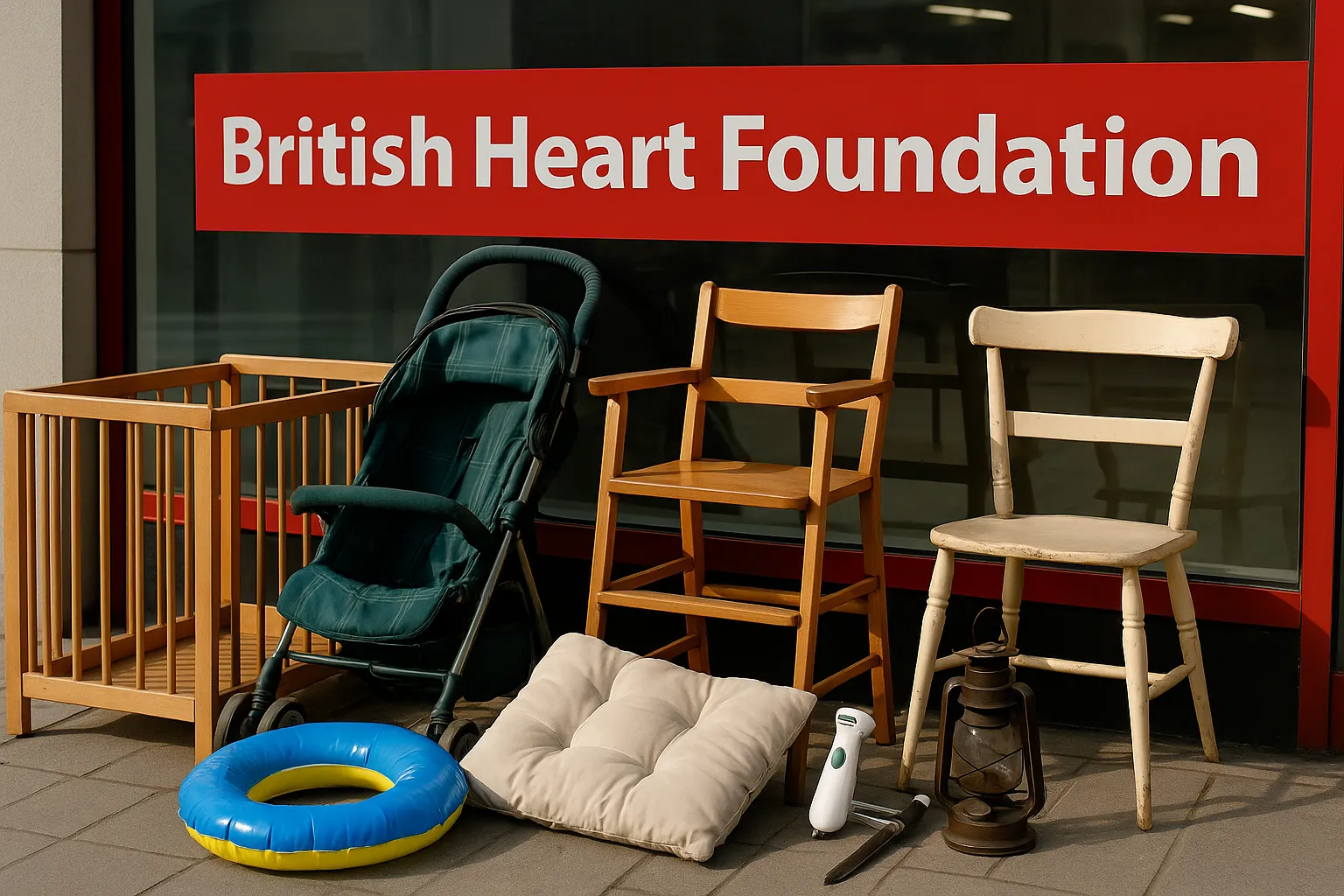
The BHF also prioritises the safety of children, leading to a more extensive list of banned items aimed at protecting young users. Essential safety equipment like car seats and booster seats, along with prams, pushchairs, and buggies, are not accepted for donation. Despite the demand for affordable pre-owned equipment among families, the risks associated with selling these items second-hand are too significant. Additionally, other child-related items such as cots, high chairs, safety gates, and playpens will not be accepted.

The BHF’s refusal to accept inflatable beds, dinghies, or water play equipment is consistent with their policies aimed at ensuring a safe inventory. Parents looking to donate previously owned baby products must remember that these strict guidelines are primarily focused on protecting children’s safety, reducing potential hazards associated with used items.

Beyond clothing and children’s goods, there is an array of personal items that the BHF refuses to take for hygiene reasons. Personal grooming appliances like electric shavers or foot spas are only suitable for donation if they are sealed and brand new. Prescription glasses cannot be accepted, reflecting a broader policy on hygiene and safety.

Moreover, the BHF will not accept weapons, nor any items that may present safety risks. This prohibition covers a wide range of products, including gas and oil-powered tools and appliances, which could be dangerous for both consumers and store staff. Among the specific items listed as unsuitable are electric blankets, electrical hoists, oil lamps, oil heaters, power tools, and washing machines.

As individuals prepare for their spring clean or continue their New Year decluttering efforts, it is crucial to be informed about the restrictions imposed by charity shops like the British Heart Foundation. By being aware of what can and cannot be donated, individuals can ensure that their contributions to charity are both valuable and compliant with safety regulations.

For potential donors, the best practice is to engage with local BHF staff when considering what items to bring in. Store employees can provide guidance on acceptable donations and help individuals avoid common pitfalls. Understanding these parameters not only facilitates a smoother donation process but also aligns with the BHF’s commitment to maintaining high standards of safety and quality in the items they sell.

As the charity retail sector continues to play a vital role in community support and fundraising, the importance of respecting these guidelines cannot be overstated. The BHF’s clear regulations serve an essential function in safeguarding both the public and the integrity of their fundraising efforts. Through informed donations, individuals can actively contribute to the noble cause of advancing heart health while ensuring the safety and wellbeing of their communities.

Our Thoughts

To avoid potential health and safety risks associated with donated items at charity shops, a more rigorous pre-donation inspection process could have been implemented. This would involve clearer communication to donors regarding acceptable items and mandatory labels indicating safety compliance, especially for children’s clothing and equipment, which must conform to UK safety standards such as the General Product Safety Regulations.

Key safety lessons involve prioritizing flammability warnings and ensuring that furnishings are free from hazardous materials like lead paint, in line with the Furniture and Furnishings (Fire) (Safety) Regulations. The refusal to accept certain children’s items reflects adherence to strict safety regulations to prevent dangerous situations.

Relevant regulations potentially breached include the Health and Safety at Work Act 1974, which mandates that employers must ensure the safety of any products offered to the public. To prevent similar incidents, charity shops should establish clear guidelines in partnership with safety authorities to educate both donors and staff, enhancing overall safety and compliance.


SummarizeShare35Share197SendSend
ADVERTISEMENT
Ellie Cartwright

Ellie Cartwright

Related Posts

New curriculum empowers students with medicine safety education

New curriculum empowers students with medicine safety education

by Jade Anderson
September 17, 2025
2

In a landmark move for public health, the Medicines and Healthcare products Regulatory Agency (MHRA) has integrated medicine safety education...

Former officer raises alarm over Ajax vehicle's impact on soldiers' health

Former officer raises alarm over Ajax vehicle’s impact on soldiers’ health

by Tara Rowden
December 11, 2025
0

Concerns over the Ajax armoured vehicle's safety have intensified following alarming revelations from former commander Rob Page, who attributed significant...

Useful Documents

  • Understanding RIDDOR
  • 10 Workplace Safety Failures
  • A Complete Guide to Reporting Safety Incidents in the UK
  • Understanding RIDDOR
  • Fire Risk Assessment: Meeting the Regulatory Reform (Fire Safety) Order
  • COSHH Basics: A Practical Guide to Control of Substances Hazardous to Health
  • Working at Height in the UK: The Essentials (WAH Regulations 2005)
  • Lock out Tag out LOTO

Recent Posts

  • Worker dies in Cardiff after company fails to maintain industrial door
  • Thousands face potential spinal surgery due to implant recall
  • Amber alert issued as southern England braces for extreme heat
  • Temporary mobility issues may lead to Blue Badge eligibility in Scotland
  • Patients face unprecedented NHS medicine shortages

Recent Comments

  1. Piper Douglas on Worker dies due to inadequate machinery safety measures
  2. Natalie Coleman on New housing laws aim to tackle damp and mould crisis in England
  3. Simon Barrett on Honeymoon ruined by illness as newlywed suffers severe infection in Cape Verde
  4. Nolan Barrett on Work-related ill health in Great Britain remains a concern after pandemic peak
  5. Dylan Reeves on Sickness rates among Scottish police officers soar to troubling levels
UK Safety News

Copyright © 2026
UK Safety News

Navigate Site

  • About
  • Advertise
  • Policies
  • Useful Documents
  • Contact
  • Agent

Follow Us

Welcome Back!

Login to your account below

Forgotten Password?

Retrieve your password

Please enter your username or email address to reset your password.

Log In
No Result
View All Result
  • Home
  • News

Copyright © 2026
UK Safety News

This website uses cookies. By continuing to use this website you are giving consent to cookies being used. Visit our Privacy and Cookie Policy.