
















Story Highlight
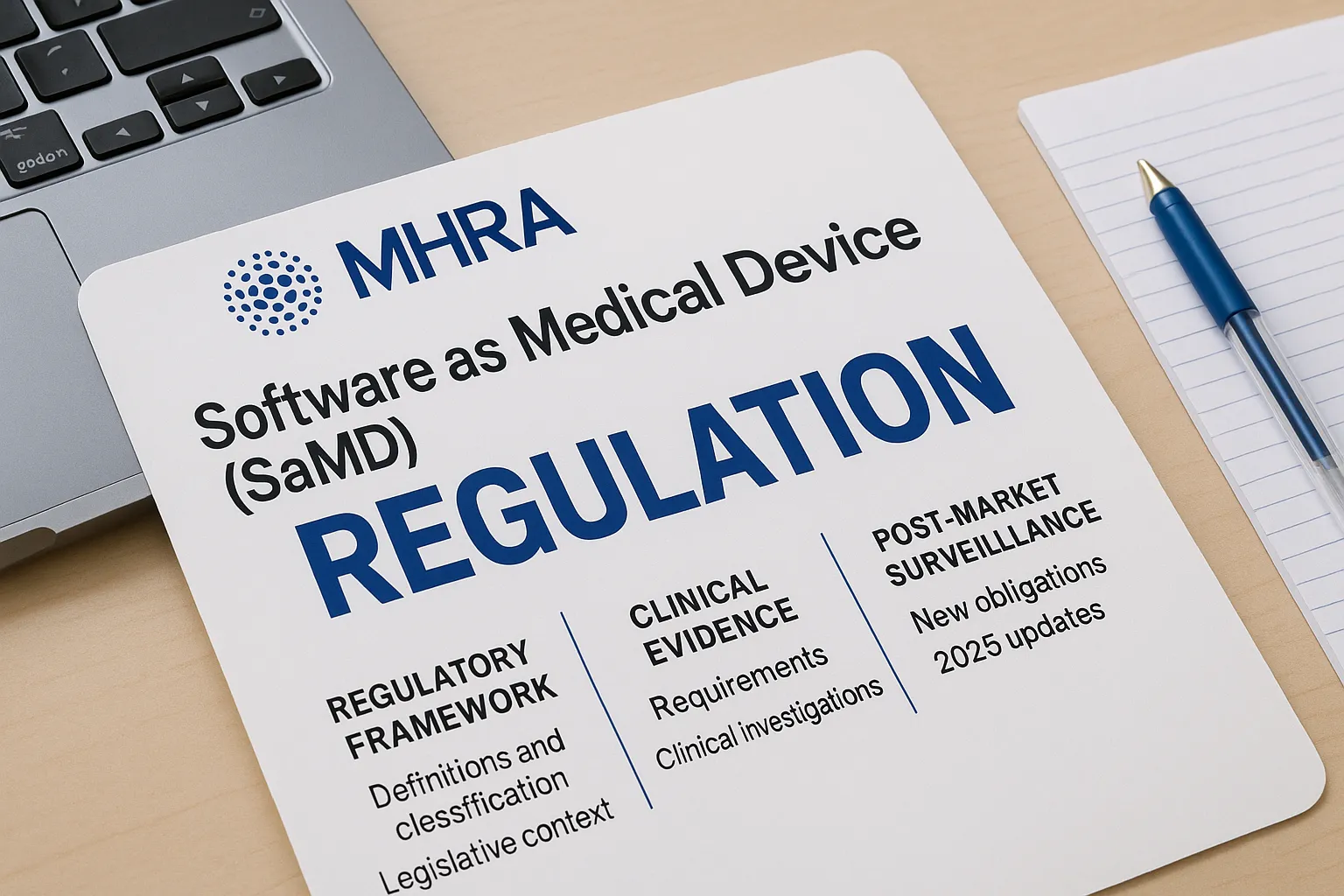
– MHRA introduced UK regulations for Software as Medical Device.
– Importance of precise intended purpose for classification emphasized.
– Clinical investigations required if clinical evidence is insufficient.
– New post-market surveillance rules effective from June 2025.
– Developers must ensure compliance and utilize MHRA guidance.
Full Story
In a recent online seminar organised by techUK, specialists from the Medicines and Healthcare products Regulatory Agency (MHRA) provided vital insights into the United Kingdom’s regulatory landscape for software designated as a medical device (SaMD). This webinar specifically aimed to clarify essential regulatory requirements for practitioners, manufacturers, and NHS stakeholders as the use of software and artificial intelligence (AI) in healthcare gains momentum, prompting numerous inquiries regarding compliance, clinical evidence, and ongoing monitoring expectations.
The MHRA representatives outlined the full spectrum of the regulatory process, highlighting everything from the initial evaluation of whether a software product qualifies as a medical device, through to clinical trials and enhanced requirements for post-market surveillance that will take effect in 2025. They reiterated their commitment to assisting innovators in successfully navigating these increasingly intricate and rapidly evolving regulations.
Establishing the Regulatory Framework: Definitions and Legislation
The session commenced with an overview of the legislative framework concerning medical devices in the UK. The MHRA clarified the differences between Great Britain and Northern Ireland, underscoring that the former accepts both UKCA and CE marking, while Northern Ireland adheres to EU Medical Device Regulations. Participants were urged to accurately identify the markets they aim to penetrate, especially given ongoing discussions about the recognition of CE standards in Great Britain.
A significant point raised was the relevance of the intended purpose of software, which serves as a fundamental criterion in determining whether it qualifies as a medical device. This aspect influences its classification, as well as the evidence necessary to prove its safety and effectiveness. The MHRA stressed that having unambiguous and clearly articulated intended use declarations is crucial as they inform all subsequent regulatory measures, including software design, risk management strategies, clinical evaluations, and post-market responsibilities.
To aid manufacturers in navigating these complexities, the MHRA has established comprehensive guidance materials, including a software flowchart designed to assist stakeholders in evaluating whether their products meet the criteria of a medical device. This guidance elaborates on diverse use cases, including tools for calculations, decision support, and AI-enhanced systems.
Generating Clinical Evidence: When is a Clinical Investigation Needed?
The MHRA’s clinical investigations team elaborated on the expectations for producing clinical evidence. All medical devices must prove both safety and performance, and when such evidence cannot be satisfactorily obtained through existing documentation or by comparison to similar devices, a formal clinical investigation is required.
Among the crucial points conveyed were:
– A clinical investigation requires approval from the MHRA within a 60-day period before commencement.
– Submissions must go through the IRAS system, accompanied by necessary documentation that aligns with ISO/IEC 62304, a standard for medical device software development.
– Research sites must secure a Letter of No Objection prior to initiating any study.
– Ethical approval from a Research Ethics Committee is also mandated.
Furthermore, the MHRA delineated between pre-market clinical investigations, which are subject to regulation, and post-market studies that, although needing ethical clearance, fall outside MHRA oversight. Participants expressed appreciation for the clarity provided regarding complex topics, such as digitised clinical calculators and evolving AI tools, particularly the role of equivalence in minimising undue burdens on manufacturers.
Enhanced Post-Market Surveillance: New Requirements from June 2025
The seminar also highlighted pivotal updates pertaining to market surveillance, which will be enforced starting June 2025, affecting both CE and UKCA-marked devices launched after this date. These reforms are intended to foster improved traceability, standardise reporting procedures, and expedite regulatory responses to emerging safety issues.
Key changes include:
– A requirement to report serious incidents within 15 working days, with even stricter timelines for fatalities and public health threats.
– An expansion of mandatory reporting to encompass a broader array of incidents, including specific adverse effects.
– Increased scrutiny of field safety corrective actions, which must be reported within three working days upon request.
– Mandatory pre-publication review of Field Safety Notices by the MHRA.
– The necessity for real-world data collection to aid continual monitoring, especially pertinent for software and AI solutions that may undergo modifications over time.
All incident reports are required to be submitted via the MORE online portal, which is designed to facilitate consistent monitoring and risk assessment.
Implications for Developers and NHS Adopters
For manufacturers, the insights shared during the session underscored several necessities:
– Clearly defining intended purpose from the outset, with guidance from the MHRA.
– A thorough understanding of when clinical investigations are needed and planning for evidence generation accordingly.
– Compliance with the new post-market surveillance regulations.
– Utilising the MHRA’s published resources, including flowcharts and guidance documents, to minimise confusion.
NHS organisations involved in the procurement or deployment of SaMD were reminded that having medical device status does not substitute for local clinical safety assessments, which must include frameworks such as DCB 0129/0160. While products on the MHRA register confirm regulatory adherence, local due diligence remains imperative to evaluate workflow integration, risk management, and compatibility.
The MHRA expressed its ongoing availability to clarify any uncertainties, although it cannot provide consultancy on specific implementation decisions.
Looking Ahead
The session reaffirmed the MHRA’s dedication to facilitating dialogue with innovators and the health and care sector. As software and AI-integrated tools become further integrated into clinical practices, the regulator is committed to enhancing its guidelines, improving transparency, and addressing new areas where the industry may require added support.
techUK has committed to collaborating with the MHRA to curate a practical resource pack that summarises critical guidance, addresses frequently asked questions, and includes exemplars derived from members’ experiences.
Our Thoughts
The article highlights the importance of adhering to the UK regulatory framework for software as a medical device (SaMD) to prevent potential safety issues. Key lessons include the necessity of clear intended use statements and compliance with the regulatory journey outlined by the Medicines and Healthcare products Regulatory Agency (MHRA). To avoid regulatory breaches, developers should ensure they categorize their software correctly as a medical device and generate sufficient clinical evidence, as mandated by the UK Medical Devices Regulations.
Strengthened post-market surveillance requirements, effective from June 2025, emphasize the need for timely incident reporting and comprehensive safety data collection. Non-compliance with these rules could lead to increased risks for patients.
Furthermore, local clinical safety assessments, such as DCB 0129/0160, must be conducted alongside regulatory compliance to ensure that SaMD integrates well within existing healthcare workflows. Ensuring thorough training for NHS adopters on these obligations and bolstering communication with MHRA could mitigate similar incidents in the future and enhance overall patient safety.