















Story Highlight
– Decathlon partners with Bike2Work for cycling access.
– Salary sacrifice offers savings up to 47% for employees.
– Partnership enhances employee benefit schemes and commuting solutions.
– Commitment to healthier lifestyles and reducing carbon footprint.
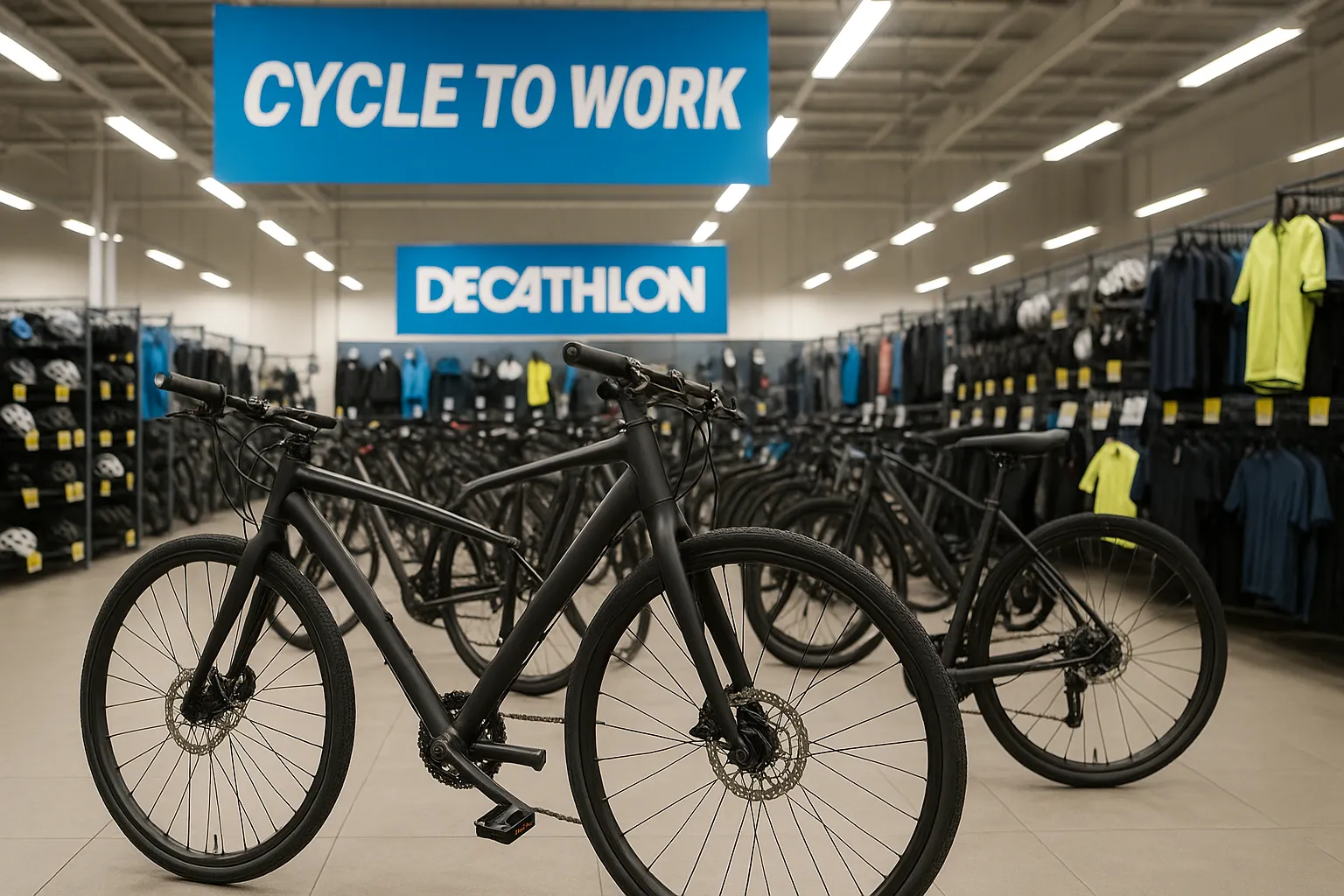
– Decathlon provides high-quality bikes and safety accessories.
Full Story
Decathlon, the world’s largest sports goods retailer, has entered into a significant strategic collaboration with Bike2Work, a prominent facilitator of the UK’s Cycle to Work initiative. This partnership is geared towards making cycling more accessible and financially viable for employees throughout the United Kingdom.
With this collaboration, Decathlon and Bike2Work aim to simplify the process by which employees can obtain high-quality cycling gear through salary sacrifice arrangements, potentially yielding savings of up to 47%. By fusing Decathlon’s extensive inventory of cycling equipment with Bike2Work’s proficiency in managing employee benefit schemes, the two entities are poised to enhance the cycling experience for countless individuals.
The announcement of this partnership highlights Decathlon’s ongoing commitment to providing a comprehensive range of commuting solutions. This is achieved through the retailer’s established collaborations with Cyclescheme and the Green Commute Initiative (GCI), reinforcing Decathlon’s position as a go-to destination for cyclists, irrespective of their employers’ specific schemes.
Chrysanthe Rukebesha, who leads the B2B division at Decathlon UK, expressed enthusiasm about the new partnership, stating, “We are delighted to welcome Bike2Work to our eligible Cycle to Work schemes. By expanding our network of partners, we aim to offer an unparalleled choice for UK commuters, making cycling more accessible.” This reflects Decathlon’s aim to enhance options for commuters, catering to a growing demand for cycling as a preferred mode of transport.
Aimee Radcliffe, director at Bike2Work, also commented on the collaboration, calling it a significant advancement for the organization. “This partnership marks an exciting step forward for Bike2Work. By combining Decathlon’s outstanding product range with our experience delivering Cycle to Work schemes nationwide, we’re creating a smoother and more accessible journey for employees looking to cycle to work,” she said. Radcliffe further noted the shared commitment of both companies to promote healthier lifestyles and greener forms of commuting across the UK.
As part of this initiative, Decathlon provides access to high-performance bicycles at competitive prices, making professional-grade cycling equipment available to a broader audience. The product lineup also includes a variety of cycling apparel and safety gear, catering to all segments of the cycling community.
Both parties are dedicated to addressing environmental concerns by encouraging more individuals to transition from car travel to cycling. This effort aligns with broader public health objectives aimed at reducing the UK’s carbon footprint while simultaneously promoting active commuting.
The partnership is timely, coinciding with an increasing public recognition of the benefits of cycling, not only for personal health but also for environmental sustainability. In light of rising fuel costs and the growing emphasis on health and well-being, many workers are seeking alternatives to traditional commuting options. This collaboration aims to meet that demand by providing practical solutions that promote a more sustainable lifestyle.
For those interested in taking advantage of this new partnership, Decathlon’s offerings can be accessed through its various Cycle to Work partners. To start their cycling journey, potential customers are encouraged to visit the official Decathlon website for detailed information.
As cycling continues to gain popularity as a viable commuting method, partnerships like that of Decathlon and Bike2Work are increasingly relevant. They not only simplify the process of acquiring cycling equipment but also foster a culture of health-conscious commuting among UK employees.
With the looming climate crisis, initiatives that promote cycling as a sustainable transport option are crucial. By removing financial barriers to high-quality cycling equipment, Decathlon and Bike2Work are paving the way for a healthier and greener future. The long-term benefits of such partnerships extend beyond mere convenience; they position cycling as a key player in the shift towards more sustainable urban mobility solutions.
As more companies embrace the concept of cycle-to-work schemes, Decathlon’s role as a leading supplier will likely expand, positioning the brand at the forefront of the cycling revolution taking place across the nation. The company’s collaborative approach serves as an encouraging model for businesses looking to contribute positively to public health and environmental efforts.
In conclusion, the partnership between Decathlon and Bike2Work not only stands to benefit individual employees but also aims to contribute significantly to wider societal goals surrounding health and environmental sustainability. As the cycling landscape evolves, this collaboration is expected to play a pivotal role in encouraging a shift towards a more active and eco-friendly commuting culture in the UK.
Our Thoughts
The article highlights a partnership between Decathlon and Bike2Work aimed at increasing cycling accessibility for employees in the UK. While the initiative supports healthier lifestyles and greener commuting, it raises potential safety concerns regarding the provision of high-quality cycling equipment.
To avoid safety issues, the companies should ensure that all equipment provided through the Cycle to Work scheme meets the relevant safety standards as outlined in the Health and Safety at Work Act 1974. Additionally, risk assessments should be conducted to ensure that employees receive appropriate training on cycling safety and maintenance. Providing safety accessories, such as helmets and lights, should be mandatory to mitigate risks associated with cycling.
Key lessons include the importance of comprehensive safety training and awareness programs for cyclists. Companies must also be aware of Regulation 6 of the Provision and Use of Work Equipment Regulations 1998, which mandates that equipment used at work must be suitable for the intended purpose and adequately maintained.
Preventive measures against similar incidents could include regular audits of the safety compliance of the offered equipment and ongoing monitoring of employee feedback regarding cycling experiences.