
















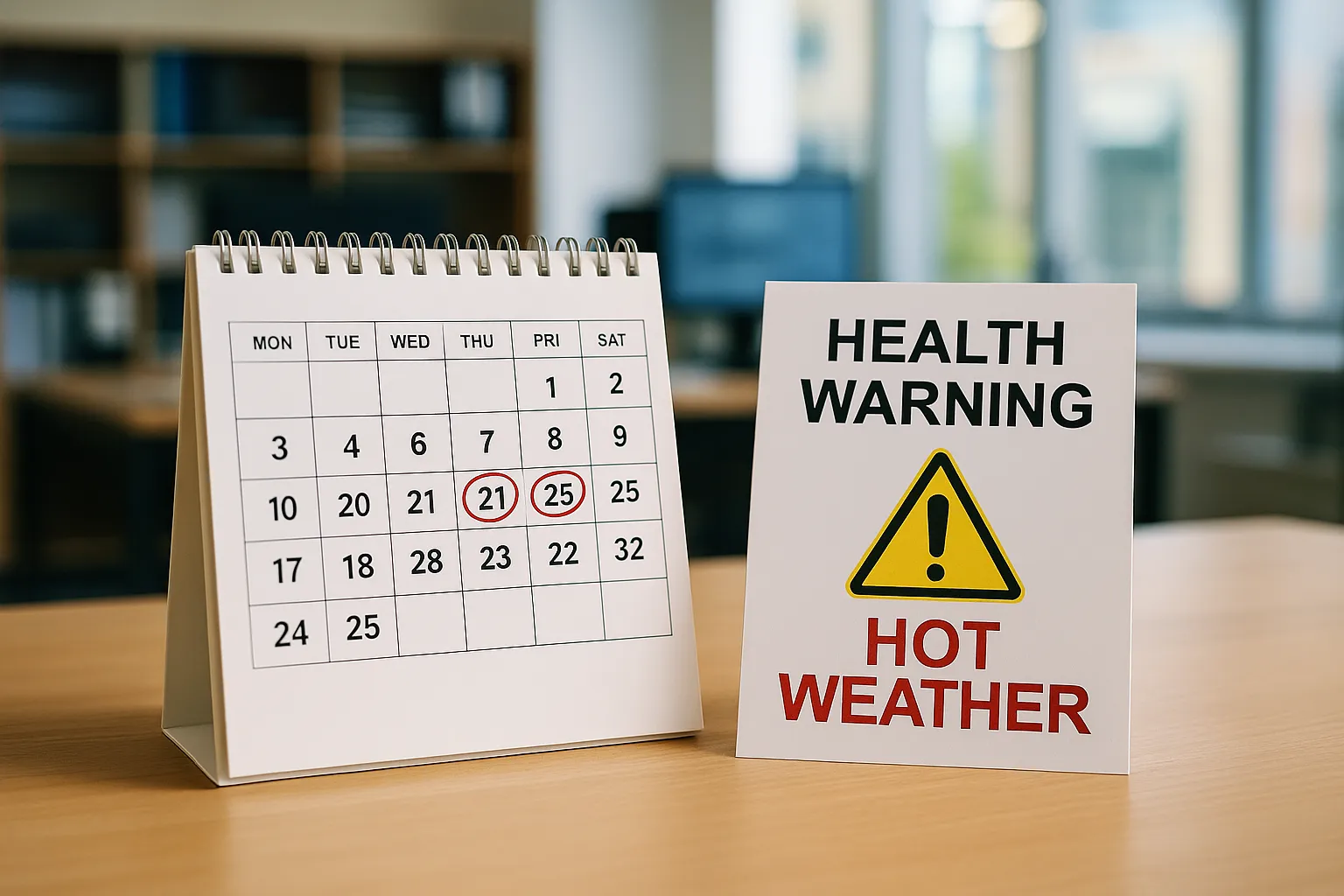
Story Highlight
– UK outdoor workers warned about rising heat risks.
– Met Office predicts increased summer heatwaves this year.
– June identified as the most hazardous month.
– No legal maximum temperature for outdoor work in UK.
– Safety guidelines suggested for workers in extreme heat.
Full Story
Outdoor workers and tradespeople throughout the United Kingdom have been issued important health warnings concerning the dangers posed by extreme heat during the summer months. As predictions from the Met Office indicate an increased likelihood of heatwaves, workers are being urged to take precautions against heat-related health issues.
According to the Met Office’s seasonal forecast for June through August, there is a significantly higher probability of experiencing elevated temperatures in comparison to historical averages. Alex Burkill, a meteorologist at the Met Office, stated, “There are signs that we could see another heatwave by the end of the week and into the weekend. We could get temperatures, particularly across central-eastern parts, of 27°C or 28°C, so we could be looking at getting to heatwave threshold. Thursday is likely to be the first hot day before temperatures rise through the weekend.” He further explained that the prevailing weather patterns are expected to usher in warmer air as high pressure establishes itself across the region. However, Burkill added a note of caution regarding the potential variability of temperatures compared to earlier heatwaves experienced in May.
One critical issue facing outdoor workers is the absence of a legal maximum temperature for work in the UK. Neither tradespeople nor outdoor workers have an enforceable right to cease working in conditions of extreme heat. A recent study by tradesman insurance provider Protectivity highlights the increased risks that tradespeople face when temperatures climb. The research identifies June as the month with the highest risk due to potential heat stress.
Protectivity’s analysis examined weather data from various UK cities and pinpointed the locations and specific dates when outdoor workers might encounter dangerous working conditions. The study revealed that outdoor work could be jeopardised by heat extremes, with over 100 million working hours estimated to be lost annually due to heat stress within the UK labour force. Unlike many other European countries that enforce strict temperature thresholds for outdoor work, UK regulations only mandate employers to maintain a “reasonable” temperature – a term that lacks a clear definition and an enforceable limit.
To ascertain which cities are most affected by high temperatures, Protectivity reviewed historical weather data, focusing on days when temperatures soared to 27°C or higher for at least two hours during working hours (6 am to 6 pm). This information, paired with calendar dates, reveals which summer days are statistically the most hazardous for outdoor workers, using the 27°C threshold recommended by the Trade Union Congress (TUC) for halting strenuous outdoor activities.
Among the findings, St Albans, located in Hertfordshire, emerged as the city with the highest number of sweltering days, recording an average of 47 days per year when temperatures climbed above this threshold. Urban locales tend to experience heightened risks due to the urban heat island effect, where built environments contribute to elevated temperatures. Following St Albans, the City of London reported 45 days with high temperatures, while both Oxford and Cambridge recorded 37 days of extreme heat.
Interestingly, the research indicated that June is often hotter than July and August, which are traditionally seen as peak summer months. The data highlights key dates when outdoor workers are particularly vulnerable. For instance, August 12 stands out as the single hottest working day over the past three years, averaging 61 days of temperatures exceeding 27°C. This is followed closely by critical June dates, including June 20, which sees an average of 43 days reaching potentially dangerous levels.
Chris Trotman, the Underwriting Manager at Protectivity, commented on the implications of the research, noting, “What makes this research particularly striking is that the risk isn’t concentrated in one place or one month and it’s actually spread across cities many wouldn’t necessarily flag as heat hotspots, and it also starts earlier in the summer than most people would assume.” He observed that while June tends to be a time of peak activity for many construction sites, there are often no specific heat management protocols in place, which poses additional risks, especially to self-employed tradespeople—the largest group of self-employed individuals in the UK.
Considering the health hazards associated with working outdoors in elevated temperatures, James Crame, a Health and Safety Advisor at Start Safety, offered essential tips for tradespeople to combat the risks of heat-related illnesses:
1. **Conduct a Site Heat Risk Assessment:** It is vital to assess which roles and tasks are most susceptible to heat exposure, ensuring that these assessments are continuously updated.
2. **Implement Acclimatisation Schedules:** New or returning workers should undergo a structured acclimatisation period, gradually increasing their exposure to heat and workload to minimise the risk of heat-related health issues.
3. **Reschedule Strenuous Tasks:** Whenever possible, adjust the timing of physically demanding work to avoid peak heat hours, ideally scheduling these tasks for early mornings or late afternoons.
4. **Establish a Hydration and Rest Routine:** A systematic schedule for breaks should be enforced, encouraging workers to hydrate frequently and stress relief through adequate rest in shaded areas.
5. **Review Personal Protective Equipment (PPE):** Summer may necessitate the selection of lighter and more breathable PPE alternatives that do not compromise safety standards.
As the summer progresses and temperatures rise, outdoor workers must remain vigilant about their health. By prioritising safety and adapting practices to accommodate the risks of heat exposure, tradespeople can mitigate the dangers associated with working in extreme heat while safeguarding their well-being.
Our Thoughts
The article highlights significant risks faced by outdoor workers during increased summer temperatures, emphasizing a lack of stringent regulations concerning maximum working temperatures in the UK. Key lessons include the necessity for robust heat risk assessments, which should establish clear guidelines for working conditions during high temperatures, addressing factors such as exposure duration and personal protective equipment (PPE) suitability.
Employers should implement job-specific acclimatization schedules, adjusting workers’ exposure to heat gradually and rescheduling strenuous tasks to cooler parts of the day, which aligns with the Health and Safety at Work Act 1974 that mandates ensuring the health and safety of employees.
The absence of enforceable maximum working temperature laws, contrasting with regulations in other European countries, represents a breach of workers’ rights to safe working conditions. To prevent similar incidents, the UK should consider introducing defined temperature thresholds and legal requirements for protective measures.
Establishing comprehensive heat management protocols, including scheduled rest periods and hydration strategies as outlined in the guidance, would further mitigate risks associated with heat-related illnesses among outdoor workers, ensuring compliance with the Management of Health and Safety at Work Regulations 1999.