











Story Highlight
– Hornsea 3 to power 3.3 million UK homes.
– £8.5bn investment creates thousands of skilled jobs.
– Project faces challenges with next-gen turbine installation.
– Focus on safety, mental health, and well-being emphasized.
– Ørsted strengthens East Anglia’s offshore wind supply chain.
Full Story
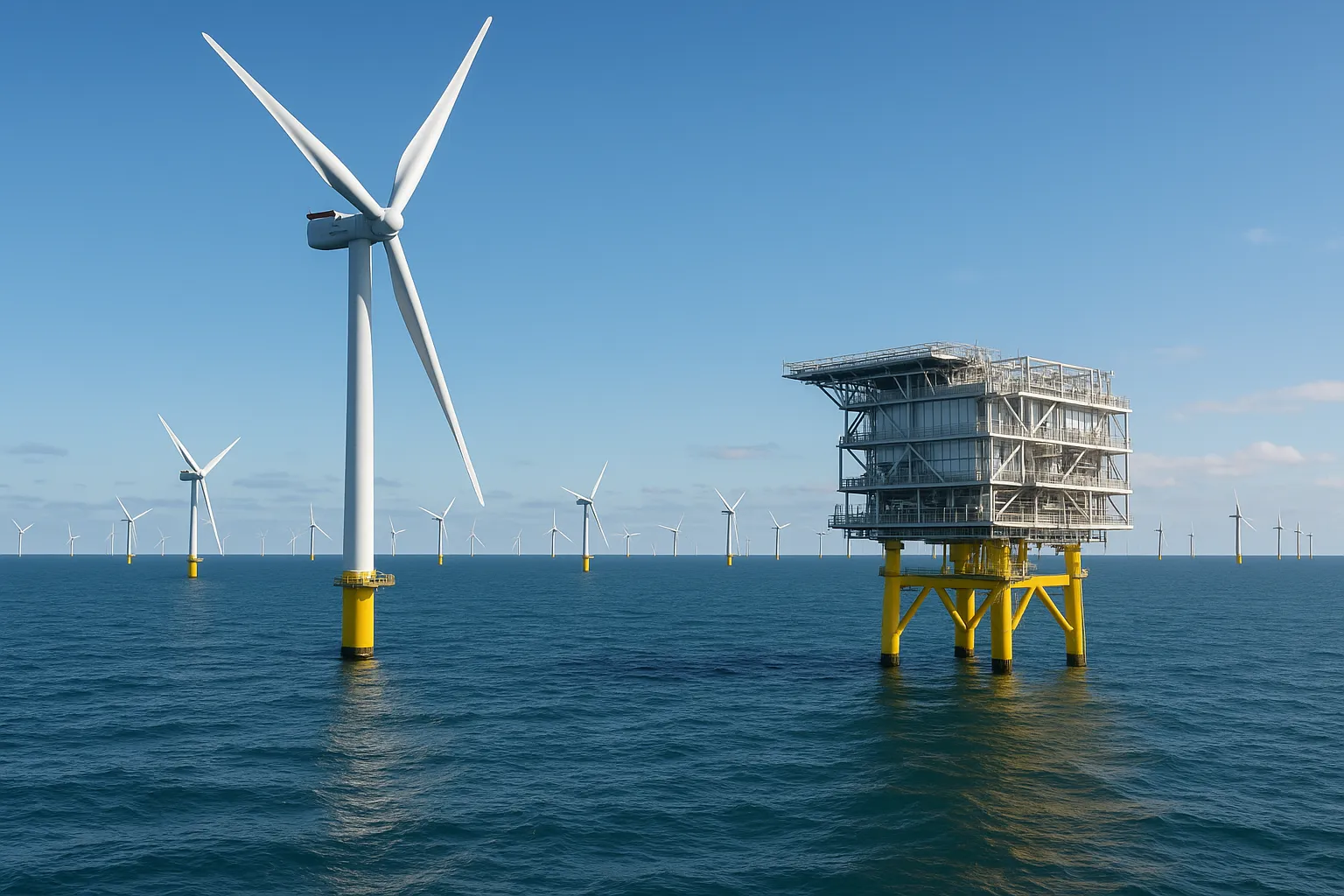
Situated approximately 120 kilometres off the Norfolk coast, Hornsea 3 is set to become a significant contributor to the UK’s renewable energy landscape. With a projected capacity of 2.9 GW, the wind farm will generate enough electricity to supply over 3.3 million homes across the nation.
Managed by Luke Bridgman, the project’s director, Hornsea 3 has involved a vast network of workers spanning not only the UK but also reaching as far as Asia. Bridgman emphasises a strong commitment to safety, prioritising the wellbeing of all team members amidst the complex challenge of constructing next-generation wind turbines. He aims to inject up to £8.5 billion into the economy through investments in the supply chain and the creation of numerous skilled jobs.
“Being responsible for the health and safety of every individual involved in Hornsea 3 is a significant burden and is what occupies my thoughts the most,” Bridgman remarked. “The intricacies of this work rely heavily on the ability of a multitude of people to make sound decisions in intense situations. The prospect of serious injury, or worse, occurring on my watch is a source of great concern for me.”
To mitigate risks, extensive efforts are made to focus on mental health and overall wellbeing, ensuring that every conceivable measure is taken to guarantee that team members return home safely each night.
“With Hornsea 3 being such a vast endeavour, I am constantly aware of its importance to Ørsted as we strive to reclaim our position as the top global leader in offshore wind energy. Keeping our timeline intact, adhering to budget constraints, and delivering an asset of the highest quality to our operational partners is absolutely crucial,” Bridgman stated.
He pointed out that fostering clarity in roles, responsibilities, and expectations is vital to the project’s success. Regular coordination with key suppliers plays an integral part in progressing the project. Bridgman believes that cultivating resilient relationships is more critical than contractual obligations, highlighting that openness regarding risks and advancements enables all parties to move in sync.
Innovation and advanced technology are pivotal in ensuring that large-scale projects such as Hornsea 3 remain feasible. “Our journey began with pioneering ornithological measures, particularly through the development of artificial nesting structures for kittiwakes. It feels like a lifetime ago, but without those initiatives, we would not be in a position to build anything now,” he explained.
Bridgman noted that technological advancements have progressed rapidly, playing a crucial role in the feasibility of Hornsea 3. He added that the energy cost dynamics and technological innovations have significantly evolved over recent years, making the project achievable.
The heart of the project’s transmission network comprises high-voltage direct current (HVDC) converters, described by Bridgman as some of the most impressive technological components in existence today. “Standing in the valve hall and witnessing the scale of the valve systems, I am constantly amazed at the technology driving these control systems,” he expressed.
The sheer size of an offshore wind farm can be difficult to comprehend—Bridgman emphasised that without firsthand experience of substantial components like 2,000-tonne foundations, 15 MW nacelles, and 115-metre blades, one cannot truly grasp the scale involved.
Day-to-day responsibilities for Bridgman are anything but monotonous. “Every day is unique, and that’s what I appreciate about my role. It’s rare that a typical day occurs, as unexpected challenges consistently emerge,” he explained. He spends a considerable amount of time travelling extensively, building connections between his team, supply chain partners, and various stakeholders, including regulatory bodies. “My focus lies in understanding and addressing our key risks, decision-making points, and identifying how to facilitate progress for our team.”
Raised in Australia, Bridgman attained his degree in electrical engineering from RMIT University in Melbourne before accumulating extensive experience in the energy sector. His career progressed from working as a senior offshore project engineer at Senvion UK to joining Ørsted in 2014. He also holds an MSc in project management from Robert Gordon University, having previously performed as the deputy director for engineering procurement and construction on Hornsea 2. He brings a wealth of expertise in safely delivering wind farm projects.
Bridgman finds personal joy in his role and is dedicated to the project’s successful completion, which he views as a defining aspect of his career. “There are constant milestones to celebrate and small victories that add variety to the process. Ultimately, being able to reflect on our achievements once the project concludes provides immense satisfaction and drives me to return daily until we’ve reached the end.”
With a family of two young children, Bridgman maintains a healthy work-life balance. He enjoys cycling to work from his home in Hackney and incorporates running into his routine, ensuring he has his running shoes with him while travelling.
Reflecting on his journey, he said, “I never envisaged being involved in something of this magnitude when I first began my career. I feel truly privileged to be where I am now, having evolved into a role that revolves more around people and decision-making than I initially anticipated.”
He advocates for young individuals aspiring to pursue careers in offshore wind to embrace opportunities rather than play it safe. “Be curious, keep learning, and seize as many chances as possible. Cultivate both technical skills and interpersonal abilities, exploring various roles, projects, and locations,” he advised.
The role of Ørsted in enhancing the East Anglian supply chain is underscored in the UK Supply Chain Map 2026, highlighting 35 regional companies contributing to its efforts. This map signifies the emergence of East Anglia as a hub for offshore wind specialisations, ranging from consultancy to construction and environmental assessments.
Ordtek, based in Norwich and part of Venterra Group, exemplifies this growth. Established in 2012 with a modest team, the company has expanded its pool of expertise, especially in mitigating risks associated with unexploded military weapons during offshore construction.
Keith Higgins, a consultant at Ordtek, commented, “Our partnership with Ørsted has evolved as the offshore wind sector has developed, leading to more formalised and standardised operational procedures.” Companies such as Northern Offshore Services and Red7 Marine, both integral to Hornsea 3, alongside NIRAS Group, have also showcased East Anglia’s contributions to this renewable energy sector.
The transition towards sustainable energy, as demonstrated by projects like Hornsea 3 and the concerted efforts within the East Anglian supply chain, reflects a commitment to minimising environmental impact while fostering economic growth and innovation.
Our Thoughts
The article presents challenges faced by the Hornsea 3 offshore wind project, emphasizing the importance of safety management. To prevent potential incidents, several measures could be enhanced, such as stringent risk assessments and robust safety protocols to manage the complexities of large-scale projects. The managing director’s focus on clear roles and responsibilities is a step in the right direction, but regular safety audits and enhanced training for all personnel can further mitigate risks.
Key safety lessons include the necessity of fostering an ingrained safety culture, where mental health and wellbeing are prioritized alongside conventional safety measures. This aligns with the Health and Safety at Work Act 1974, which imposes a general duty on employers to ensure the health, safety, and welfare of their employees.
Should workplace incidents occur, they could lead to breaches of the Management of Health and Safety at Work Regulations 1999, particularly if adequate risk control measures are not in place. Similar incidents can be avoided by implementing comprehensive safety management systems and consistent communication regarding safety practices throughout the supply chain, ensuring that all stakeholders are aligned on health and safety expectations.