
Story Highlight
– Colin Thwaites, 61, died at Lochaline mine accident.
– Fan blades lacked sufficient guarding, causing fatal injuries.
– HSE found serious failings in fan safety modifications.
– No risk assessments or maintenance records were provided.
– Lochaline Quartz Sand fined £150,000 for safety breaches.
Full Story
Colin Thwaites, a dedicated electrician with a lifelong commitment to the mining industry, tragically lost his life on October 21, 2024, while working at Lochaline Quartz Sand Limited, Europe’s sole underground quartz sand mine located in the Scottish Highlands.
The incident occurred on the Morvern Peninsula, where Mr. Thwaites was summoned to the site to assist in restoring power following significant disruptions caused by Storm Ashleigh. The 61-year-old veteran, who held the distinction of being the mine’s only qualified electrician, was engaged in a task alongside an apprentice that involved disconnecting a communications cable near a BORA fan. He was subsequently discovered trapped in the machinery, having suffered life-threatening injuries.
An investigation launched by the Health and Safety Executive (HSE), specifically its Mines and Quarries Unit, sought to uncover the circumstances surrounding Mr. Thwaites’ death and the operational safety measures in place. Inspectors attended the site the following day and uncovered multiple alarming deficiencies associated with the design and maintenance of the fan involved in the incident.
The fan, which had originally been part of an integrated assembly with another similar unit, had been split into two separate entities in June 2020. HSE investigators identified critical oversights related to this modification, noting a lack of risk assessments, commissioning documents, and records of management discussions regarding the fan’s separation. Consequently, the design change failed to adequately address the hazards that arose.
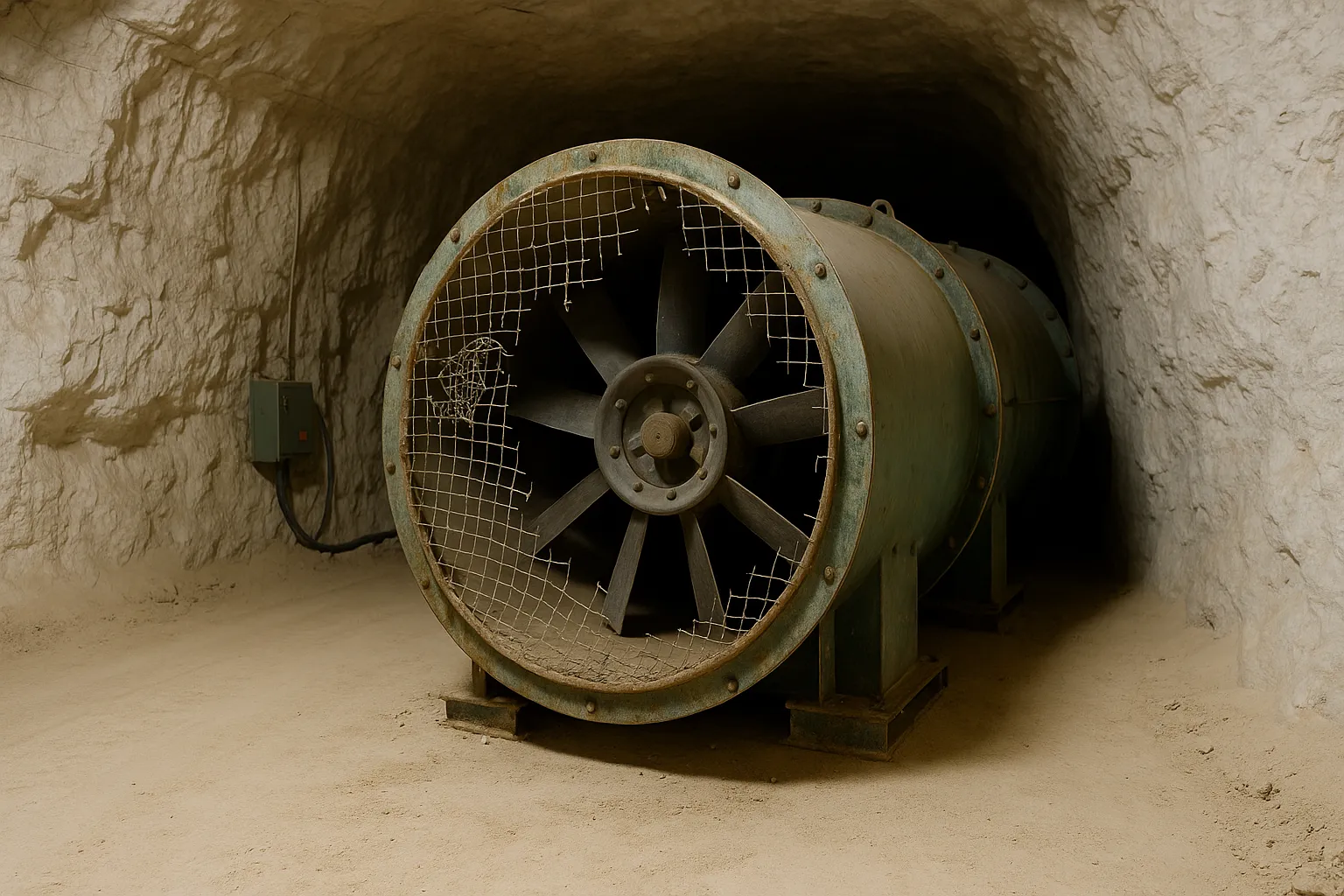
Most concerning was the proximity of the fan’s rotating components to its intake guard. The blades of the operating fan were found to be only 43 millimetres away from the leading edge of the duct, a measurement well below the necessary safeguarding standard of at least 200 millimetres. This is an imperative safety measure that could have been satisfied through appropriate protective designs, such as a nose cone or cage-type guard.
To mitigate risks, makeshift guards were created on-site using metal square lattice mesh. However, the design was deemed fundamentally flawed by HSE inspectors, who found that the metal bracing was installed externally rather than internally, undermining the structural integrity of the guards. Furthermore, the exhaust end of the fan was completely unprotected.
An examination of the fan the day after the incident revealed that the intake guard was in a severely compromised state. Portions of the mesh were missing, particularly around the fan’s impeller hub. Inspectors discovered corroded fragments of wire and mesh, indicating that these components had been in a state of disrepair long before the tragedy occurred. Some pieces had even been ejected from the fan during the incident itself. Had the guard been appropriately designed and maintained, it is likely that Mr. Thwaites’ death could have been avoided.
The deficiencies did not end with the fan’s condition; crucially, both fans had not been included in the mine’s Mechanical Asset Register, and there was a complete absence of inspection checklists or maintenance documents pertaining to their status. Although electrical inspections had been logged, the inadequate condition of the intake guard did not feature in these assessments.
In the wake of these findings, HSE took immediate enforcement action against Lochaline Quartz Sand Limited, compelling the company to engage with a specialist mining consultancy to rectify the identified issues and achieve compliance with safety standards. The company, based at the European Technical Centre in Hall Lane, Lathom, Lancashire, ultimately pleaded guilty to violations under Section 2(1) and Section 33(1)(a) of the Health and Safety at Work etc. Act 1974. In light of these failures, the company was fined £150,000 and ordered to pay a further Victim Surcharge of £11,250 during proceedings at Inverness Sheriff Court on June 16, 2026.
Kevin Wilson, Chief Inspector of Mines and Quarries at HSE, expressed the tragic nature of the situation, stating, “This was a tragic and entirely preventable death. Colin Thwaites was a highly experienced mining professional with decades of service. He should have gone home to his family that day.” He emphasized that the risks associated with the fan modification were not sufficiently assessed, leading to inadequate guard design and a lack of proper maintenance, which ultimately culminated in a fatal outcome. Wilson reiterated the responsibility that mine operators have to ensure that their machinery is both safely commissioned and maintained, warning, “Where those duties are not met, the consequences can be fatal.”
The fallout from this incident highlights the crucial importance of stringent safety practices in the mining sector, underscoring the need for comprehensive assessments whenever equipment is modified. The Health and Safety Executive stands as the national regulator overseeing workplace health and safety in the UK, tirelessly dedicated to promoting safe working environments and safeguarding lives. In the aftermath of this incident, it remains to be seen how Lochaline Quartz Sand Limited will enhance their safety protocols to prevent future tragedies, and the case serves as a stark reminder of the fatal consequences that can arise from neglecting safety measures within high-risk workplaces.
Our Thoughts
The tragic incident involving Colin Thwaites highlights several critical failings in health and safety practices at Lochaline Quartz Sand Limited. To prevent such occurrences, a comprehensive risk assessment should have been conducted prior to the modification of the fans. The Health and Safety at Work etc. Act 1974 mandates that employers identify and manage health and safety risks effectively.
The significant safety breaches included the inadequate guarding of the fan blades, which violated the recommended guarding standards, and the poor design and degradation of the fabricated guards. Regular maintenance and inspection, as required by regulations, were evidently lacking, as the condition of the guards was not documented in the mine’s Mechanical Asset Register and inspections failed to identify the risks of failure.
Additionally, no proper commissioning documents were created after the modification. This lack of documentation contravened safety management protocols. To prevent similar incidents in the future, stricter adherence to risk assessments, proper equipment modification documentation, and regular maintenance checks are essential to ensure worker safety and compliance with legal obligations.