














Story Highlight
– Temporary mobility issues can qualify for Blue Badge.
– Blue Badges aid parking for serious mobility difficulties.
– Councils assess eligibility for temporary disabilities too.
– Blue Badge offers additional benefits like road tax exemptions.
– Applications available online or via local councils.
Full Story
Individuals recovering from surgery, experiencing significant injuries, or dealing with temporary mobility issues lasting over a year may be eligible for a Blue Badge, according to less commonly known regulations. Many residents in Scotland may not be aware that the Blue Badge scheme is not exclusively for individuals with permanent disabilities.
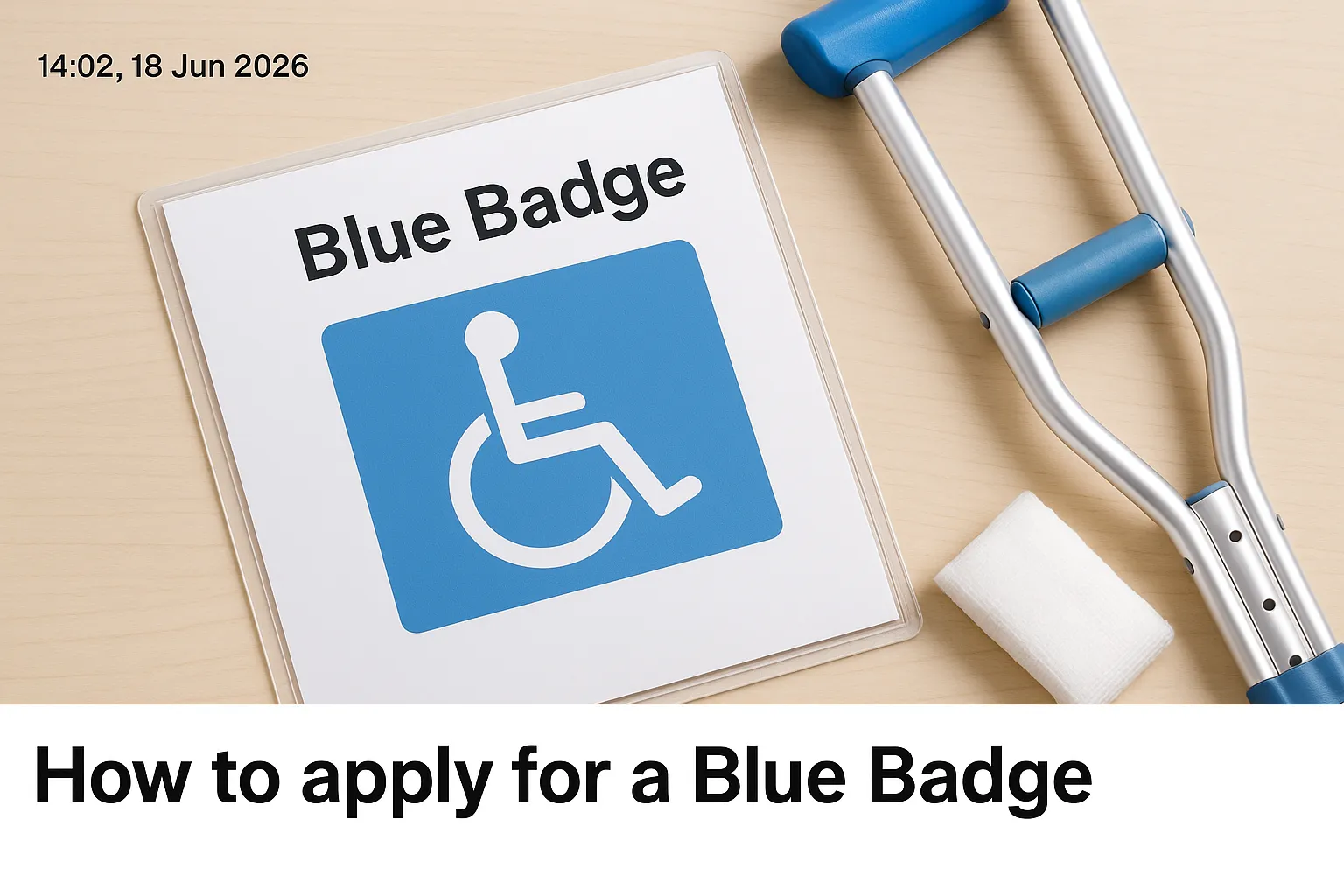
The Blue Badge initiative is intended to aid those with severe mobility challenges, allowing them to park closer to their destinations, whether they are driving or being chauffeured. While it primarily caters to individuals with long-term health concerns or disabilities, councils possess the authority to grant badges to those with temporary conditions, so long as the mobility impact is considerable.
Official guidance from the Scottish Government specifies that temporary disabilities can qualify for a Blue Badge if they are likely to persist for a minimum of 12 months. This eligibility encompasses a range of scenarios, including recuperating from significant surgeries, dealing with serious leg or hip injuries, or neurological disorders that impede mobility over an extended timeframe.
Interestingly, applicants do not invariably need to be beneficiaries of disability payments to apply for a Blue Badge. Certain groups automatically qualify under specific conditions, notably those receiving designated rates of Adult Disability Payment (ADP), Personal Independence Payment (PIP), Child Disability Payment, or Scottish Adult Disability Living Allowance.
However, local councils have the discretion to consider applications from individuals who may not fit the automatic qualification criteria but who still face serious mobility challenges. The Scottish Government emphasises that individuals may still be eligible for a Blue Badge if they suffer from a condition that significantly affects their mobility, regardless of whether they receive other disability payments.
Local councils are responsible for managing Blue Badge applications. In many cases, they may request additional medical documentation or conduct a mobility assessment to evaluate each application accurately before rendering a decision. Holders of a Blue Badge benefit from various parking conveniences, including the ability to park without charge in designated disabled bays, pay-and-display areas, and on specified yellow lines where parking is deemed safe.
Additionally, Citizens Advice Scotland reports that Blue Badge holders may gain access to further support mechanisms, such as potential road tax exemptions, toll concessions, and permission to use restricted parking zones.
In Scotland, a Blue Badge is generally priced at £20 and remains valid for a period of up to three years before a renewal is necessary. Interested individuals may submit their applications online via the Scottish Government’s official website or request a physical form from their local council.
For those seeking clarity on automatic qualification for a Blue Badge in Scotland, the criteria are as follows:
– Individuals under 16 years of age with an eligibility letter from their visual impairment care team.
– Those aged 16 or older who are registered or certified as severely sight impaired.
– Recipients of the highest rate of the mobility component of the Disability Living Allowance (DLA).
– PIP recipients scoring eight points or more in the mobility aspect of their assessment.
– PIP recipients achieving 12 points in the ‘planning and following a journey’ section of the assessment.
– Individuals who previously received the higher mobility rate DLA on a permanent or lifetime basis.
– Individuals whose PIP award is currently under appeal after having received the higher rate of DLA mobility.
– ADP recipients awarded eight points or more in the mobility activity or 12 points in the planning and journey aspect, or those receiving enhanced mobility rates without reference to points.
– Individuals awarded the higher rate of the mobility component of the Child Disability Payment.
– Recipients of the War Pensioners’ Mobility Supplement.
– Individuals who have received a lump sum from tariffs 1 to 8 under the Armed Forces Compensation Scheme and are certified as having a permanent and substantial disability.
Local councils are tasked with processing all Blue Badge applications and making determinations based on the criteria established by the Scottish Government.
Moreover, individuals interested in staying informed of financial matters and beneficial updates can consider joining community platforms like the Money Saving Scotland Facebook group. This platform offers valuable tips on money management, the latest news concerning State Pension and benefits, energy bill advice, and regular updates on the cost of living. Interested individuals can also subscribe to the Record Money newsletter, which provides daily updates from Monday to Friday, including a special cost of living edition every Thursday.
For those who prefer real-time updates, following @Recordmoney_ on X (formerly Twitter) will yield timely information, and joining the Daily Record Money WhatsApp community will ensure that important money-related alerts are delivered directly to your phone.
Our Thoughts
The article discusses the Blue Badge scheme in Scotland, emphasizing that individuals with temporary but substantial mobility difficulties may qualify. To prevent any potential mismanagement or confusion surrounding the application process, local authorities could enhance public awareness campaigns about eligibility criteria, thereby ensuring that those who qualify understand their rights.
Key safety lessons include the importance of clear communication regarding the criteria for issuing Blue Badges and the supporting processes involved, in line with the Health and Safety at Work Act 1974, which necessitates organizations to provide clear information to mitigate risks.
Moreover, if councils were to conduct regular audits and training for staff handling applications, it could reduce the chances of errors in assessments and improve overall service efficiency.
While there are no specific regulations breached in the article itself, miscommunication or lack of accessibility may lead to negligence claims under the Equality Act 2010 if individuals are unfairly denied access to vital services. Establishing a straightforward, transparent process could better safeguard against such incidents in future.