
















Story Highlight
– M6-C artificial disc recalled due to osteolysis risk.
– Thousands may require urgent spinal surgery for removal.
– Legal action considered; manufacturers face scrutiny and outrage.
– Patients advised to undergo scans and regular monitoring.
– Delays in risk communication have caused significant distress.
Full Story
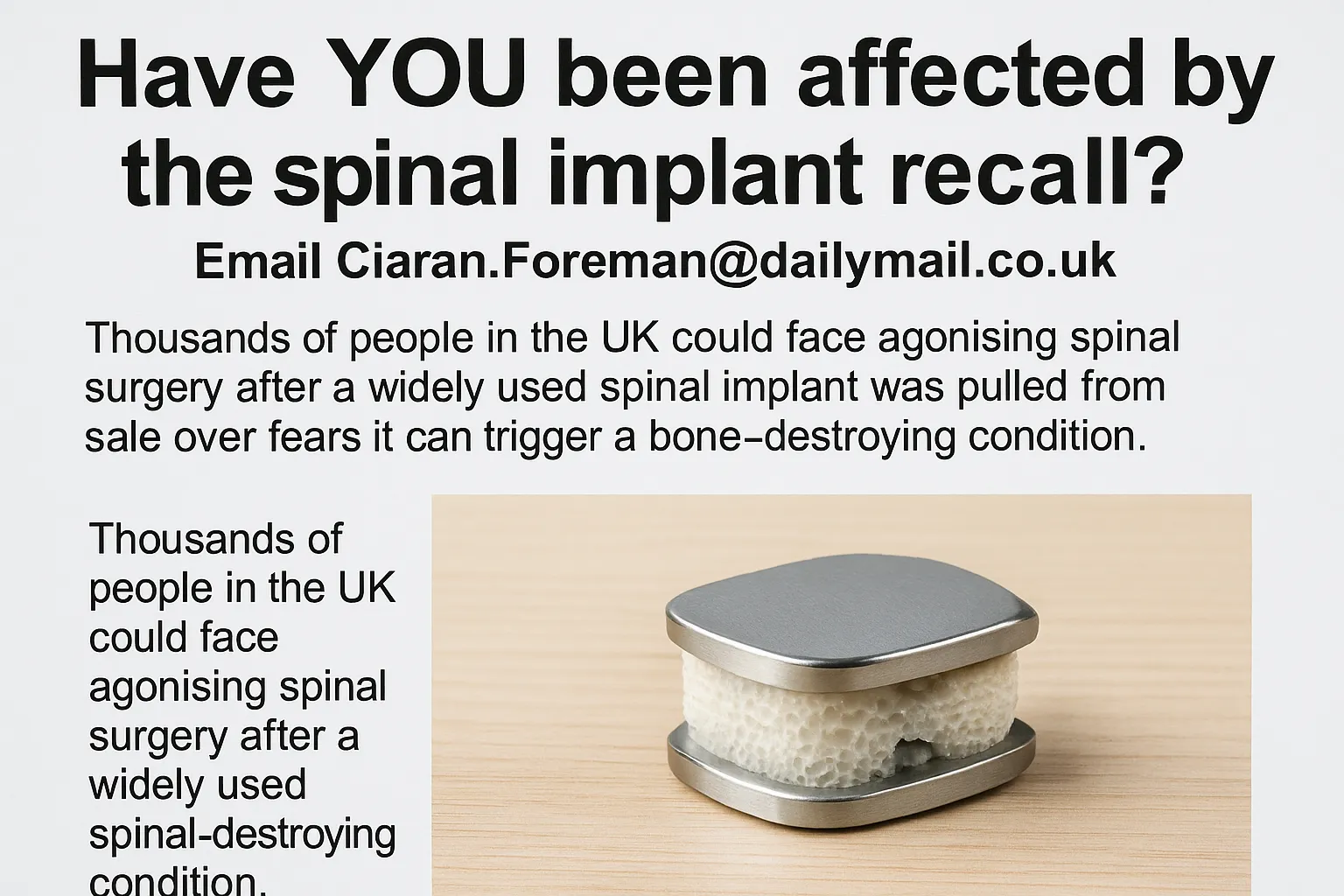
Thousands of individuals in the UK may require painful spinal surgery following the recall of a widely used spinal implant, which has been associated with a serious condition that damages bone tissue. The M6-C artificial disc, introduced as an alternative to traditional spinal fusion surgery, is now at the centre of concerns after it’s been linked to osteolysis—a progressive disorder in which healthy bone is gradually destroyed and absorbed by the body.
With the implant typically utilised to replace damaged cervical discs, its removal from the market has raised alarm bells among healthcare professionals and affected patients alike. Many who have received the M6-C disc are now being called in for urgent scans to assess any potential adverse effects of the device. The company behind the M6-C, Orthofix, has made the decision to discontinue this product by February 2025 after it was withdrawn from sales globally.
Legal experts believe that this recall could impact thousands of patients across the country. According to Penningtons Manches Cooper, a law firm that has already received inquiries from at least ten individuals, the real number may be significantly higher. The firm is actively exploring potential legal actions against the manufacturer due to the serious implications of the implant’s faults.
Sophia Harrison, a 52-year-old from East Grinstead, East Sussex, has shared her experience after having the M6-C implant installed in 2019. In 2021, she began to feel unusual sensations like pins and needles in her hands and later noticed a concerning lump in her throat that affected her ability to speak and swallow. At the time, she did not connect these symptoms to the implant.
After receiving a notice from the Medicines and Healthcare products Regulatory Agency (MHRA) regarding the risks associated with the implant, Ms Harrison underwent a CT scan. The results revealed a significant abscess measuring 10cm. “My doctor said he nearly fell off his chair looking at the results as the infection continued to grow despite being drained,” she remarked. “I can feel it growing again by the day and I’ve now been told they may have to take out two further discs along with the implant and insert a metal rod.”
Driven by her ordeal and the desire to inform others, Ms Harrison is urging anyone fitted with the M6-C implant to seek a scan promptly to safeguard against potential complications. “You may not even be aware you have an associated infection or other symptoms,” she cautions.
Regulatory bodies in Australia initially issued a hazard alert regarding the M6-C implant back in 2020, but UK patients did not receive this crucial information for several years, leading to frustration and outrage among those affected. In January 2024, the MHRA formally alerted the public to the associations between the device and osteolysis, advising that those fitted with the implant should undergo regular monitoring for potential issues.
Harrison expressed her frustration over the lack of communication regarding the risks, stating, “I am so angry that we weren’t told about the faults of the disc that leads to bones disintegrating. It’s absolutely despicable—the manufacturer would have known about this, so why has it taken so long? If I had known earlier, the infection would have been caught and I would not be facing what has now become such complex and daunting surgeries on my spine.”
Lyndsey Skibinski, a solicitor specialising in medical negligence at Penningtons Manches Cooper, emphasised the gravity of the situation: “This is a potentially huge public health issue with thousands of patients affected. Many will need complex surgery to remove the implants, which poses the risk of paralysis or long-term chronic pain. We are currently investigating the legal options available for those we are advising to seek justice for the trauma and suffering they are enduring.”
Dr Stephanie Millican, the deputy director for benefit-risk evaluation at the MHRA, stated that following reports submitted in early 2025, the agency initiated an investigation into the device. She acknowledged that there had been significant delays in the manufacturer alerting both patients and healthcare professionals about the risks of osteolysis. “Patient safety is our top priority,” she affirmed.
The MHRA has issued instructions for patients who currently have the M6-C implant to discuss their risk status with their healthcare provider and to undergo routine monitoring. Patients should also be vigilant and contact their healthcare specialists immediately if they experience any unusual symptoms.
As the situation continues to develop, patients afflicted by the M6-C recall are likely to receive further communications from their healthcare providers. It is paramount that those with the implant stay informed and proactive about their health to mitigate any potential long-term effects of the device.
Our Thoughts
The recall of the M6-C spinal implant highlights several key areas for improvement in patient safety and regulatory compliance.
Firstly, the manufacturer, Orthofix, failed to communicate critical safety information regarding the risks associated with the device in a timely manner, potentially breaching the Health and Safety at Work Act 1974, which mandates ensuring the health and safety of patients. This delay in the dissemination of hazard alerts from Australia to UK patients and healthcare providers raises concerns about compliance with the Medical Devices Regulations 2002, which require manufacturers to report incidents and monitor adverse effects promptly.
To prevent similar incidents in the future, stricter enforcement of timely and transparent communication of safety alerts is essential. Regular monitoring and proactive communication with patients, as advised by the MHRA, should be instituted as a standard practice. The recall also accentuates the importance of post-market surveillance and robust risk management processes, ensuring that manufacturers actively monitor and mitigate risks associated with their devices.
In summary, enhanced communication protocols, adherence to regulatory requirements, and improved monitoring procedures are vital safety lessons to avert such incidents in the future.