














Story Highlight
– Brief respite from heat on Saturday across the UK.
– South-east England could still reach 27-28C.
– Temperatures forecast to rise again Sunday through Tuesday.
– Met Office amber warning for extreme heat issued.
– Health risks and safety incidents expected with high temperatures.
Full Story
Britain is experiencing a temporary respite from the recent sweltering conditions, with Saturday promising to bring slightly cooler weather after several regions endured heat exceeding 30°C on Friday. An influx of fresher air from the west is set to reduce temperatures marginally; however, the south-east may still see highs of between 27°C and 28°C. The majority of the country is expected to remain dry, punctuated by sunny intervals and only a slim chance of isolated showers.
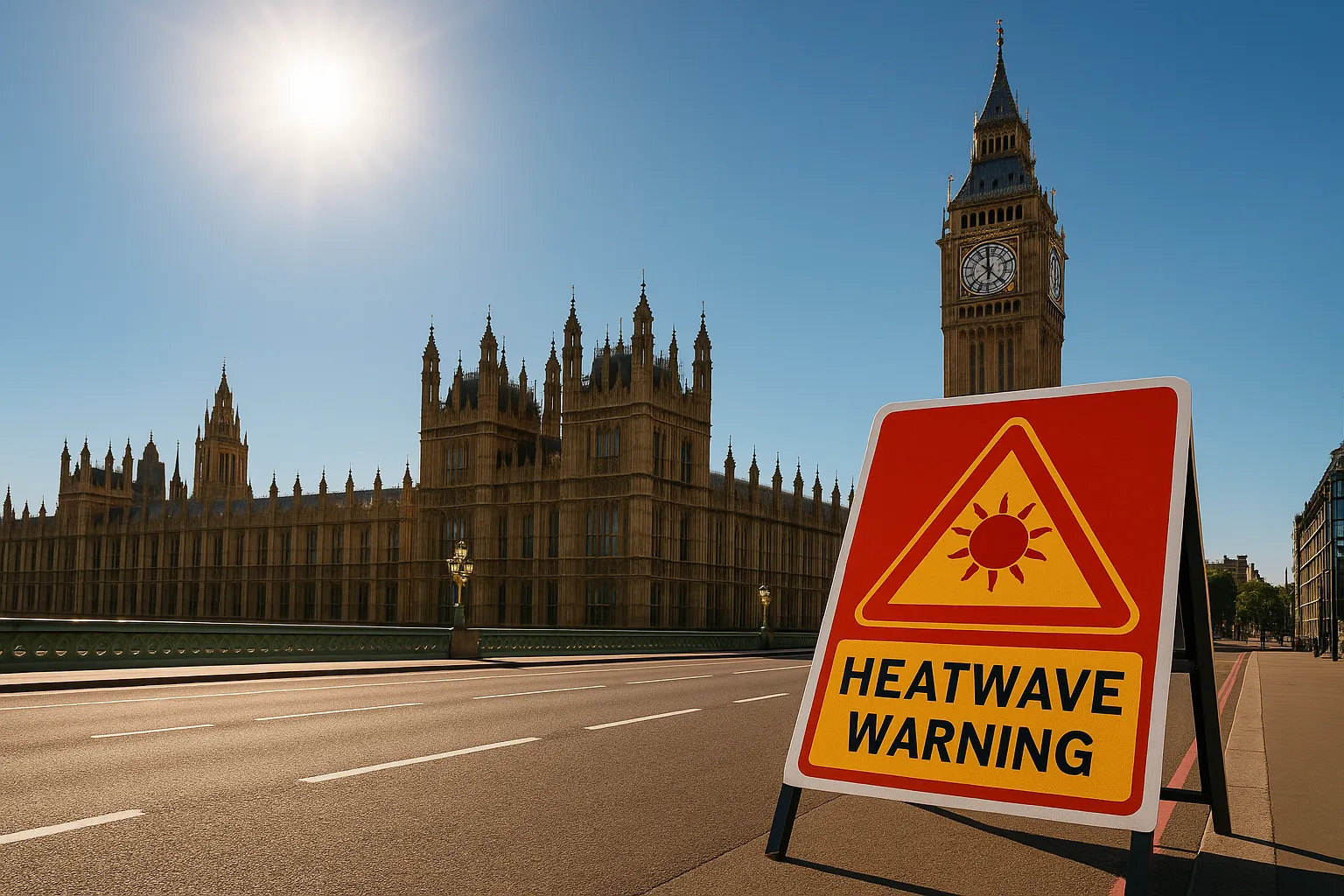
Looking ahead, forecasters predict a resurgence in temperatures over the weekend, with Sunday marking a potential return to the high levels felt earlier in the week. The Met Office has issued an amber warning for extreme heat, which will come into effect on Monday and persist through Tuesday. This warning anticipates temperatures rising once more, with readings possibly reaching 34°C or higher as the new week progresses.
The amber alert spans a wide area including London, eastern and south-eastern England, as well as parts of the south-west and Wales. It serves to inform the public about health risks associated with high temperatures, particularly for vulnerable groups, and indicates an increased likelihood of incidents related to water safety. This directive is distinct from the amber heat health alerts previously issued by the UK Health Security Agency (UKHSA).
As the weekend approaches, southern and eastern England is poised to meet the criteria for a heatwave, with a forecasted 40% probability of surpassing June’s record high of 35.6°C, a temperature benchmark set back in 1957 and 1976. Certain regions could see temperatures soar to around 32°C on Sunday, with increments possibly pushing above 34°C on the following Monday. There is also a chance some areas may experience overnight temperatures lingering above 20°C, particularly in urban centres.
In relation to the predicted weather conditions, Greg Wolverson, the Met Office’s deputy chief forecaster, provided insight: “While heatwave criteria will be met for some in the south and south-east of England over the weekend, with temperatures into the low 30s possible, the warmth will expand and intensify at the start of next week, which, coupled with high temperatures overnight, leads to potential impacts.” He further noted the challenge posed by high humidity, which may make the heat feel significantly more oppressive for many individuals.
The phenomenon of “tropical nights,” characterised by temperatures that do not fall below 20°C, could affect some regions, particularly in urban locales. Although the warmer conditions could trigger sporadic thundery showers on Monday and Tuesday, the Met Office has suggested that such occurrences will remain relatively isolated.
As the country braces for another wave of high temperatures, it is vital to keep in mind the safety implications associated with elevated heat, especially concerning water-related activities. In May, at least 15 individuals lost their lives due to accidents in open water during a similarly hot period. Samantha Hughes, the national water safety partner at the Royal National Lifeboat Institution, cautioned regarding the dangers: “With warmer weather approaching, it’s important to remember that the water is still cold. Entering it unexpectedly can lead to cold water shock, causing a sudden increase in breathing and heart rate, which may trigger panic.”
In light of the heat health alerts, the Health and Safety Executive (HSE) has reiterated the importance of employers taking steps to protect their workers while also ensuring productivity during this heatwave. Workers, particularly those engaged in outdoor or physically demanding jobs, may be at increased risk and should have measures in place to mitigate the effects of the heat.
As this weather phenomenon unfolds, authorities and communities will need to monitor conditions closely and adapt accordingly to ensure safety for all, particularly for those who are more susceptible to the adverse effects of extreme temperatures. The public is advised to stay hydrated, avoid strenuous activities during peak heat hours, and seek cool environments whenever possible.
As the UK grapples with these high temperatures, the broader implications of climate change and its contribution to increasingly frequent heatwaves are also being examined. Experts are encouraging ongoing discussions about climate resilience and adaptation strategies within affected communities.
Looking ahead to the rest of the week, the weather forecast remains a topic of interest as high temperatures may linger across some areas beyond Tuesday. The Met Office continues to advise caution and highlights that this situation will require close observation, with updates to the public expected as conditions evolve.
Our Thoughts
The article highlights the risks posed by extreme temperatures and the consequent health impacts, including increased water safety incidents. To mitigate such risks, key preventive measures should include better public awareness campaigns about the dangers of heat and the importance of safety around water. The Health and Safety Executive (HSE) emphasizes that employers have a duty under the Health and Safety at Work Act 1974 to protect workers from heat stress, which may include implementing suitable workplace conditions and hydration strategies.
Additionally, the dangers of cold water shock should be communicated more effectively, as highlighted by the Royal National Lifeboat Institution. This aligns with the Management of Health and Safety at Work Regulations 1999, which require risk assessments to consider all potential hazards, including environmental conditions like extreme heat or cold water exposure.
To prevent similar incidents, regular safety briefings regarding weather-related risks should be conducted, especially ahead of forecasted extreme weather events. Enhanced collaboration between emergency services and health agencies during heatwaves would also help in addressing potential crises effectively.