
















Story Highlight
– Worker suffered multiple fractures in conveyor accident.
– Company fined £333,333 for safety violations.
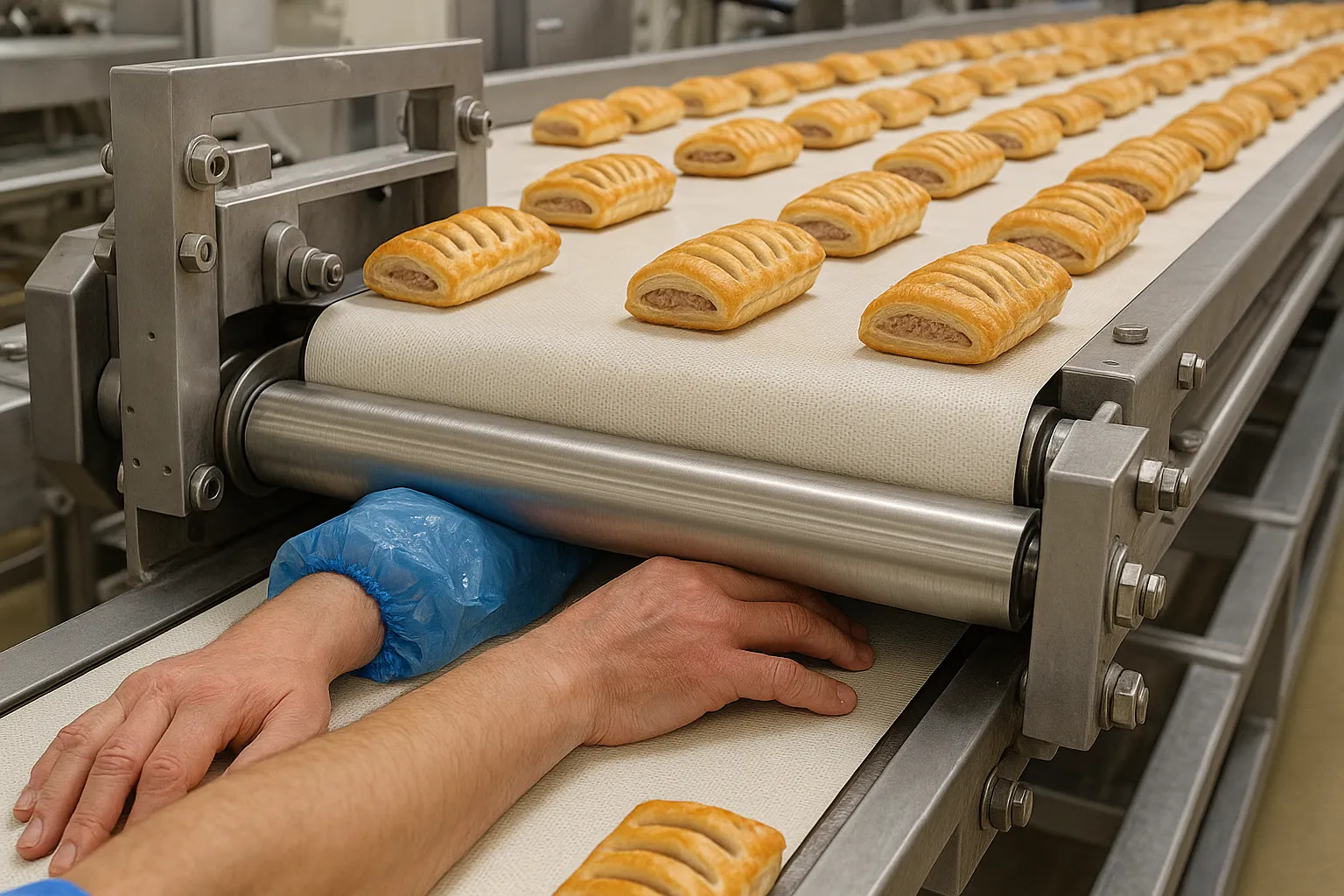
– Accident occurred while cleaning sausage roll line.
– Health and Safety Executive conducted investigation.
– Inadequate machinery guarding led to the incident.
Full Story
A significant workplace incident at a baked goods manufacturing facility has resulted in serious injuries for an employee and a hefty fine for the responsible company. David Wood Baking Limited, based in Sheerness, Kent, has been penalised £333,333 following an investigation into an injury sustained by a worker while cleaning machinery.
The incident occurred on December 1, 2023, when Ribeca Jesuthasan was undertaking her cleaning duties on a conveyor line specifically tasked with producing sausage rolls. During the course of her work, her arm became trapped in a rotating roller of the conveyor, causing her to suffer multiple fractures, including a critically broken arm.
An inquiry conducted by the Health and Safety Executive (HSE) revealed that David Wood Baking Limited had breached its responsibilities under health and safety legislation. Specifically, the company had failed to implement necessary safety measures to prevent employee access to the dangerous moving parts of the machinery involved. Following these findings, the company pleaded guilty to violating health and safety regulations designed to protect workers from such hazards.
As a consequence of the failure to ensure a safe working environment, the firm was fined on 1 September 2026, at a session held at Medway Court, in addition to incurring legal costs amounting to £7644.
Delcina Burden, an inspector from the HSE, commented on the incident, highlighting a troubling trend of serious injuries resulting from inadequate safety measures at workplaces. Burden stated, “Too many workers are seriously injured every year as a result of contact with dangerous parts of machinery due to inadequate or absent guarding. If simple measures had been taken, this incident could have been avoided.” The inspector further emphasised the importance of the court’s decision, signalling that both the judiciary and the HSE take breaches of health and safety regulations with utmost seriousness.
Burden added, “The sentence handed down by the court in this case should demonstrate that the courts and HSE take breaches of health and safety law seriously. We will not hesitate to take action against companies that fail to do all they can to keep people safe.”
This incident highlights the critical need for stringent safety protocols in workplaces where dangerous machinery is in operation. Industry experts suggest that, while automation and technology significantly enhance productivity, they must be accompanied by robust safety measures to protect workers.
The workplace environment in manufacturing, particularly in food production, often involves complex machinery that can pose risks to health and safety. In this case, the failure to secure appropriate guarding on the conveyor line led to a catastrophic injury that underscores a broader issue within the industry regarding workplace safety culture.
In response to the incident, advocacy groups are calling for increased scrutiny of workplace safety standards across manufacturing sectors. They stress that businesses have a moral and legal obligation to protect their employees from known hazards and to foster an environment where safety is paramount.
Experts recommend that companies conduct regular safety audits and training sessions, ensuring all employees are aware of the risks involved in their roles and the safety measures in place to mitigate those risks. Furthermore, inducting staff into a culture of safety can empower employees to speak up about unsafe practices without fear of repercussion.
With the prevalence of workplace injuries related to machinery, the establishment of comprehensive safety protocols—including emergency shut-off mechanisms, maintenance schedules, and stringent employee training regarding equipment operation—becomes increasingly vital.
This tragic incident serves as a crucial reminder of the potential consequences stemming from negligence in workplace safety. As calls for reform and more stringent regulation of health and safety practices gain momentum, it is imperative that manufacturing firms take decisive action to ensure their working environments are not only productive but also safe for all employees.
The case against David Wood Baking Limited certainly poses questions about accountability within the food manufacturing sector and the implementation of safety regulations. Stakeholders will be watching closely to see how the industry responds to ensure that such incidents do not recur and that every worker can look forward to returning home safe after a day’s work.
Our Thoughts
The incident at David Wood Baking Limited highlights critical failures in machinery safety protocols. To prevent such accidents, several measures could have been implemented. Firstly, effective guarding should have been installed around the rotating parts of the conveyor to restrict access during cleaning operations, in accordance with the Provision and Use of Work Equipment Regulations 1998 (PUWER). Regular risk assessments should have been conducted to identify potential hazards associated with the machinery.
Additionally, proper training for employees on safety procedures and the risks associated with working near machinery would have contributed to a safer work environment. Adhering to the Health and Safety at Work Act 1974, which mandates ensuring the health and safety of employees, could have also prevented this incident.
In this case, the failure to implement preventive measures and provide sufficient guarding constituted a breach of health and safety regulations. Similar incidents could be prevented by reinforcing the importance of machinery safety controls and safeguarding practices, alongside a culture of proactive safety compliance within the workplace.