















Story Highlight
– Increased threat of Russian hybrid attacks on the UK.
– German government attributes drone attack to Russia directly.
– UK stands in solidarity with Germany amid rising tensions.
– Previous hybrid attacks linked to Russian tactical escalations.
– Officials warn Russia may target NATO countries directly.
Full Story
The recent targeted attack on Leipzig/Halle Airport in Germany using explosive drones has raised significant concerns among officials and security experts regarding the escalating threat of Russian hybrid warfare against nations supporting Ukraine. This operation, which the German government has explicitly linked to Moscow, has highlighted the evolving nature of threats faced by the UK and its allies.
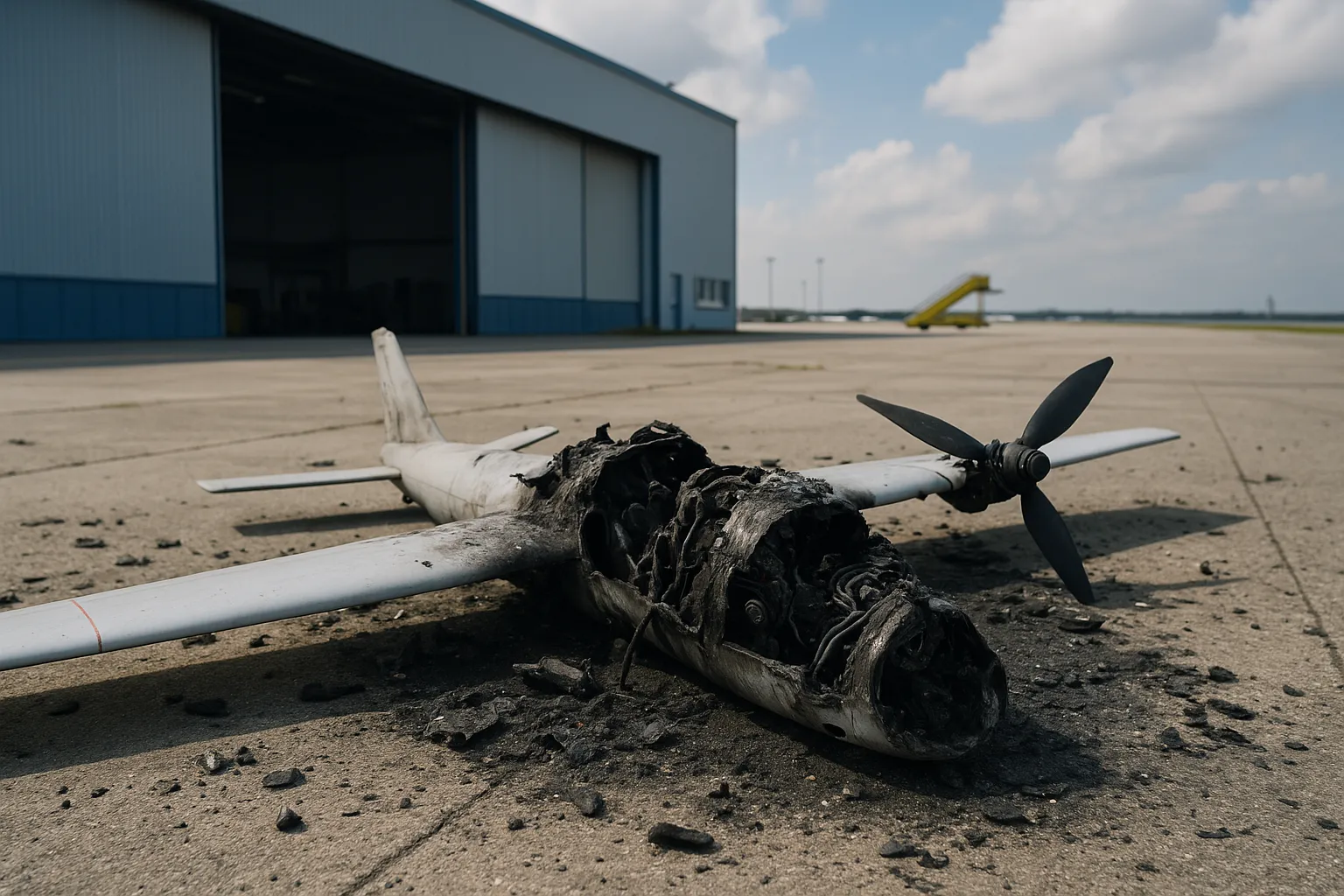
German authorities reported that the drone, which did not detonate, was discovered near a facility utilised by Ukrainian Antonov cargo planes. In a statement, German Interior Minister Alexander Dobrindt noted that the design and construction of the drone reflect a notable degree of technical sophistication, as well as considerable planning. Investigations revealed that the drone was packed with Semtex, a military-grade explosive, featuring detonators similar to those previously seen on Russian drones deployed in the ongoing conflict in Ukraine.
While the drone attack ultimately failed to achieve its intended destructive purpose, it represents a troubling indication of the methods employed by Russia in its campaign against countries perceived as adversaries. German media outlet Die Zeit reported that investigators suspect the failure of the drone to detonate was a matter of luck and have identified a second drone, also found on the airport’s periphery.
Evidence gathered by German investigators implies that the attack may have involved lower-level personnel acting as mere proxies rather than the direct involvement of Russian intelligence officers. This strategy reflects a broader trend of hybrid warfare tactics previously observed across Europe, where deniability and plausible disavowal are crucial components of the operations.
In the UK, the government views this increase in hybrid aggression as a serious matter, though it remains consistent with prior behaviour attributed to President Vladimir Putin. Government sources indicate that British officials are working collaboratively with their German counterparts to develop strategies aimed at countering this form of warfare.
Despite the gravity of the situation, Downing Street has indicated that there will not be an immediate, specific policy response to the Leipzig incident, including refraining from joining the European Union in imposing additional sanctions on Russia. A spokesperson affirmed the UK’s unwavering support for Germany, stating that any Russian attempts to diminish Western support for Ukraine are ultimately ineffective and bound to fail.
The incident at Leipzig/Halle Airport is a reminder of the complexity of the threats posed by Russia. The UK has itself faced hybrid assaults, including a notable arson attack in March 2024, which targeted a warehouse filled with satellite equipment designated for Ukraine. Reports from British officials suggest that the risk of further physical attacks is at an unprecedented high as Russia seeks to retaliate against nations that have provided military assistance to Ukraine.
In the wake of various provocations, including the use of British-made drones in offensive operations within Russian territory, Russia’s embassy in London has warned that the UK’s involvement in the conflict will have dire consequences. A sharp warning from Russia’s foreign ministry described British military capabilities as legitimate targets in light of the UK’s increasing military support for Ukraine.
Expert commentary has underscored the unprecedented nature of the rhetoric emanating from Moscow. Andy Pryce, a former head of counter-disinformation for the Foreign Office, claimed that the heightened aggressiveness of the threats observed signals a marked shift in the nature of Russian communication over the past decade, stoking fears of potential hybrid attacks aimed at the UK.
This latest incident echoes earlier patterns of Russian aggression, harking back to a specific attack attributed to Russian operatives that targeted the UK in July 2024. That particular insidious plot involved packages containing self-igniting technology, which ignited in multiple locations across Europe, including the UK, heightening concerns about public safety and security.
Ultimately, experts remain vigilant regarding the implications of these hybrid attacks. Dr. Peter Neumann, a security studies professor at King’s College London, warns that such incidents have multifaceted objectives. Not only do they aim to disrupt military logistics, but they are also intended to instil fear and division within societies supporting Ukraine.
Moreover, Dr. Neumann indicated that the continued threats from Russian officials coincide with President Putin’s declarations that retribution will increasingly target regions aligned with Ukraine’s interests, alluding to a broader strategy of intimidation aimed at NATO and its member states.
In light of these developments, NATO Secretary General Mark Rutte has expressed concerns regarding Russia’s increasingly reckless behaviour and the direct threat such actions pose to member nations. Recognising the risks, he highlighted the necessity for collective robustness in confronting such malign activities.
In response to the heightened threat, spokespersons for UK political leadership, including those associated with Prime Minister Andy Burnham, emphasised ongoing collaboration with Germany to bolster security measures and counter Russia’s burgeoning hybrid threats. The message from European leaders remains consistent: they are resolute in their commitment to supporting Ukraine and will not be swayed by intimidation tactics employed by the Kremlin.
Ursula von der Leyen, President of the European Commission, pointedly remarked that the recent drone incident is symptomatic of a broader trend of escalating threats from Russia, and that European nations must brace themselves for what appears to be a new normal in geopolitical tensions.
Our Thoughts
The reported drone attack targeting Leipzig/Halle Airport highlights significant gaps in safety and security measures that could have been addressed to prevent such incidents. Key takeaways include the necessity for enhanced risk assessments and countermeasures against hybrid warfare tactics, as outlined in the UK’s Health and Safety at Work Act 1974, which mandates employers to ensure the safety of all personnel and the public.
Regulations regarding the protection of critical infrastructure could have been strengthened to mitigate threats, including the Security and Counter Terrorism Act 2007, which emphasizes the need for comprehensive security arrangements in critical public locations.
Additionally, the incident reflects the importance of improving intelligence-sharing and collaborative security efforts between nations to anticipate and respond to hybrid threats more effectively. Regular training and preparedness drills for emergency responders could further bolster resilience against possible attacks in the UK.
Tighter control measures on the procurement and use of military-grade materials are also necessary to limit exposure to explosive threats. Overall, a proactive and collaborative approach to security within international contexts is vital to ensure public safety.