










Story Highlight
– Iceland and Tesco alert customers about E. coli contamination.
– Tesco recalls mozzarella pearls and pesto salad products.
– Summit Foods withdraws multiple wrap products over E. coli.
– Simple recalls micellar cleansing water for safety concerns.
– Consumers advised to stop using affected products immediately.
Full Story
Supermarkets Iceland and Tesco have taken swift action this week by issuing urgent product recalls due to potential health risks associated with specific food items. The recalls are attributed to concerns over E. coli contamination, a bacterium infamous for causing food poisoning. Customers are being strongly advised not to consume the implicated products, following the issuance of official recall notifications. In addition to the food items, a popular skincare brand has also announced a recall for one of its widely used face washes due to potential microbial contamination that could negatively impact skin health.
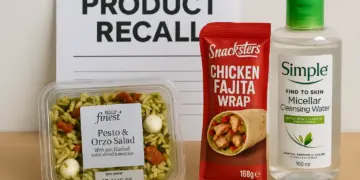
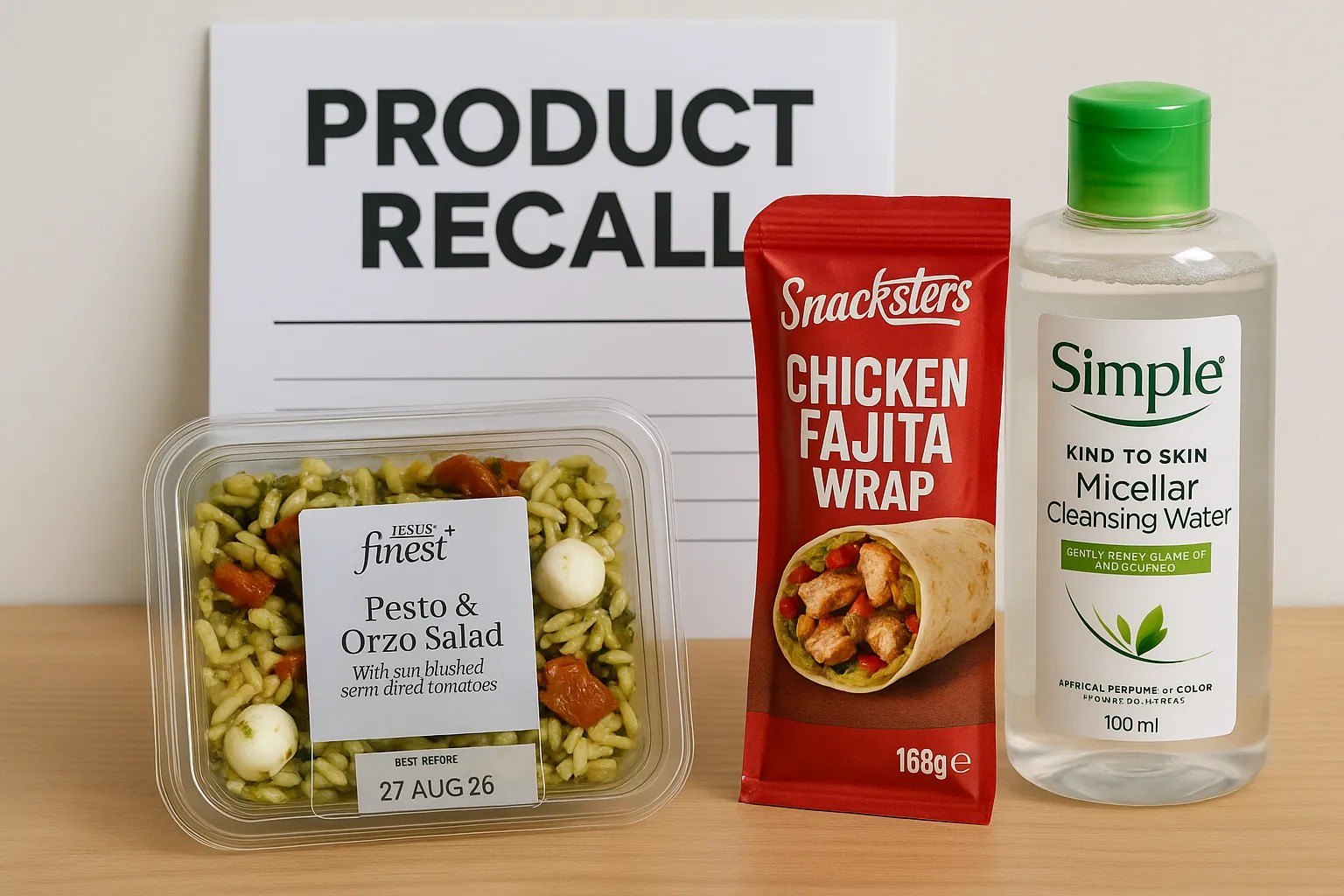
Tesco has confirmed that it is recalling two of its products: the Tesco Finest Mozzarella Pearls and the Pesto Orzo Salad. Both items were sold in 215g packages and have passed their best-before dates of 25, 26, and 27 August 2026. Even though these dates have elapsed, some customers may still have these products at home. The Food Standards Agency (FSA) has circulated a recall notice outlining the presence of Shiga toxin-producing E. coli (STEC) as the basis for the recall. The agency warned: “Symptoms caused by STEC organisms include severe diarrhoea with or without blood in the stool, abdominal pain, vomiting, dehydration and sometimes haemolytic uremic syndrome (HUS), a serious condition that can lead to kidney failure and can be fatal.”
In light of these risks, Tesco has urged customers: “If you are experiencing these symptoms, you should stay away from work, school or nursery until you have stopped having symptoms for at least 48 hours to avoid passing it on to others.” The supermarket reassured its customers, stating, “We’re recalling three date codes of Tesco Finest Mozzarella Pearls and Pesto Orzo Salad 215g due to the possible presence of Shiga toxin-producing E. coli (STEC), which can cause illness if eaten. No other products sold at Tesco are affected by this recall.”
In parallel to Tesco’s efforts, Summit Foods has initiated a recall for several of its products as well. The affected items include the Snacksters Chicken Fajita Wrap, Snacksters Hoi Sin Wrap, East Street Deli Sweet Chilli Chicken Wrap, and the Target a Snack Chicken Fajita Wrap. This recall is also due to potential contamination with STEC and applies to all items with use-by dates up to and including 5 September 2026. The FSA has implored shoppers who may have purchased any of these wraps not to consume them and to dispose of them immediately. Patrons seeking refunds can submit proof of purchase by emailing sales@summitfoods.co.uk, detailing when and where each item was bought.
Similarly, Iceland has emphasized the gravity of the situation regarding the Snacksters Chicken Fajita Wrap, which is part of the products affected by the recall. The company has issued a statement urging customers who have purchased the wrap to dispose of it immediately and not to consume it. They reiterated the importance of safety, stating, “Safety and quality is our first priority and we apologise for the inconvenience caused.” For a refund, consumers must provide proof of purchase to sales@summitfoods.co.uk, including details of where and when the product was acquired.
In a separate event, skincare brand Simple has announced a recall for its popular micellar cleansing water amid concerns surrounding a possible “microbiological risk”, which may lead to inflammation of the eyes for users. Consumers who have this product at home are advised to stop using it immediately, as the affected stock is being withdrawn from retailers across the UK. The items in question include the Simple Kind to Skin Micellar Cleansing Water available in 200ml, 400ml, and 730ml sizes. Initially, the recall was limited to one bottle size; however, it has since been expanded to include additional sizes across both the UK and the Republic of Ireland.
A spokesperson for Simple commented: “We are recalling these products because the safety of the people who buy and use our products is our top priority. Other Simple products are not affected by this issue. We understand that product recalls can be concerning, and we are sorry for any concern or inconvenience this may have caused.” For further inquiries or to obtain refunds, customers can contact Simple’s Consumer Careline via email at ukicare@unilever.com or by calling 0800 146 252 in the UK or 1800 604 060 in the Republic of Ireland.
The announcements from both supermarkets and the skincare brand come as reminders of the importance of vigilance when purchasing food and health products. Public health officials recommend consumers check their cupboards and bathrooms for the recalled items and adhere strictly to the recall instructions to mitigate health risks. In these uncertain times, the adherence to food and safety regulations remains crucial for protecting public health, and the timely responses from these companies aim to prevent potential adverse health effects for their customers.
Our Thoughts
To prevent the incidents reported regarding potential E. coli contamination in food products and microbiological risks in skincare items, several measures could have been implemented in line with UK health and safety legislation.
Firstly, adherence to the Food Safety Act 1990 and Regulations such as the Food Hygiene (England) Regulations 2006 is essential. Regular microbiological testing and monitoring throughout the food production and supply chain could have identified contamination issues before products reached consumers. Furthermore, the Hazard Analysis and Critical Control Points (HACCP) principles should be rigorously applied, ensuring critical control points are monitored effectively.
Secondly, product labeling and traceability standards outlined in the Food Information Regulations must be upheld. This includes ensuring accurate best-before dates and clear consumer warnings about potential hazards.
Key safety lessons include the necessity for stringent quality control processes and consumer communication strategies. Swift and effective recall procedures must be established to mitigate health risks once contamination is identified.
Lastly, compliance with the General Product Safety Regulations 2005 is crucial to ensure all consumer goods, like skincare products, are safe for use prior to market. By following these regulations and guidelines, similar incidents can be significantly reduced.