














Story Highlight
– Father and son injured by collapsing scrap metal.
– HSE found inadequate public segregation from machinery.
– Incident followed earlier near miss with same excavator.
– PPS Metal Recycling fined £40,000 for safety breaches.
– New safety measures implemented after the incident.
Full Story
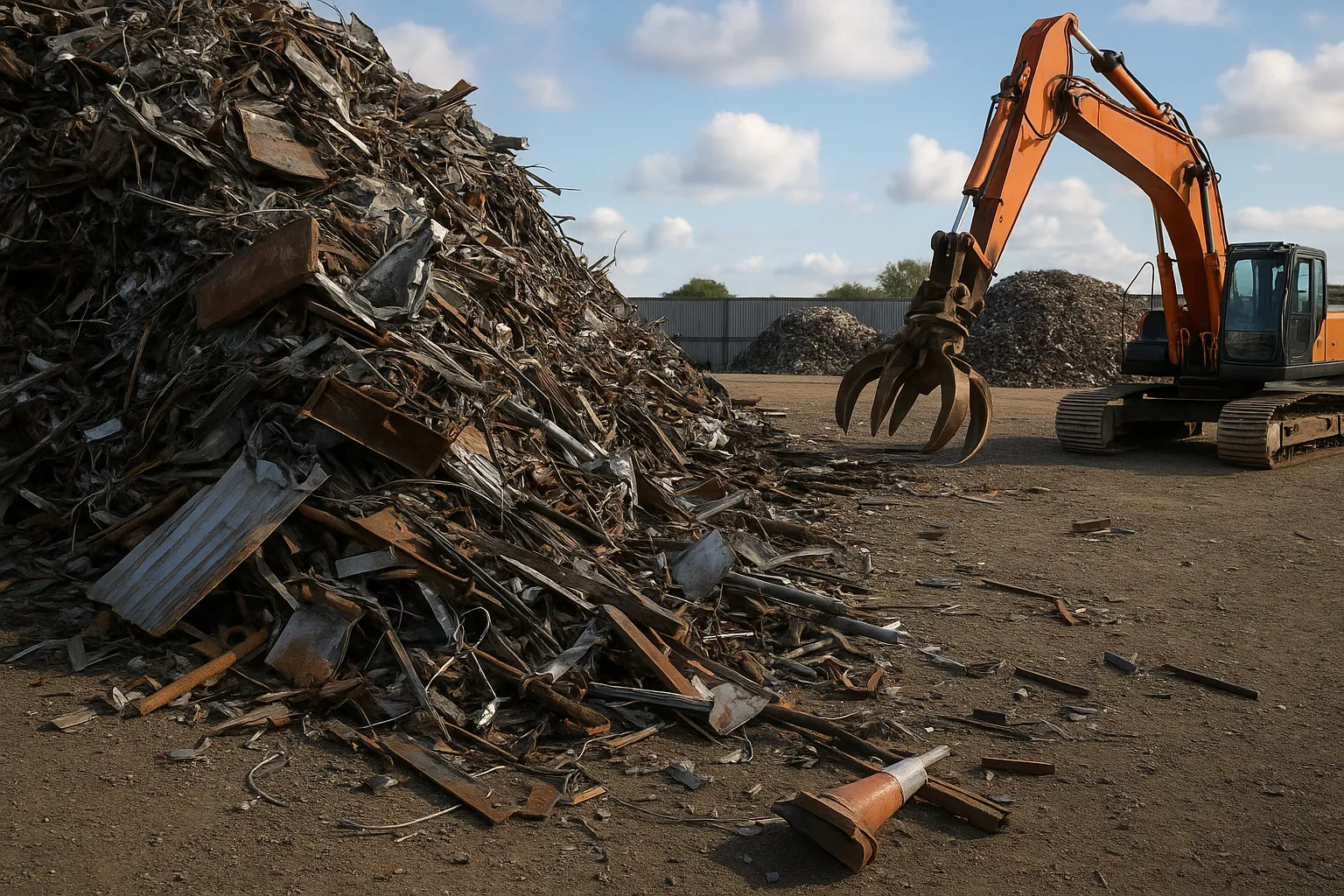
A father and son were injured at a scrap metal recycling facility in Scunthorpe when a large mass of scrap metal fell onto them. The incident occurred as the two individuals were engaged in unloading operations on 6 February 2025, coinciding with the operation of a nearby 360-degree excavator equipped with a grab attachment.
The implicated company, PPS Metal Recycling Ltd, has since accepted responsibility for the occurrence, pleading guilty to charges related to workplace safety regulations. The Health and Safety Executive (HSE) discovered that the company had not taken sufficient precautions to separate the public from operational machinery, which ultimately led to the accident.
Prior to the collapse, the excavator had been in operation close to the father and son for approximately twenty minutes. While removing material from a towering build-up of scrap metal, a portion of the pile became unstable and subsequently collapsed, injuring both individuals. Emergency services were called to the scene, and the duo was transported to a hospital for medical attention, with one of them suffering a broken leg.
Investigators from the HSE noted serious deficiencies in the company’s safety measures. Their inquiry revealed that the wrecking machine had been working in the vicinity of the public during the unloading process, creating a hazardous environment. Previous concerns about the safety of the site had also been flagged; just over a week earlier, on 27 January 2025, the same excavator had come perilously close to a member of the public’s vehicle, highlighting ongoing safety lapses despite no injuries occurring during that incident.
The HSE underscored the necessity for stringent safety protocols, particularly those outlined in its guidance document, HSG136: A guide to workplace transport safety. The guidelines assert that adequate segregation between pedestrians and vehicles should be ensured wherever feasible, thereby preventing accidents in areas where workers and the public might interact with heavy machinery.
In response to the recent incident, the HSE issued a Prohibition Notice halting the excavator’s operations in areas close to where the public might gather. Subsequently, PPS Metal Recycling Ltd implemented several safety measures designed to enhance public safety at their recycling site. These include establishing a dedicated area for public unloading, putting up clear signage to alert individuals to potential hazards, creating a supervised unloading procedure, and devising a comprehensive traffic management strategy that features barriered walkways.
Joe Fitzgerald, an inspector with the HSE and the lead on the investigation, expressed grave concerns regarding the incident. He stated, “These two members of the public were fortunate not to have been even more seriously injured or killed. This incident was entirely avoidable. Members of the public should not have been exposed to the risks created by heavy machinery and unstable stockpiles. Employers must ensure effective arrangements are in place to segregate pedestrians from workplace transport and mobile plant. Had suitable controls been implemented, this incident and the earlier near miss would not have occurred.”
The case against PPS Metal Recycling Ltd culminated in a court appearance at Grimsby Magistrates’ Court on 1 September 2026, where the company faced sentencing after admitting fault in a prior hearing on 30 July 2026. The court imposed a fine of £40,000 on the company for breaching Section 3(1) of the Health and Safety at Work etc. Act 1974, alongside an additional £6,181 in costs.
The prosecution was organised by a team consisting of enforcement lawyer Iain Jordan, paralegal officer Henrietta Ruthven, and advocacy from enforcement lawyer Arfaq Nabi, all of whom emphasised the importance of adherence to safety regulations in workplace environments, particularly in operations involving heavy machinery and public interactions.
The HSE operates as the national authority for workplace health and safety in Britain, committed to promoting safety protocols and enhancing conditions for workers and the general public. As part of its mandate, the HSE issues guidance, conducts investigations, and ensures compliance with health and safety laws to prevent workplace accidents and injuries.
For further details on related safety legislation, as well as recent HSE news releases, the agency provides extensive resources to inform the public and industry professionals alike. However, it is important to clarify that while the HSE plays a critical role in the enforcement of safety regulations, it does not determine sentences or collect fines imposed by the courts, which adhere to established sentencing guidelines barring exceptional circumstances.
This incident serves as a stark reminder of the importance of robust safety management systems in industries involving public access and the operation of heavy machinery. Following this incident, it is expected that PPS Metal Recycling Ltd, along with other similar enterprises, will re-evaluate their safety protocols to prevent further accidents and ensure the protection of both workers and the public.
Our Thoughts
PPS Metal Recycling Ltd failed to adequately protect members of the public from risks associated with operating heavy machinery and unstable stockpiles, as outlined in the Health and Safety at Work etc. Act 1974, Section 3(1). The incident could have been avoided through better enforcement of pedestrian segregation from machinery, as recommended by HSE guidance HSG136.
Key safety lessons include the necessity for robust traffic management systems and thorough risk assessments, especially following previous near misses involving the same equipment. Implementing clear areas for public unloading, effective signage, and a supervised unloading system should have been prioritized from the start. The company’s failure to address the risks posed by the excavator operating near the public for 20 minutes, despite a recent incident, highlights a lack of commitment to proactive safety measures.
To prevent similar incidents, companies should develop comprehensive safety protocols, including regular training for all staff on risk awareness and emergency procedures, and ongoing evaluations of safety practices. Immediate corrective actions should also be established in response to any incidents or near misses to ensure compliance with health and safety regulations.