
















Story Highlight
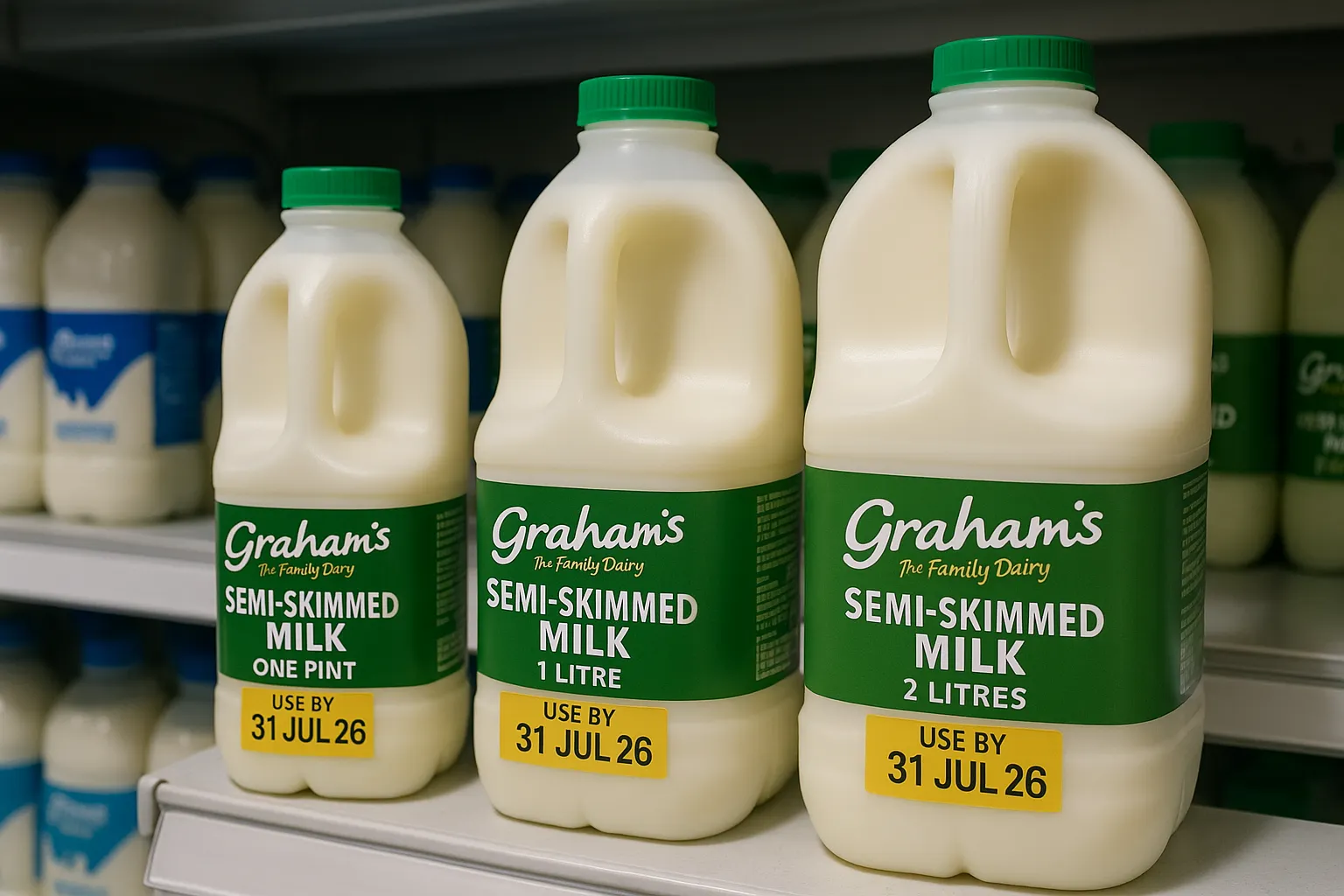
– FSA recalls three Graham’s Family Dairy milk products.
– Possible antibiotic contamination detected in the milk.
– Affected sizes: one pint, one litre, two litres.
– Customers advised to return products for full refund.
– Waitrose also recalls brioche rolls for plastic and metal.
Full Story
The Food Standards Agency (FSA) has announced a comprehensive recall impacting three variants of Graham’s Family Dairy Semi-Skimmed Milk, which are currently distributed across various supermarkets in the UK, including Tesco, Sainsbury’s, and Waitrose. This action follows the detection of potential contamination with antibiotics, specifically penicillin, raising significant health concerns.
Affected products include one pint, one litre, and two litre bottles of semi-skimmed milk, all bearing the use-by date of 31 July 2026. The FSA has underscored the seriousness of the situation, advising consumers that the presence of veterinary medicines in the milk poses an immediate health risk, particularly for individuals who may have allergies to antibiotics. The agency stated, “The presence of veterinary medicines, including antibiotics in the product may make it unsafe to consume.”
In response to the discovery, Graham’s Family Dairy has proactively initiated a recall of these specific milk products. Consumers who have purchased the affected items are strongly advised against consuming them. Instead, the company encourages customers to return the products to their point of purchase for a full refund. A notice has been disseminated to retail stores selling the affected products, and announcements will be visible both in-store and on the company’s website.
A representative from Graham’s Family Dairy remarked, “This is a precautionary measure we have taken as there is a small risk a trace level of antibiotics may be present in the milk which could cause a reaction to consumers with an allergy to antibiotics.” Furthermore, they reassured their customers that no other products or dates are implicated in this incident. For additional inquiries, customers can reach out through their website at www.grahamsfamilydairy.com.
In recent developments, this recall is amidst another alert issued by Waitrose, which has confirmed the recall of its 8 Chocolate Chip Brioche Rolls. This action is also precautionary, following concerns that these products may contain fragments of hard plastic and metal. The affected batches are identified by the batch code B26177, with a best-before date of 26 July 2026. The FSA has reiterated that items presenting such contamination risks are unsafe for consumption and has advised customers not to eat the product, but rather return it to the nearest Waitrose store for a complete refund.
A spokesperson for Waitrose expressed regret over this matter, stating, “We are recalling one batch of Waitrose 8 Chocolate Chip Brioche as a precaution due to the potential presence of plastic and metal pieces.” They added, “We are really sorry for the inconvenience. Customers with impacted products are advised not to consume the product, and to return it to their nearest Waitrose shop or contact us for a full refund.”
Recalls of food products due to safety concerns underscore the importance of vigilance in the food supply chain. The health implications of consuming products contaminated with antibiotics or foreign materials highlight ongoing challenges faced by food manufacturers, supermarkets, and regulatory bodies.
With the grocery sector being under increased scrutiny regarding food safety, these incidents may prompt further discussions about quality controls and safety protocols in food production and distribution. It underscores the necessity of stringent monitoring throughout the supply chain to preserve consumer safety and confidence.
For consumers, the era of widespread information and access has made it easier to stay informed about product recalls. Various platforms, including social media, apps, and official websites, offer real-time updates and guidance about food safety. The FSA plays a crucial role in this system, acting as a central authority on food standards, recalls, and safety notifications.
In light of these events, public health experts stress the importance of consumer awareness regarding product recalls. They recommend that shoppers remain vigilant and check the FSA website or their supermarket’s recall notices regularly. This vigilance is particularly crucial for those with known allergies, as the consequences of consuming contaminated products can be serious.
Ultimately, the responsibility lies not only with food producers and retailers to ensure product safety but also with consumers who must stay informed and take appropriate action when advised. Community outreach and education on safe food handling and awareness of recalls could serve as a beneficial strategy in enhancing public health and safety.
As the FSA and respective companies manage these recalls, the focus remains on protecting public health and ensuring that consumers have access to safe food products. The proactive measures taken by Graham’s Family Dairy and Waitrose signify a commitment to food safety and responsiveness to potential health risks associated with food consumption.
Our Thoughts
The incident involving Graham’s Family Dairy highlights several key lessons in food safety management. Firstly, stringent quality control measures must be implemented throughout the supply chain to prevent contamination by veterinary medicines, including antibiotics like penicillin. This situation could have been avoided by adhering to the guidelines set out in the Food Safety Act 1990 and the General Food Law Regulation (EC) 178/2002, which require that food businesses ensure food safety and traceability.
The dairy should have also conducted regular testing of their products to detect any contamination before reaching consumers. The Hazard Analysis Critical Control Point (HACCP) principles should have been effectively employed to identify and control critical points in their production process, thus ensuring that any potential sources of contamination are addressed.
Moreover, the Food Labelling Regulations require accurate labeling of food products, including allergens. Clear communication with consumers about potential risks is essential to limit harm. Similar incidents could be prevented by regular staff training on food safety protocols and thorough audits of suppliers to ensure compliance with relevant safety legislation.