
















Story Highlight
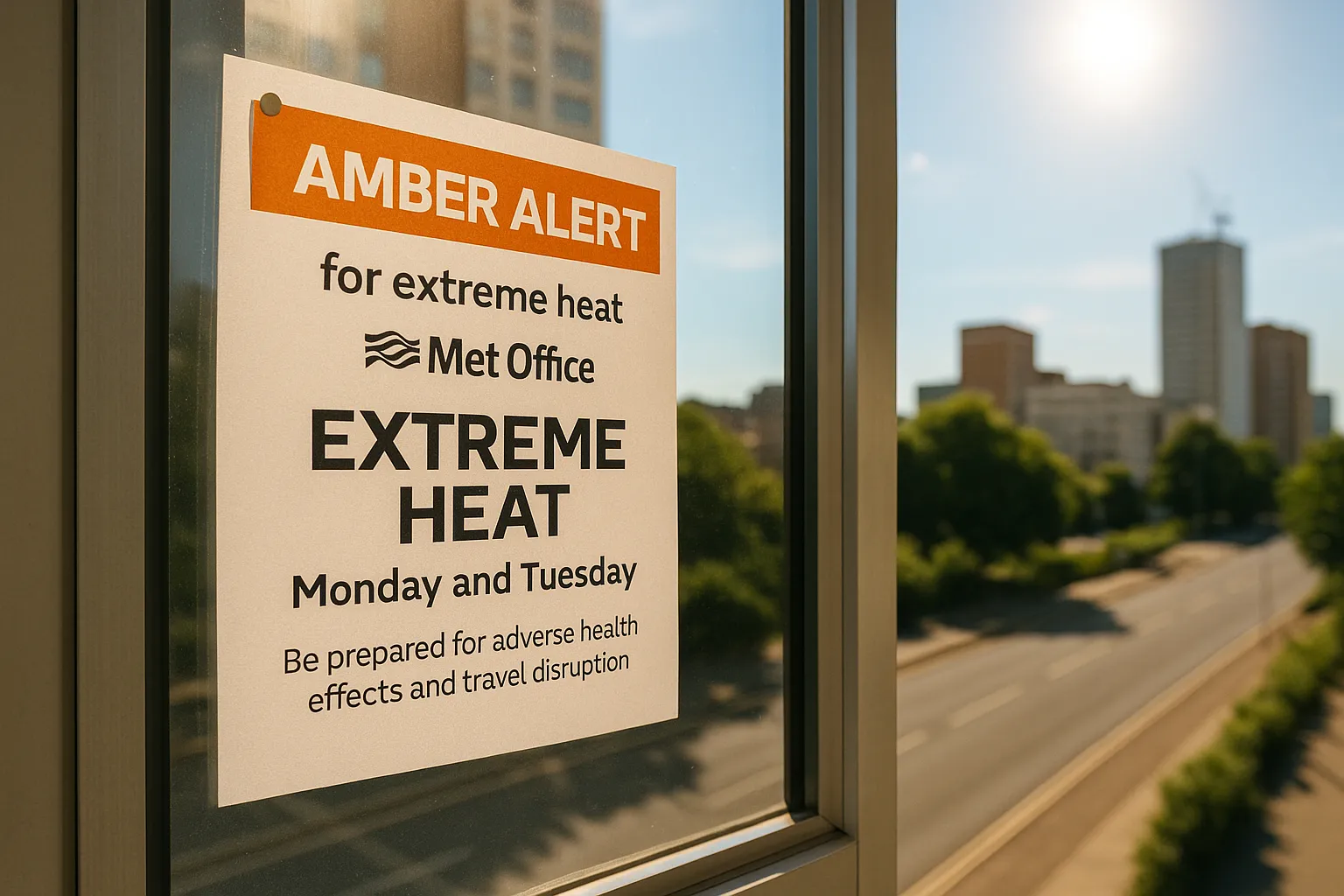
– Amber alert for extreme heat issued next Monday and Tuesday.
– Temperatures may hit mid 30s in southern England.
– Health risks and travel delays expected during heatwave.
– Vulnerable groups warned of increased health impacts.
– Cold water shock risks emphasized for swimmers.
Full Story
An amber alert for extreme heat is set to activate next Monday and Tuesday, affecting extensive regions of southern England and parts of south Wales. The Met Office has cautioned that the rising temperatures could lead to “adverse health effects,” as well as disruptions in transportation services and potential power outages.
Forecasts predict that temperatures could soar into the mid-30s on both days, with nighttime lows remaining above 20 degrees Celsius in some areas. Existing amber heat health alerts cover the east, South East, and South West of England, alongside London, and will be in effect from 12pm on Thursday until 8pm on Tuesday.
As the weekend approaches, certain areas in the south and South East are expected to reach the threshold for a heatwave. There is also a 40% likelihood of surpassing the record high for June, previously set at 35.6 degrees Celsius in 1957 and 1976, according to the Met Office. East Anglia is anticipated to see temperatures around 32 degrees on Friday before the warmth briefly recedes on Saturday, bringing a high of about 28 degrees. However, temperatures are projected to increase again, with parts of the south and South East likely reaching or exceeding 32 degrees on Sunday, followed by potential highs of 34 degrees on Monday.
Alex Deakin, a meteorologist at the Met Office, remarked that such temperatures are “pretty unusual even for the middle part of June.” There remains a slight chance that the heat could trigger thunderstorms, particularly in the South East and East Anglia on Sunday. Nonetheless, Deputy Chief Forecaster Gregory Wolverson noted that this upcoming warm spell may not replicate the “wall-to-wall sunshine and blue skies” experienced during the heatwave in May, suggesting that clouds and high humidity could make conditions feel “rather oppressive at times.”
During the May heatwave, numerous temperature records were set, including 35.1 degrees Celsius at Kew Gardens and 32.9 degrees in Cardiff’s Bute Park. Notably, the UK experienced 15 fatalities in open water incidents throughout May as a result of the heat.
The amber health warning issued by the UK Health Security Agency (UKHSA) indicates that health and social care services will likely face increased demand, with a potential rise in mortality rates. The agency has highlighted that those aged 65 and over, alongside individuals with pre-existing health conditions, are particularly at risk, although younger populations may also be affected. Less severe yellow health alerts are in place for the East and West Midlands, signalling minor impacts on local services.
According to the Met Office’s criteria, a heatwave is defined as a period of three consecutive days where maximum daily temperatures meet or surpass a specified threshold unique to that location.
In light of the upcoming hot weather, Samantha Hughes, the national water safety partner at the RNLI, emphasised the importance of safety in cold water. “With warmer weather approaching, it’s important to remember that the water is still cold,” she stated. In situations where someone unexpectedly enters cold water, there is a risk of cold water shock, which can lead to a sudden increase in heart rate and breathing that may provoke panic.
Hughes offered guidance for those who might struggle in the water: “If you find yourself struggling in the water, remember to Float to Live: tilt your head back so your ears are submerged, relax and control your breathing.” She also advised that it is acceptable for legs to sink while attempting to stay afloat, as everyone’s ability to float differs.
As the UK prepares for this heatwave, public safety and health remain paramount concerns. With the forecast predicting rising temperatures, authorities are urging vigilance and precaution. The imminent weather events underline the significance of being aware of one’s health, particularly for vulnerable groups. The warnings also highlight considerations for transport infrastructure, with expectations that traffic delays could arise as increased heat conditions put additional pressure on services.
In response to the amber alert, local councils and health authorities are mobilising efforts to ensure that resources are readily available to support those who may be adversely affected by the heat. Community initiatives are anticipated to be rolled out, focusing on public health messaging about staying hydrated and avoiding strenuous outdoor activities during peak heat times.
As more information on the extent of these heat conditions develops, residents are advised to stay informed through reliable news sources and heed local advisories to ensure safety for themselves and their families.
Our Thoughts
To mitigate the risks associated with the anticipated extreme heat, several proactive measures could have been taken. Firstly, organizations should implement and communicate heat health plans that comply with the Health and Safety at Work Act 1974, ensuring the safety of employees and vulnerable populations. This includes monitoring environmental conditions, providing adequate hydration, and allowing flexible working arrangements during peak temperatures.
Secondly, the Control of Substances Hazardous to Health Regulations 2002 could have been reviewed to ensure that any working environments are assessed for heat stress hazards, and appropriate control measures are established.
Thirdly, there should be an emphasis on public safety awareness campaigns regarding cold water shock, as highlighted by the RNLI. Encouraging education about safe practices in high temperatures and around water bodies could prevent incidents similar to the recent drownings during heat waves.
Lastly, it is essential for health agencies to prepare for increased service demand during heat alerts, as highlighted by the UKHSA warnings, to ensure that vulnerable populations receive necessary care and support. Adhering to these regulatory frameworks could help prevent health-related incidents during extreme weather conditions.