
















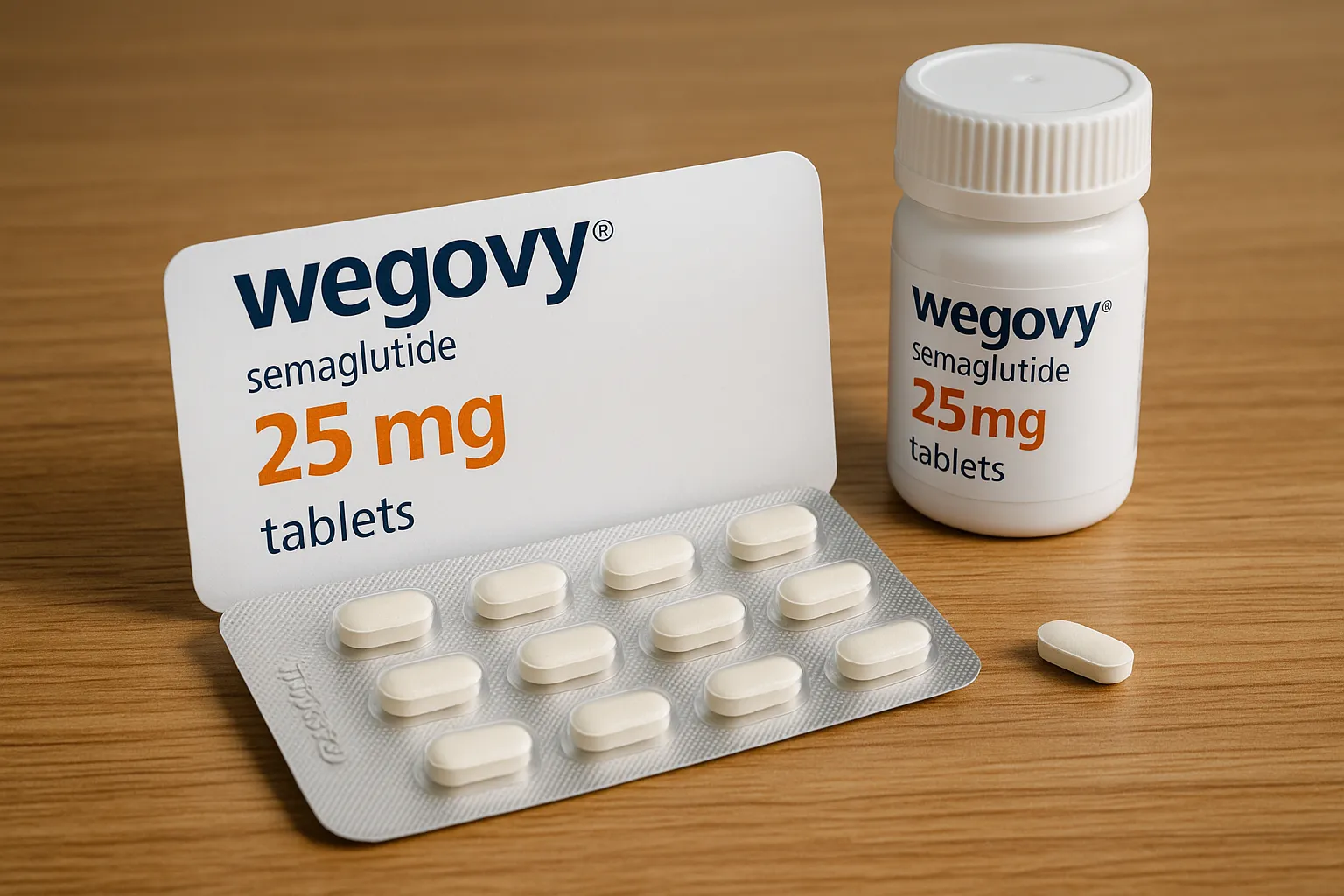
Story Highlight
– Wegovy approved as UK’s first oral GLP-1 weight loss pill.
– Tablet is for obese adults with BMI of 30+.
– Patients must take it daily on an empty stomach.
– Clinical trials showed significant average weight loss of 14%.
– Growing demand expected; concerns over counterfeit medications.
Full Story
The UK has recently approved its first oral weight loss medication, Wegovy (semaglutide), marking a significant development in the treatment options available for individuals living with obesity. The endorsement from the Medicines and Healthcare products Regulatory Agency (MHRA) means that adults with a body mass index (BMI) of 30 or above, and those with a BMI of 27 who are dealing with associated health conditions, now have an alternative to injectable treatments.
Wegovy is designed to be taken daily by patients, beginning at a dosage of 1.5mg, which can be gradually increased up to 25mg, after spending a minimum of one month at each dosage level. Current users of the injectable Wegovy, which is administered at a dosage of 2.4mg weekly, will have the option to transition directly to the higher oral dose. Prescription-based access to this new medication will become available through private channels in the weeks ahead, although an NHS assessment has yet to be completed.
Julian Beach, the executive director of healthcare quality and access at the MHRA, noted, “Having met the MHRA’s rigorous standards of safety, quality and effectiveness, the semaglutide tablet has been approved in the UK for weight loss and weight management.” Manufactured by Novo Nordisk, the Wegovy tablet must be taken intact with water on an empty stomach after an overnight fast of at least eight hours. Following ingestion, food and drink should be avoided for at least 30 minutes to ensure optimal absorption of the medication.
Clinical trials leading to the approval of the Wegovy tablet revealed that participants adhering to a healthy diet and exercise regime while taking the 25mg dose lost an average of 17% of their body weight over 64 weeks, in contrast to just 3% for those on a placebo. When including participants who either discontinued the treatment or did not strictly follow the protocol, the overall mean weight reduction across the trial was 14%. Reported side effects were primarily digestive and included nausea, diarrhoea, constipation, and vomiting.
Sebnem Avsar Tuna, managing director at Novo Nordisk, expressed that “This marks an important milestone for obesity care in the UK.” She highlighted that the introduction of an oral GLP-1 treatment provides individuals living with obesity a valuable option, allowing them the choice and flexibility of a tablet over injections for long-term weight management goals.
Professor Naveed Sattar from the University of Glasgow praised the approval of Wegovy’s oral formulation, stating, “The approval of the once-daily oral form of Wegovy (semaglutide) is welcome news for people living with obesity, particularly those who would prefer not to use injections.” He further remarked on the necessity of diversifying treatment options in light of the pressing public health issue of obesity, which is linked to many other health complications in the UK.
The UK is currently facing rising levels of obesity, with such conditions associated with numerous chronic health issues. The availability of alternative treatment options for sustained weight loss is increasingly deemed necessary by healthcare professionals.
James O’Loan, chief executive of Chemist4U, noted the enthusiasm surrounding the anticipated launch of the oral Wegovy pill, remarking, “The launch of oral weight loss medications is set to be game-changing for UK patients.” He indicated considerable interest, with the waiting list for consultations already exceeding 10,000 individuals. Many of those eager for the new medication have never tried GLP-1 treatments before, which suggests that the oral pill could broaden access to effective weight management solutions for countless people in the UK. O’Loan explained: “Weight loss pills are a great alternative for people who don’t feel comfortable using injections.”
In light of the growing public interest in medicated weight management, it is crucial that patients engage with reputable clinical services. Dr Kieran Seyan, chief medical officer at Pharmacy2U, emphasized the importance of opting for regulated sources rather than unverified online options, which may pose risks to health.
Olivier Picard, chairman of the National Pharmacy Association (NPA), labelled the announcement of Wegovy’s oral formulation as “very significant” and stressed its potential impact on those striving to achieve healthier weights through medical interventions. However, he expressed concerns regarding the burgeoning black market for counterfeit weight loss medications, an issue likely to be exacerbated by the introduction of a tablet form. Picard cautioned: “Patients must only ever obtain weight loss medication properly prescribed and dispensed by a regulated pharmacy. Unregulated providers may be selling faked medicines or medicines that do not meet the strict safety standards we have in the UK.”
As the rollout of Wegovy begins, healthcare professionals and industry leaders across the UK remain cautiously optimistic about the potential for this new tablet to transform weight management strategies for those affected by obesity. With obesity rates on the rise and the associated health risks being at the forefront of public health discussions, initiatives aimed at providing safe, effective treatment alternatives are more critical than ever to support individuals in their journey toward healthier lifestyles.
Our Thoughts
The approval of Wegovy tablets highlights potential areas of concern in patient safety and access to medication. To mitigate risks, greater emphasis should be placed on ensuring that patients obtain the medication only through regulated healthcare providers to prevent exposure to counterfeit products, as noted by industry experts.
Key safety lessons suggest that enhanced public awareness campaigns are necessary to inform patients of reputable sources for obtaining prescriptions. This aligns with the Health and Safety at Work Act 1974 which requires employers to ensure the health and safety of employees and the public.
Another area for improvement involves monitoring doses and transitions between medication types. Clearer guidance and oversight from the Medicines and Healthcare products Regulatory Agency (MHRA) could ensure that patients understand dosage protocols and associated risks, in accordance with the Misuse of Drugs Act 1971, which regulates prescription medications.
Moreover, the potential for side effects from the medication underscores the importance of comprehensive patient information and support systems, in line with the General Product Safety Regulations 2005. Implementing these measures could prevent similar incidents related to medication misuse or adverse reactions in the future.