















Story Highlight
– Council removed controversial fence blocking house’s main window.
– Fence faced mockery on social media for its appearance.
– Originally erected for health and safety reasons.
– Replaced with black metal railings to improve visibility.
– Neighbors expressed confusion over the initial decision.
Full Story
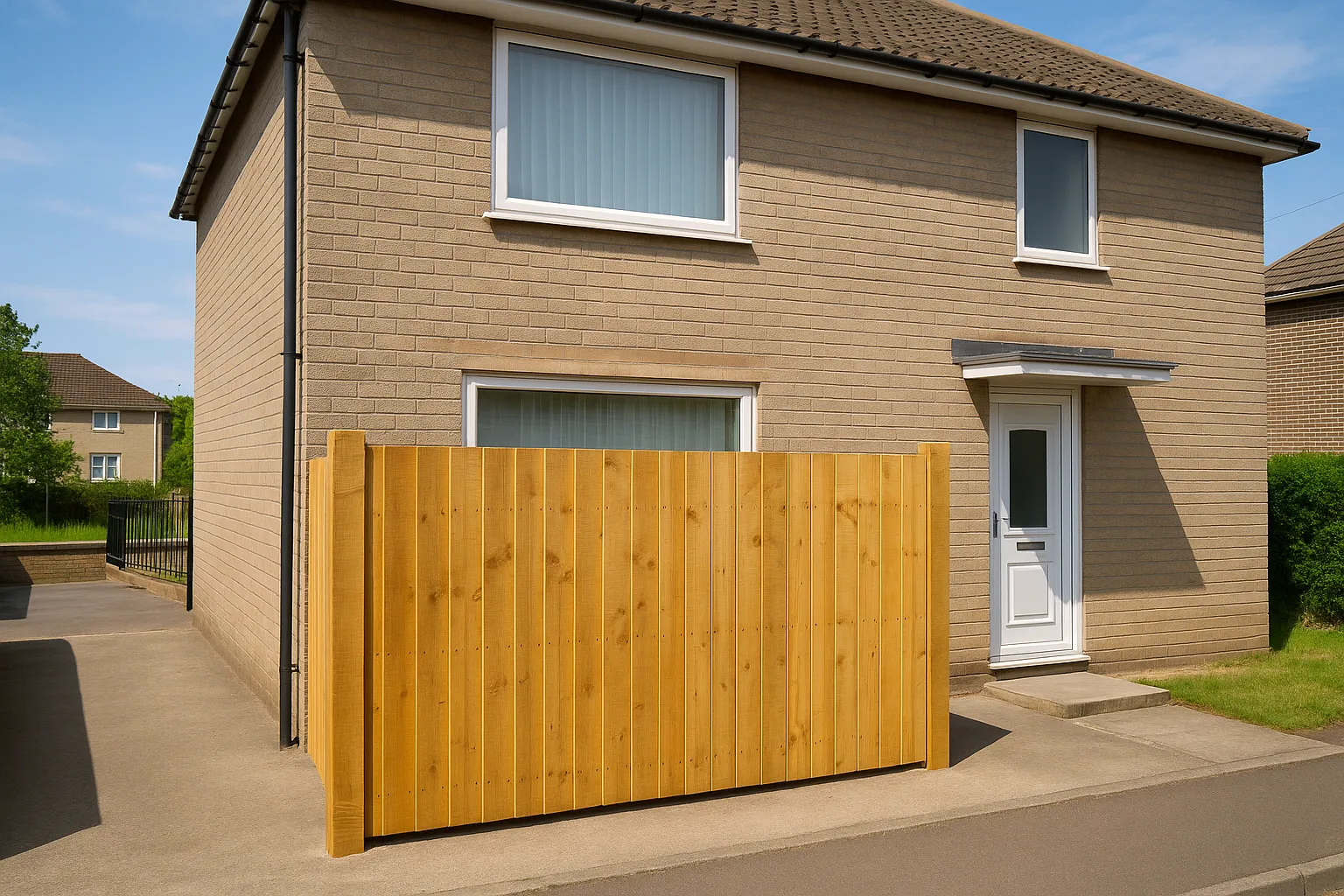
In a significant turnaround, local authorities in Bristol have dismantled a controversial fence that had attracted widespread ridicule amongst residents and social media users alike. This fence, deemed by many as ‘absurd,’ had been installed just inches away from a house’s main window, severely obstructing both light and views for the occupants.
The decision to erect the fence was reportedly made by Bristol City Council, who justified the action as a necessary measure to address health and safety concerns arising from a steep drop between the property’s driveway and adjacent ground. However, the implementation of the fence soon became a topic of mockery, with numerous comments highlighting its ineffectiveness. Social media platforms were flooded with reactions after its installation last month, with one user exclaiming, “Oh my goodness that is beyond stupid!”
The unsightly barrier not only blocked the view but also significantly diminished the sunlight entering the home, leading to the criticism echoing around the community. One worker involved in the installation candidly remarked on the fence’s appearance, stating, “Obviously the fence did look hideous and blocked 90 per cent of the sunlight going in. I think because of the views it had online, it was just decided that it needed to come down and something else put back in its place.”
As a result of the widespread backlash, the council has opted for a more aesthetically pleasing solution. The original fence has now been replaced with elegant black metal railings, which aim to ensure safety while also enhancing visual appeal for the residents.
Reactions from the local community have epitomised a blend of confusion and frustration. One neighbour, who identified himself as a builder, expressed his disbelief at the initial decision, remarking, “I can’t work it out and I’m a builder. It blocks the windows out. I think everyone is confused.” Another local resident voiced similar sentiments, suggesting that the motivation behind the installation was rooted in an excessive interpretation of health and safety regulations. “That’s health and safety gone a bit mad,” he said, further questioning the reasoning behind the initial design. “I just thought it was a bit silly and obviously common sense should come in at some point.”
In response to the uproar, a spokesperson for Bristol City Council reaffirmed the rationale behind the original decision to erect the fence. “We can confirm the property is owned by Bristol City Council. The fence was initially installed due to the significant drop between the drive and the side of the house – a barrier was therefore required for health and safety reasons,” they stated. They went on to explain that the recent replacement with black railings was intended to ameliorate the visual impact on the surrounding community.
This incident underscores the intricate balance needed between safety measures and community aesthetics, particularly in residential areas. Experts in urban planning argue that such decisions require careful consideration of both practical needs and the aesthetic implications for local residents.
The council’s swift response to public outcry highlights the importance of community engagement in decision-making processes, particularly concerning residential safety features. In a climate where local councils are under increasing scrutiny regarding resource use and community satisfaction, this incident has reignited discussions about how such measures are implemented and communicated.
As urban developments continue to evolve, residents are becoming more vocal about their feelings on various modifications to their living environments, whether these changes relate to infrastructure, safety features, or community facilities. This situation in Bristol offers a poignant reminder of the need for transparency and dialogue between local authorities and the communities they serve.
In the aftermath of the fence’s removal, many residents are left pondering how decisions that significantly affect their lives are made. The jest surrounding the fence speaks volumes about the role of social media in modern activism and local governance; residents were able to galvanise their opinions rapidly and influence council action through public outcry.
This incident has also raised crucial questions regarding the responsibilities of councils in ensuring that health and safety protocols are not only adhered to but are also proportionate. Indeed, whilst safety is paramount, the measures employed must strike a balance with residents’ quality of life and community identity.
Additionally, Bristol City Council’s experience can serve as a case study for other councils facing similar challenges. Positive engagement with the community, ahead of significant alterations, could foster goodwill and streamline the approval process for necessary safety installations.
In conclusion, Bristol’s fence saga may have appeared trivial at first glance, but it unearths deeper issues about governance, community interaction, and societal norms surrounding safety. Through assessing and adapting to public feedback, councils can enhance their operations and ultimately cultivate stronger relationships with the residents they serve.
Our Thoughts
The incident in Lockleaze, Bristol highlights several lapses in health and safety judgment. Firstly, the installation of a fence that obstructed light and views contradicts the principles outlined in the Health and Safety at Work Act 1974, which mandates that safety measures should not create adverse living conditions. The council’s decision to erect such a barrier demonstrates a failure to conduct a thorough risk assessment and consider alternative solutions that could have provided safety without compromising the residents’ quality of life.
To avoid similar issues in the future, councils should engage with local communities and stakeholders before implementing health and safety measures that affect them. Appropriate consultation would ensure that safety solutions are both effective and acceptable to residents. Additionally, adherence to the Management of Health and Safety at Work Regulations 1999, which require risk assessments to be suitable and sufficient, would prevent the implementation of impractical solutions that lead to public criticism.
In conclusion, fostering better communication and applying common sense in safety assessments can significantly enhance resident satisfaction while ensuring compliance with health and safety laws.