











Story Highlight
– Bristol council removes controversial fence blocking views and light.
– Fence initially installed for ‘health and safety reasons.’
– Neighbors and social media users mock the ‘hideous’ design.
– Replacement features black metal railings for improved aesthetics.
– Council acknowledges confusion over the fence’s initial installation.
Full Story
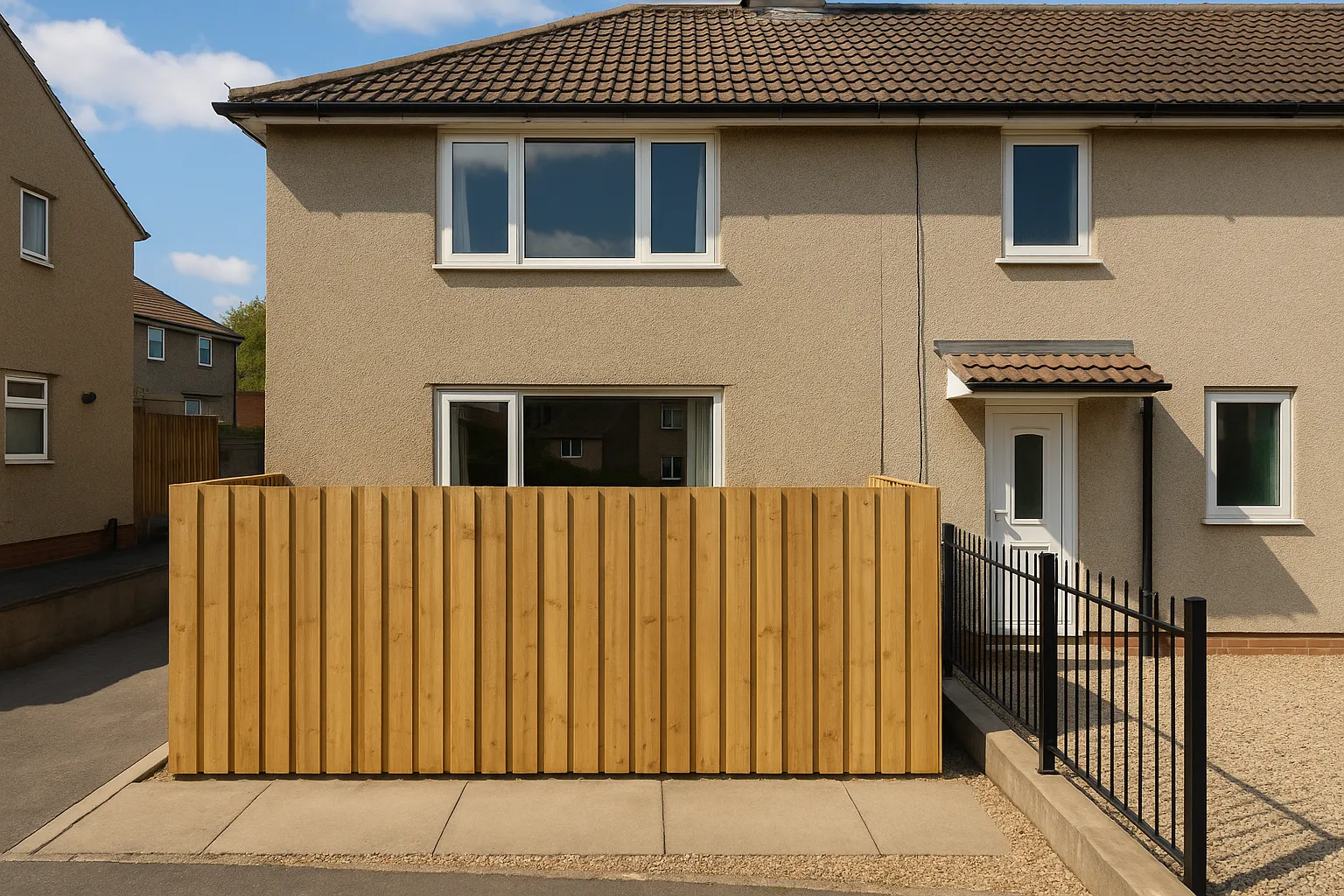
A fence that has drawn the ire of the community in Lockleaze, Bristol, has been taken down after significant public backlash. The fence, described as both ‘ridiculous’ and ‘hideous’, was positioned mere inches from the main window of a house, limiting light and obstructing views. Its design and placement raised eyebrows among neighbours and many social media users, who took to online platforms to express their disbelief.
The striking barrier was erected by Bristol City Council, initially intended to address what was termed a ‘significant drop’ between the property’s driveway and a neighbouring side area. Council officials stated that the fencing was necessary for health and safety reasons. However, the aesthetic impact of the fence quickly came under scrutiny, resulting in a wave of mockery directed at the council’s decision.
In response to growing complaints and its virality on social media, where thousands ridiculed the fence, the council opted to replace it with more visually appealing black metal railings. The earlier installation made it difficult for light to penetrate the home’s downstairs window, an issue noted by residents and workers involved in the construction.
A worker who participated in the removal shared insight into the situation, acknowledging the fence’s unattractive nature and its impact on natural light. “Obviously, the fence did look hideous and blocked 90 per cent of the sunlight going in. I think because of the views it had online, it was just decided that it needed to come down and something else put back in its place,” the worker stated.
The social media uproar began shortly after the fence’s installation last month, with users expressing their disbelief at the design. One commenter exclaimed, “Oh my goodness that is beyond stupid!” Another added, “This is ridiculous, surely the person who put that up must have questioned it? They must have some common sense.”
Local residents also voiced their opinions. A builder living in the vicinity remarked on the baffling nature of the fence, saying, “I can’t work it out and I’m a builder. It blocks the windows out. I think everyone is confused.” Another individual suggested that the decision to install the fence stemmed from an excessive interpretation of health and safety regulations. “I think it looked ridiculous. Whoever decided to do that, why?” they questioned. “I just thought it was a bit silly and obviously common sense should come in at some point.”
In light of the criticisms, a spokesperson for Bristol City Council confirmed that the property is indeed under their ownership. They reiterated that the fence was intended to mitigate risks posed by the steep drop between the driveway and the adjoining area. “The fence was initially installed due to the significant drop between the drive and the side of the house – a barrier was therefore required for health and safety reasons,” the spokesperson explained. They further clarified that the replacement of the contentious fence with black railings was intended to reduce its visual impact on the community.
The local backlash highlights a broader concern regarding urban design and community engagement in council decisions. As cities continue to evolve and expand, questions arise about how those in charge of public safety and aesthetics can balance both effectively. This incident serves as a reminder that community feedback is vital in making decisions that affect residents’ daily lives. The rapid response from the council in this instance reflects a willingness to listen to the community’s voice, which may pave the way for more thoughtful urban planning in the future.
This situation has not entirely diminished criticism regarding local governance and decision-making strategies. Residents continue to advocate for more transparency and input in municipal choices that directly alter their living environments. Although the council’s actions to replace the fence demonstrate a responsive approach, many residents feel that such fundamental oversights should not have occurred in the first place.
In conclusion, the saga of the Lockleaze fence has transformed from a local nuisance into a conversation piece that raises questions about governance, safety, and community representation. While the black railings may have alleviated the immediate concerns regarding obstruction and aesthetics, the underlying sentiment in the community emphasizes the necessity for rigorous scrutiny of local decisions. Only through ongoing dialogue and collaboration between authorities and residents can we shape public spaces that truly reflect the needs and sensibilities of the communities they serve.
Our Thoughts
The incident in Lockleaze highlights several health and safety oversights. The decision to erect a fence that obstructed natural light and views demonstrates a lack of proper risk assessment under the Management of Health and Safety at Work Regulations 1999. A more suitable solution could have involved consulting with residents and assessing the visual impact alongside safety needs.
Key lessons include the importance of balancing safety with community aesthetic and functionality. Effective communication with local residents and stakeholders could have provided insights into potential alternatives that adequately addressed safety concerns without compromising livability. Additionally, adhering to the Health and Safety (Safety Signs and Signals) Regulations 1996 could have guided proper signage to indicate hazards while maintaining visibility.
To prevent similar incidents, councils should implement a more rigorous consultation process and explore various safety measures that do not detract from the environment. Regular reviews of safety installations, including visual impact assessments, can ensure that measures remain appropriate and acceptable to the community.