















Story Highlight
– DSM begins demolition of 50-year-old link bridge.
– Norwich City Council to enhance dust suppression measures.
– Previous demolition caused significant dust complaints nearby.
– Health and Safety Executive confirms local council’s responsibility.
– Link bridge area to be secured for public safety.
Full Story
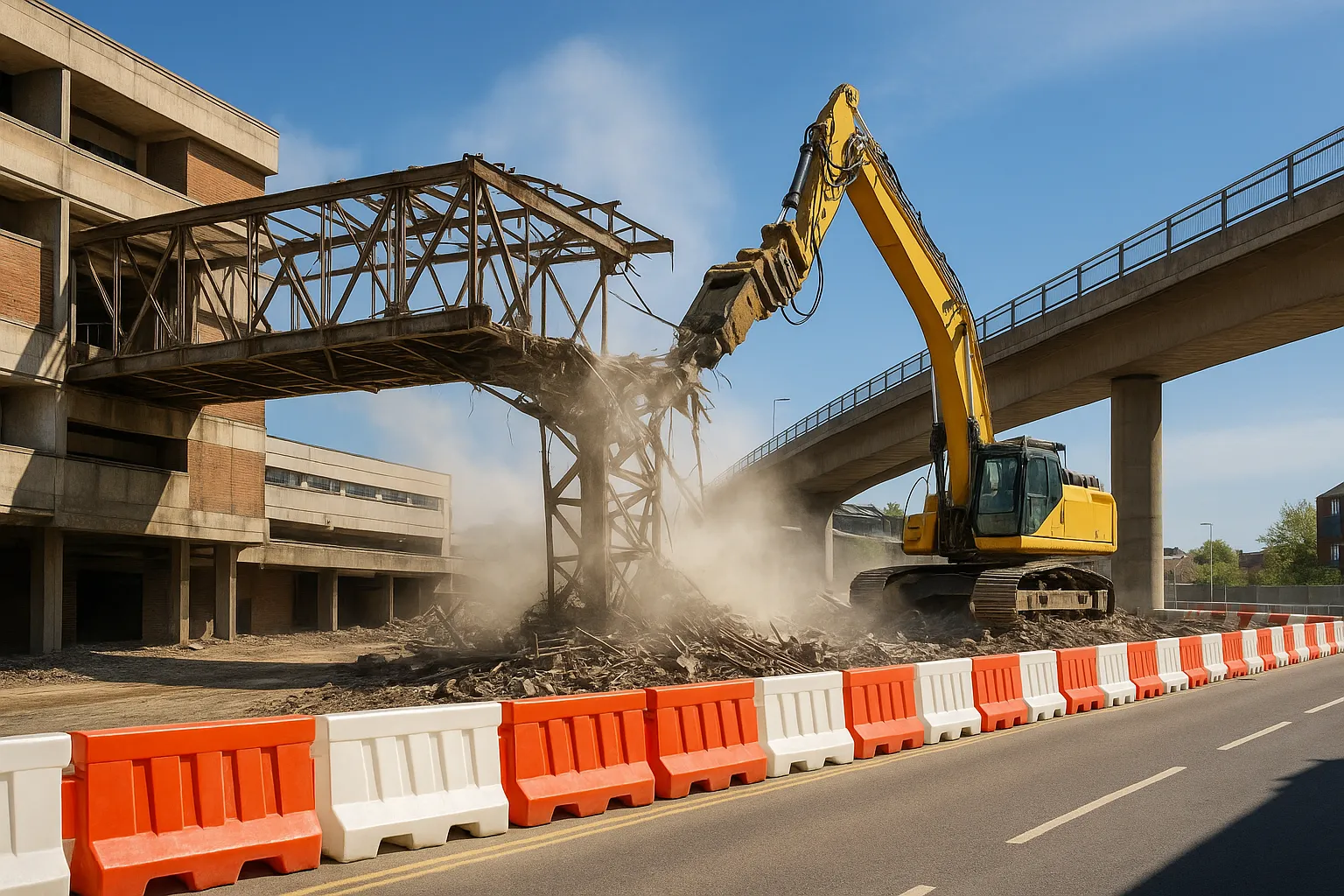
Demolition work is well underway in Norwich as contractors removed key structures from the former Anglia Square shopping centre, including the 50-year-old link bridge that has long connected the site to the Magdalen Street flyover. This development is a significant step in the ongoing renovation project spearheaded by Norwich City Council.
The demolition team, DSM, has begun dismantling the link bridge, which has served as a vital thoroughfare for both pedestrians and vehicles for decades. In light of prior air quality concerns associated with the project, the council has introduced enhanced measures to control dust, ensuring that the surrounding areas remain safe and clear. These measures include additional on-site water spraying and continuous misting to help contain any dust generated during the demolition.
Earlier this year, the controlled demolition of the multi-storey car park on the site led to considerable dust clouds that affected the air quality for nearby residents and businesses along Magdalen Street. Eyewitnesses described the experience as “suffocating,” prompting concerns regarding health and environmental safety in the locality. Such complaints have reached the Health and Safety Executive (HSE), the body responsible for enforcing health and safety legislation across the UK. The HSE acknowledged these complaints but stated that the issue lies primarily within the jurisdiction of the local council.
A spokesperson from Norwich City Council addressed these concerns, clarifying the situation surrounding the dust emissions. “The dust plume, which occurred in March this year, arose during a controlled partial collapse of the multi-storey car park,” the spokesperson stated. They noted that dust suppression protocols were already in place before the incident, including pre-wetting of structures and the deployment of water sprays during the demolition process. However, the spokesperson explained that the building’s deteriorating condition and specific weather conditions on that day contributed to the dust travelling beyond the confines of the immediate worksite.
In response to community concerns, the council has committed to ongoing dialogue with local residents and businesses to keep them informed and address any further issues relating to the demolition project. “We recognise the concerns raised by local businesses and residents and are continuing to engage directly with the local community,” added the spokesperson.
Safety remains a top priority during the demolition, particularly concerning vehicular and pedestrian traffic in the vicinity. To mitigate risks, the council has ensured that the link bridge is secured with robust safety barriers. These include interlocking red and white water-filled barriers, complemented by solid hoarding and concrete blocks, creating a safe perimeter around the active work zones.
This demolition activity is part of a larger redevelopment strategy aimed at transforming Anglia Square into a modern urban destination. The council envisions a vibrant area that accommodates residential, commercial, and recreational spaces, all of which would enhance the appeal of this location within Norwich.
Local shopkeepers and residents have expressed mixed feelings about the progress of the demolition and the planned redevelopment. While some see the potential for revitalisation in Anglia Square, others remain concerned about the noise, disruption, and dust that accompany such large-scale demolition works. The city council is keen to invest in the area and restore public space, but the balance between development and the daily lives of the nearby community is a topic that requires thoughtful consideration and dialogue.
Additionally, experts in urban development have pointed out that while such projects can yield long-term benefits for the community, the immediate impacts during demolition phases often challenge local businesses. For instance, increased foot traffic is an important factor for shops that rely on customer visits, and some have voiced concerns that ongoing construction could deter potential customers.
With the link bridge now being taken down and the multi-storey car park fully demolished, residents can expect further changes in the coming months as the project advances. It remains to be seen how the council will manage the ongoing construction environment and its effects on local life, but ongoing communication with the community will be crucial in maintaining a positive relationship during this transformative period.
As Norwich City Council moves forward with its ambitious redevelopment plan, the future of Anglia Square faces both challenges and opportunities. The council’s commitment to safety and environmental management during demolition is a step towards ensuring that the transition is as smooth and beneficial as possible for all stakeholders involved. The promise of a reimagined Anglia Square, with enhanced amenities and improved public spaces, could indeed fulfill the aspirations laid out by city planners, provided the local community remains an integral part of the conversation.
Our Thoughts
To avoid the incident involving dust pollution during the demolition of the link bridge, several measures could have been implemented more effectively. Firstly, a comprehensive dust management plan should have been established, taking into account the specific conditions and potential hazards surrounding the demolition site, as required by the Control of Dust at Construction and Demolition Sites Guidance.
In addition, the site management should have performed a more thorough risk assessment as per the Management of Health and Safety at Work Regulations 1999. This assessment should have addressed environmental controls in relation to weather conditions and laid out contingency measures to mitigate dust dispersion.
Furthermore, ensuring continuous monitoring of dust levels and improving communication with local residents about potential disruptions could have alleviated health concerns. The Health and Safety at Work Act 1974 mandates that employers ensure the health and safety of all employees and the public, which includes preventing harm from dust exposure.
To prevent similar incidents, contractors should enhance training on environmental health obligations and implement stronger suppression techniques, including real-time dust monitoring systems, to protect surrounding communities during demolition activities.