












Story Highlight
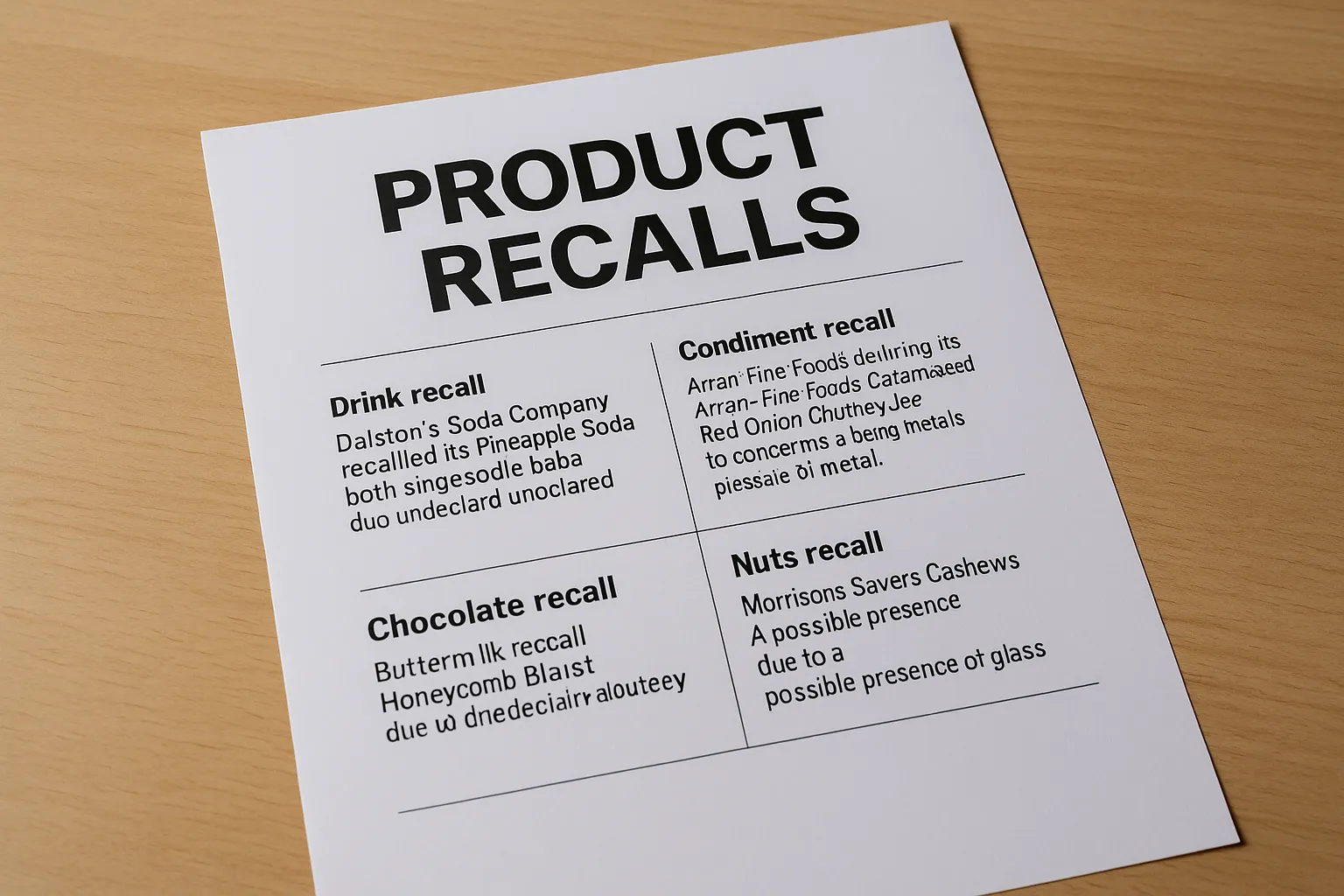
– Multiple products recalled due to health risks.
– Dalston’s Pineapple Soda cans may break unexpectedly.
– Buttermilk chocolate bar contains undeclared milk allergen.
– Arran Fine Foods Chutney may have metal fragments.
– Morrisons Savers Cashews could contain glass particles.
Full Story
Concerns about food safety have prompted significant recalls of various products sold across the UK, as the Food Standards Agency (FSA) has issued several “do not eat” alerts in light of potential health risks associated with these items. Consumers are being urged to refrain from consuming any of the implicated products and to follow specific guidance on what actions to take next.
Several manufacturers are taking precautionary measures following the FSA’s alerts. The agency announced that individuals who may have purchased affected items should closely adhere to the recall instructions provided. This may involve returning products to stores for a refund or, in some cases, disposing of them securely.
One notable recall involves Dalston’s Soda Company, which has pulled its Pineapple Soda from shelves. The fizzy drink is being recalled due to a defect in its packaging that has raised concerns that the cans may unexpectedly break apart. This poses a risk of injury to consumers because sharp edges could be exposed if the cans split. The affected Pineapple Soda comes in both 330ml single cans and multi-packs. The specific single cans carry the batch code 037130, while the multipack variant has a batch code of 037129, with both types having a best before date of August 4, 2027.
Customers are advised not to attempt to open the cans or consume the drinks. The company has recommended that consumers avoid handling the affected products unnecessarily and instead dispose of them in an external waste bin, ideally upright and in a sealed bag. Dalston’s has committed to providing a full refund for affected customers without the necessity of a receipt, which can be claimed by contacting their customer service via email or phone.
In another separate recall, Buttermilk Confections is withdrawing its Honeycomb Blast Choc Bar from UK retailers. The recall is prompted by the presence of undeclared milk within the product, posing a risk to individuals who are lactose intolerant or have milk allergies. The bar in question carries a best before date of June 15, 2027, and batch code BM26105. The FSA has urged consumers who purchased this chocolate not to consume it and to return it to the point of purchase for a full refund. Buttermilk Confections has also been proactive in notifying relevant allergy support organisations to alert their members regarding the recall.
Additionally, a popular condiment sold in Tesco and Sainsbury’s has come under scrutiny due to safety concerns. The recall of Arran Fine Foods Caramelised Red Onion Chutney, produced by Fox’s Burton’s Companies (FBC) UK, is being enacted because of the potential contamination with metal fragments. Customers who have bought this chutney have been advised not to consume it and to return it to the store immediately for a refund. The affected batches vary in best before dates, from November 25, 2028, to August 17, 2027.
Morrisons has also initiated a recall of its Savers Cashew packs due to concerns they may include glass fragments. The products in question, sold in 125g packs, possess varying best before dates including August 9 and October 9, 2026. Consumers should avoid eating these products and return them to the nearest Morrisons store for a refund. The chain has reassured customers that this issue does not extend to other products in their range.
Moreover, a dessert product from Gü has been recalled from Tesco and Waitrose after it was found that it might contain undeclared hazelnuts and soya, which could be a health risk for anyone with related allergies. The Gü Double Sea Salted Caramel Frozen Dessert has a lot number of 126135 and a best before date of June 30, 2027. The FSA is urging consumers with allergies to these ingredients to handle the situation with caution and return the item for a refund.
The FSA employs different notices to alert the public and local authorities about food safety issues, including Product Withdrawal Information Notices and Product Recall Information Notices. They have even issued “Food Alerts for Action,” providing detailed instructions for local authorities to help consumers effectively handle situations involving recalled food products.
In light of these recent events, it is recommended that consumers stay vigilant and check their purchases against the FSA’s announcements regularly. Shoppers should be aware of any potential risks and take the necessary steps to ensure their safety and health by following the guidance provided by the manufacturers and the FSA.
As these food safety recalls illustrate, the importance of clear labelling and transparency from manufacturers is crucial in maintaining consumer safety. The FSA continues to monitor and respond to incidents to protect public health, ensuring that contaminated or unsafe products are swiftly removed from the market. Customers are encouraged to report any concerns regarding food safety or potential hazards to the FSA, helping to foster a collective effort towards safer consumer practices.
Our Thoughts
The recent product recalls highlight significant lapses in safety measures and regulatory compliance. Key regulations breached include the Food Safety Act 1990 and General Food Law Regulation (EC) 178/2002 that mandate food safety standards and accurate labeling.
To prevent incidents like the ones described, manufacturers must enhance quality control processes to identify potential hazards, such as packaging defects or allergens not disclosed on labels. Rigorous risk assessments should be established during product development, ensuring all potential risks are mitigated before products reach consumers. Additionally, effective communication of safety warnings and clear recall procedures must be maintained to minimize consumer risk and confusion.
Regular training for staff on food safety legislation and best practices is essential. Implementing traceability systems could also significantly improve recall efficiency and consumer safety. Manufacturers should proactively liaise with the Food Standards Agency, ensuring that they rapidly report potential risks and cooperate fully with regulatory authorities throughout the recall process.