
















Choose an AI chat
New programme offers quicker access to mental health support for North East workers
UK Health and Safety Latest

New programme offers quicker access to mental health support for North East workers

by Michael Harland
June 16, 2026
0

Blue Talking Therapies has unveiled a new Employee Assistance Programme aimed at providing swift mental health support for workers in...

Read moreDetails
Health warning issued for outdoor workers amid rising summer temperatures

Health warning issued for outdoor workers amid rising summer temperatures

June 16, 2026
Harry and Meghan back UK social media ban for children's safety

Harry and Meghan back UK social media ban for children’s safety

June 16, 2026
Hornsea 3 project aims to power millions while prioritizing safety and innovation

Hornsea 3 project aims to power millions while prioritizing safety and innovation

June 16, 2026
Harry and Meghan face backlash over children's online safety statement

Harry and Meghan face backlash over children’s online safety statement

June 16, 2026

Archives

  • June 2026
  • May 2026
  • April 2026
  • March 2026
  • February 2026
  • January 2026
  • December 2025
  • November 2025
  • October 2025
  • September 2025
  • July 2025
  • August 2009

Categories

  • Health and Safety Help
  • News
  • Policies
  • UK Health and Safety Latest
  • About
  • Advertise
  • Policies
    • Privacy Policy
    • Editorial Policy
    • Corrections & Complaints policy
  • Useful Documents
    • Understanding RIDDOR
    • 10 Workplace Safety Failures
    • A Complete Guide to Reporting Safety Incidents in the UK
    • Fire Risk Assessment: Meeting the Regulatory Reform (Fire Safety) Order
    • COSHH Basics: A Practical Guide to Control of Substances Hazardous to Health
    • Working at Height in the UK: The Essentials (WAH Regulations 2005)
    • Asbestos in the Workplace: Control of Asbestos Regulations 2012 (CAR) Essentials
    • Managing Contractors Under CDM 2015: Roles, Duties & Controls
    • DSE & Ergonomics: Healthy Workstations for Office & Hybrid Teams
    • Lock out Tag out LOTO
    • Workplace Transport Safety: Forklifts, Pedestrians & Traffic Management
    • Noise & Vibration at Work: Practical Controls (2005 Regulations)
    • Confined Spaces in the UK: Safe Entry under the Confined Spaces Regulations 1997
  • Contact
  • Agent
Wednesday, June 17, 2026
16 °c
London
17 ° Sat
15 ° Sun
17 ° Mon
  • Login
UK Safety News
  • Home
  • News
    • All
    • UK Health and Safety Latest
    New programme offers quicker access to mental health support for North East workers

    New programme offers quicker access to mental health support for North East workers

    Health warning issued for outdoor workers amid rising summer temperatures

    Health warning issued for outdoor workers amid rising summer temperatures

    Harry and Meghan back UK social media ban for children's safety

    Harry and Meghan back UK social media ban for children’s safety

    Hornsea 3 project aims to power millions while prioritizing safety and innovation

    Hornsea 3 project aims to power millions while prioritizing safety and innovation

    Harry and Meghan face backlash over children's online safety statement

    Harry and Meghan face backlash over children’s online safety statement

    UK proposes social media ban for under-16s by spring 2024

    UK proposes social media ban for under-16s by spring 2024

    Esso fined £1m for safety breaches after oil refinery collapse

    Esso fined £1m for safety breaches after oil refinery collapse

    Starmer announces social media ban for under-16s in UK

    Starmer announces social media ban for under-16s in UK

    Africa Oyé introduces ticketing for landmark festival in Sefton Park

    Africa Oyé introduces ticketing for landmark festival in Sefton Park

    Multiple food recalls issued over health and safety concerns

    Multiple food recalls issued over health and safety concerns

    Trending Tags

    • Donald Trump
    • Future of News
    • Climate Change
    • Market Stories
    • Election Results
    • Flat Earth
No Result
View All Result
UK Safety News
No Result
View All Result
Home News UK Health and Safety Latest

India’s toxic herbicide use raises health concerns

Michael Harland by Michael Harland
June 9, 2026
in UK Health and Safety Latest
Reading Time: 4 mins read
0
India's toxic herbicide use raises health concerns

Story Highlight

– Paraquat Dichloride is highly toxic with no antidote.
– 74 countries have banned its use, including developed nations.
– India continues spraying Paraquat despite international bans.
– Critics cite weak regulations and safety measures in India.
– Concerns over health risks and food chain contamination persist.

Full Story

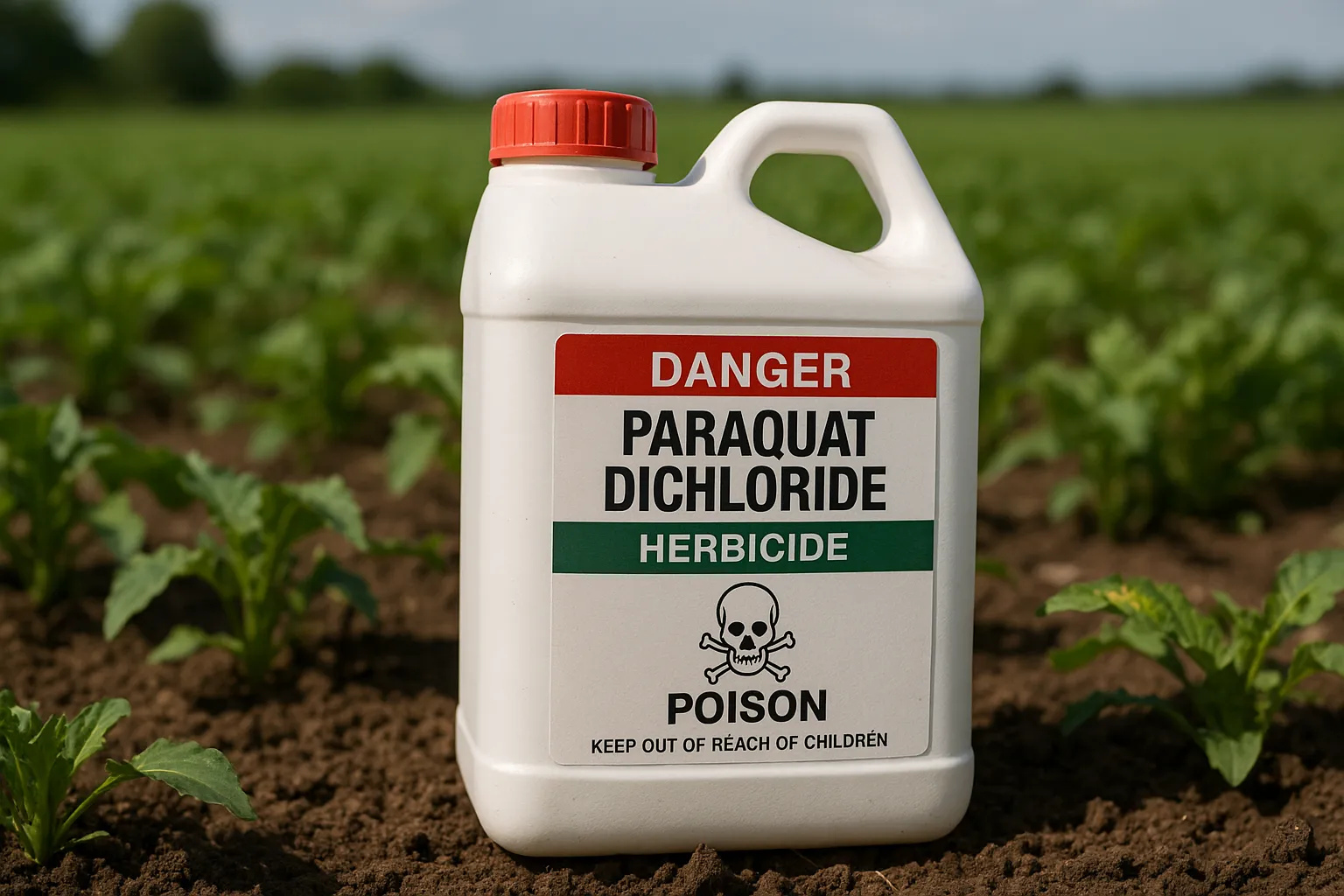
A highly toxic herbicide that poses significant health risks continues to be applied in agricultural practices across India, despite having no known antidote. Paraquat Dichloride, renowned for its lethality—where even minimal exposure can be fatal to humans—has been banned in over 70 countries due to safety concerns. Critics assert that ineffective regulatory frameworks in India have permitted the herbicide’s ongoing usage, leading to pressing questions about the safety of agricultural practices within the nation.

The central question being raised by various environmental campaigners is why India permits the agricultural use of Paraquat when 74 countries have deemed it too hazardous for use. The herbicide, first synthesised in 1882 by Austrian chemists, initially found its application as a chemical dye. However, it was not until the mid-20th century that its herbicidal properties were discovered by British researchers from Imperial Chemical Industries (ICI). Upon realising its effectiveness in eradicating plants, ICI began mass production of Paraquat in 1961 and marketed it globally a year later under the brand name Gramoxone.

In a somewhat ironic twist, the very countries that played pivotal roles in its development have since banned its use. For instance, Austria prohibited Paraquat in 1993, and the UK followed suit in 2007 due to mounting health concerns. Although the UK ceased domestic use, it continued to export the herbicide to nations like India. Switzerland, home to Syngenta—the key global manufacturer of Paraquat—implemented a ban in 1989, a move echoed by China in 2017. Despite owning Syngenta, China has since prohibited Paraquat’s domestic use.

Syngenta has indicated plans to cease global production of Paraquat by June 2026; however, the lack of a comprehensive national ban in India means that production may continue under other manufacturers. This ongoing utilisation raises significant concerns, particularly when considering that nations such as Austria, the UK, Switzerland, and numerous EU countries—including France and Germany—along with Brazil, Thailand, and Malaysia have enforced similar bans.

Champions of a prohibition argue that countries which have banned Paraquat have effectively transitioned to alternative agricultural practices that do not compromise crop yield. In India, the herbicide gained traction during the Green Revolution, a period marked by an emphasis on enhancing agricultural productivity and decreasing labour costs. The Central Insecticides Board and Registration Committee (CIBRC) sanctioned the use of Paraquat Dichloride for specific crops, including tea, potatoes, cotton, and paddy, among others.

In an attempt to address safety doubts, the Indian government instituted the Anupam Verma Committee in 2013. This committee assessed 66 pesticides banned internationally but still registered in India, including Paraquat. The review, however, concluded in 2015 with preferences to retain Paraquat’s registration, albeit under strict safety and packaging guidelines as well as medical preparedness criteria. Detractors of this decision argue that these safeguards have not been effectively enforced, leading to potential health crises.

Reports indicate that over 100 metric tonnes of Paraquat Dichloride are utilised annually in Indian agriculture. Alarmingly, in regions such as Rajasthan and Madhya Pradesh, farmers are reported to apply Paraquat in order to accelerate the drying process of crops like moong beans before harvesting, thus attempting to cut down on labour costs. Such farming practices raise significant red flags regarding the possible contamination of food supplies with hazardous residues.

The absence of a specific antidote for Paraquat poisoning exacerbates the risks associated with exposure. This factor has sparked broader discussions regarding the efficacy of India’s agricultural regulations and priorities surrounding public health. The continuing approval of Paraquat presents urgent questions regarding the government’s commitment to ensuring the safety of its citizens in the face of mounting evidence substantiating the herbicide’s dangers.

As India navigates these complex issues, it remains imperative that regulatory oversight enhances, prioritising public health and the safety of its agricultural practices. This re-evaluation is crucial as concerns continue to linger over the implications of using a substance that many nations consider too perilous to maintain within their agricultural systems. The ongoing debate surrounding Paraquat highlights the necessity for increased public scrutiny and legislative action regarding pesticide usage in India, ensuring that a balance is struck between agricultural productivity and the health of consumers.

While critiquing existing policies, it is important that discussions about Paraquat also consider the ongoing plight of farmers who may rely on such substances for their livelihoods. Effective agricultural practices must not only safeguard the health risks associated with toxic chemicals but also provide a sustainable path forward for the farming community. The future of agricultural innovation in India hinges on finding safer alternatives while addressing the realities of those who cultivate the land.

Our Thoughts

The continued use of Paraquat Dichloride in India raises significant health and safety concerns, particularly given its toxic nature and the absence of an antidote. To mitigate risks and align with best practices observed in countries that have banned the substance, India could strengthen its regulatory framework by enforcing stricter controls on the approval and usage of hazardous chemicals.

Key safety lessons include the importance of comprehensive risk assessments and robust enforcement of safety standards, which were not adequately implemented as per the Anupam Verma Committee’s recommendations. Additionally, proper training for farmers and stakeholders on the dangers associated with using such chemicals and implementing effective monitoring systems are critical steps that could have prevented these issues.

In the UK, relevant legislation such as the Control of Pesticides Regulations 1986 and the Health and Safety at Work Act 1974 emphasizes the need for safe pesticide practices and risk management. By ignoring these principles, significant regulatory gaps emerged that allowed unsafe chemicals to continue in use.

To prevent similar incidents in the future, a proactive regulatory approach, including regular reviews of pesticide safety, could ensure adherence to public health standards and align with international best practices.


SummarizeShare34Share197SendSend
ADVERTISEMENT
Michael Harland

Michael Harland

Related Posts

Melatonin use in children raises safety and dependency concerns

Melatonin use in children raises safety and dependency concerns

by Ellie Cartwright
March 13, 2026
0

The rising demand for melatonin among children in the UK has sparked serious safety concerns, as parents increasingly turn to...

Princess Anne visits Barnsley employers during royal tour

Princess Anne visits Barnsley employers during royal tour

by Tara Rowden
December 18, 2025
0

Princess Anne's recent visit to Barnsley highlighted the region's commitment to local employment and workforce development. Touring major employers GXO...

Leave a Reply Cancel reply

Your email address will not be published. Required fields are marked *

I agree to the Terms & Conditions and Privacy Policy.

Useful Documents

  • Understanding RIDDOR
  • 10 Workplace Safety Failures
  • A Complete Guide to Reporting Safety Incidents in the UK
  • Understanding RIDDOR
  • Fire Risk Assessment: Meeting the Regulatory Reform (Fire Safety) Order
  • COSHH Basics: A Practical Guide to Control of Substances Hazardous to Health
  • Working at Height in the UK: The Essentials (WAH Regulations 2005)
  • Lock out Tag out LOTO

Recent Posts

  • New programme offers quicker access to mental health support for North East workers
  • Health warning issued for outdoor workers amid rising summer temperatures
  • Harry and Meghan back UK social media ban for children’s safety
  • Hornsea 3 project aims to power millions while prioritizing safety and innovation
  • Harry and Meghan face backlash over children’s online safety statement

Recent Comments

  1. Piper Douglas on Worker dies due to inadequate machinery safety measures
  2. Natalie Coleman on New housing laws aim to tackle damp and mould crisis in England
  3. Simon Barrett on Honeymoon ruined by illness as newlywed suffers severe infection in Cape Verde
  4. Nolan Barrett on Work-related ill health in Great Britain remains a concern after pandemic peak
  5. Dylan Reeves on Sickness rates among Scottish police officers soar to troubling levels
UK Safety News

Copyright © 2026
UK Safety News

Navigate Site

  • About
  • Advertise
  • Policies
  • Useful Documents
  • Contact
  • Agent

Follow Us

Welcome Back!

Login to your account below

Forgotten Password?

Retrieve your password

Please enter your username or email address to reset your password.

Log In
No Result
View All Result
  • Home
  • News

Copyright © 2026
UK Safety News

This website uses cookies. By continuing to use this website you are giving consent to cookies being used. Visit our Privacy and Cookie Policy.