













Story Highlight
– Multiple products recalled due to health and safety risks.
– Dalston’s Pineapple Soda cans may unexpectedly break.
– Buttermilk’s Honeycomb Blast Bar contains undeclared milk.
– Arran Fine Foods chutney possibly has metal pieces.
– Morrisons Savers Cashews may contain glass shards.
Full Story
Health authorities have initiated several product recalls due to potential safety concerns, prompting the Food Standards Agency (FSA) to issue warnings to consumers across the nation. These alerts have been particularly aimed at items sold in well-known supermarkets, advising customers to refrain from consumption if they Purchased affected products.
The FSA has categorised several products as “do not eat” due to significant health risks and has provided clear instructions regarding the return or disposal of these items. Customers are encouraged to follow specific recall procedures, which often include returning products for a full refund or disposing of them safely.
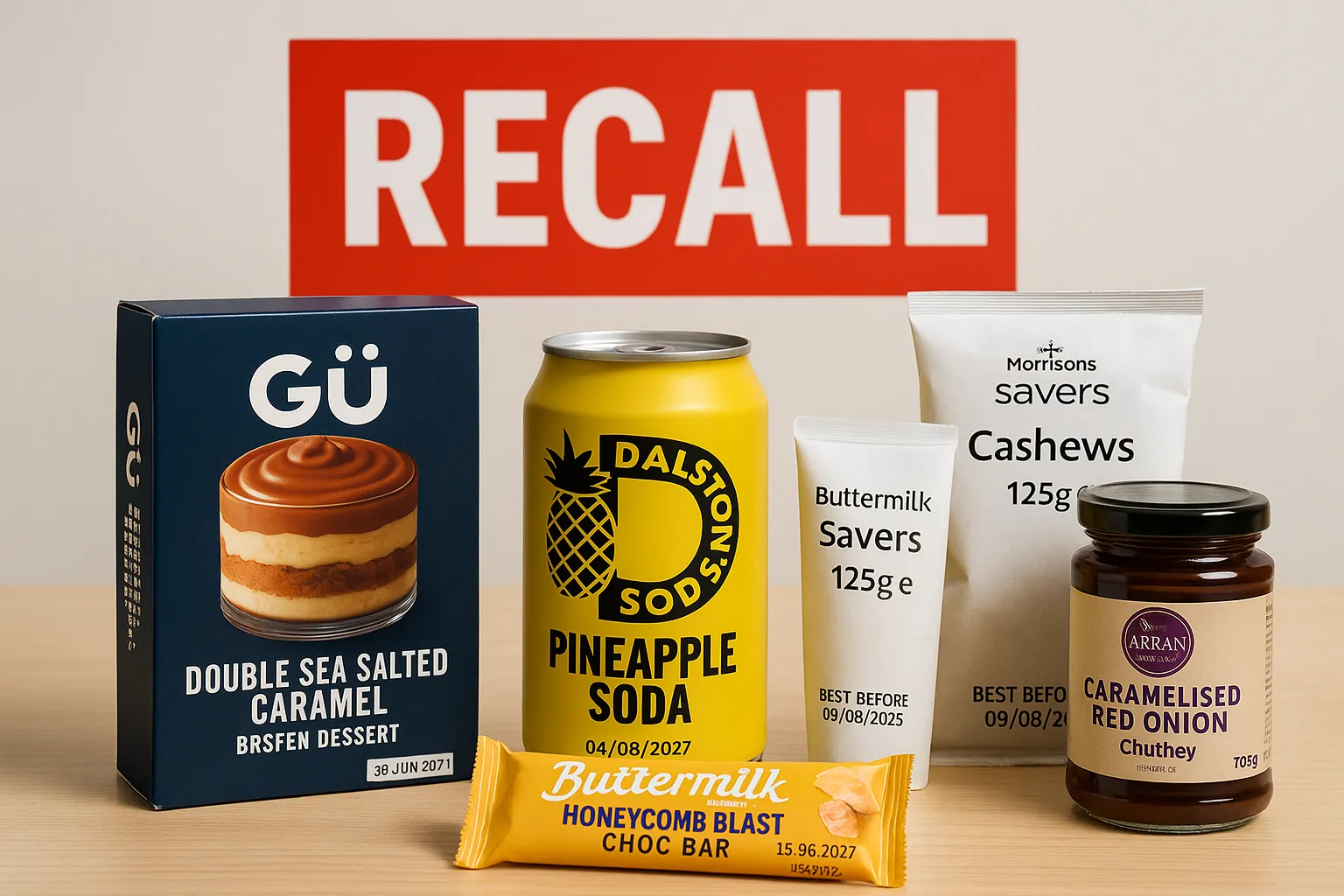
One notable recall involves a fizzy beverage produced by Dalston’s Soda Company. Concerns have been raised regarding their Pineapple Soda cans, which may unexpectedly break due to a packaging defect. This issue has been classified as a risk, as fractured cans could expose sharp edges, posing a potential injury threat. The affected products include both single cans (330ml) and multipacks containing four cans, identified by batch codes 037130 and 037129, respectively. The best before date for all affected cans is set for August 4, 2027.
Dalston’s Soda Company has specifically instructed customers not to attempt opening the cans or consuming the contents. Instead, they have recommended that consumers avoid handling the product further and dispose of it appropriately, ideally standing upright in a sealed bag to minimise risk. Refunds for the affected customers can be processed through email or their website, with no proof of purchase necessary. Dalston’s also assured that no other products or batch numbers were impacted by this recall and expressed regret for the inconvenience caused.
Another health risk has emerged from Buttermilk Confections, which is recalling its Honeycomb Blast Choc Bar due to the presence of undeclared milk, which poses a danger for individuals with milk allergies or intolerances. The product, which carries a best before date of June 15, 2027, and batch code BM26105, should not be consumed by those affected. A representative from the FSA highlighted the importance of notifying allergy support organisations to alert their members regarding this recall. Customers who purchased the product are advised to return it to the store for reimbursement.
Additionally, concerns were raised about a chutney product sold at Tesco and Sainsbury’s, where the manufacturer, Fox’s Burton’s Companies (FBC) UK, issued a recall for their Arran Fine Foods Caramelised Red Onion Chutney. The product may contain small pieces of metal, rendering it unsafe for consumption. Affected batches include several packs (195g) with various best before dates extending to January 2029, alongside larger packs (1.35kg) with expiry dates through August 2027. Customers who have purchased this item have been instructed to return it to the retailer for a full refund and have been given contact information for further inquiries.
In a separate incident, Morrisons recalled its Savers Cashews due to a potential threat of glass fragments within the product. The affected cashews, packaged in 125g bags, have best before dates ranging from August 9 to October 9, 2026. Morrisons has committed to displaying point-of-sale notices in their stores to inform customers of the recall and ensure refund procedures are clearly communicated.
A warning was also issued concerning Gü desserts sold at Tesco and Waitrose. The Gü Double Sea Salted Caramel Frozen Dessert was withdrawn due to a labelling error that failed to disclose the presence of hazelnuts and soya. Consumers with allergies to these ingredients are advised against consuming the dessert, which has a lot number of 126135 and a best before date of June 30, 2027. The FSA reiterated that those affected should return the product for a refund without needing proof of purchase. Gü has highlighted that the recall pertains to a limited number of items, and proactive measures are being taken to enhance allergen control in their production processes.
These recalls underscore the paramount importance of food safety and the measures taken by manufacturers and health authorities to safeguard consumer health. The FSA plays a crucial role in issuing Product Withdrawal Information Notices to both consumers and local authorities regarding food safety issues. In instances requiring more immediate action, a “Food Alert for Action” may also be disseminated, detailing specific procedures that should be adopted by local authorities.
Consumers are encouraged to keep abreast of these recalls, remain vigilant in checking the products they purchase, and heed all safety advisories issued by relevant authorities. The food industry is committing to ensuring that transparency and safety remain at the forefront of public health considerations as these recall events unfold.
Our Thoughts
To avoid the incidents detailed in the article, manufacturers should enhance their quality control measures to identify potential defects during production and packaging. Regular inspections and robust testing protocols could help prevent issues like packaging defects that lead to sharp edges or contamination from foreign objects, such as metal or glass.
Key safety lessons include the importance of clear product labeling to prevent allergic reactions, as seen with the Honeycomb Blast Choc Bar which failed to disclose milk content. Manufacturers must comply with the Food Labelling Regulations 1996 and ensure accurate allergen information is clearly marked.
The recalls signal breaches of health and safety obligations under the Food Safety Act 1990, particularly concerning the sale of unsafe food products. Unaddressed defects pose significant risks to consumer safety and may result in legal ramifications for the companies involved.
To prevent similar incidents in the future, implementing comprehensive risk assessments, consumer feedback mechanisms, and an effective crisis communication strategy can mitigate risks. Additionally, training staff on food safety regulations and allergen management is crucial to maintaining compliance and safeguarding public health.