












Story Highlight
– Food Standards Agency warns against consuming several recalled items.
– Tesco and Sainsbury’s recall chutney due to metal contamination.
– Waitrose recalls hot cross buns for undeclared barley allergen.
– Morrisons Savers cashews recalled over possible glass presence.
– Gü dessert withdrawn for undeclared allergens, posing health risks.
Full Story
The Food Standards Agency (FSA) has issued crucial safety alerts regarding several food products available in supermarkets across the UK, highlighting potential health hazards associated with their consumption. Shoppers are advised to avoid these items and adhere to recall instructions provided by the agency.
Several major retailers, including Tesco, Sainsbury’s, Waitrose, and Morrisons, are affected by these warnings. Consumers who have purchased any of the implicated products are recommended to refrain from consuming them and to either return the items for a refund or properly dispose of them as per the guidance issued.
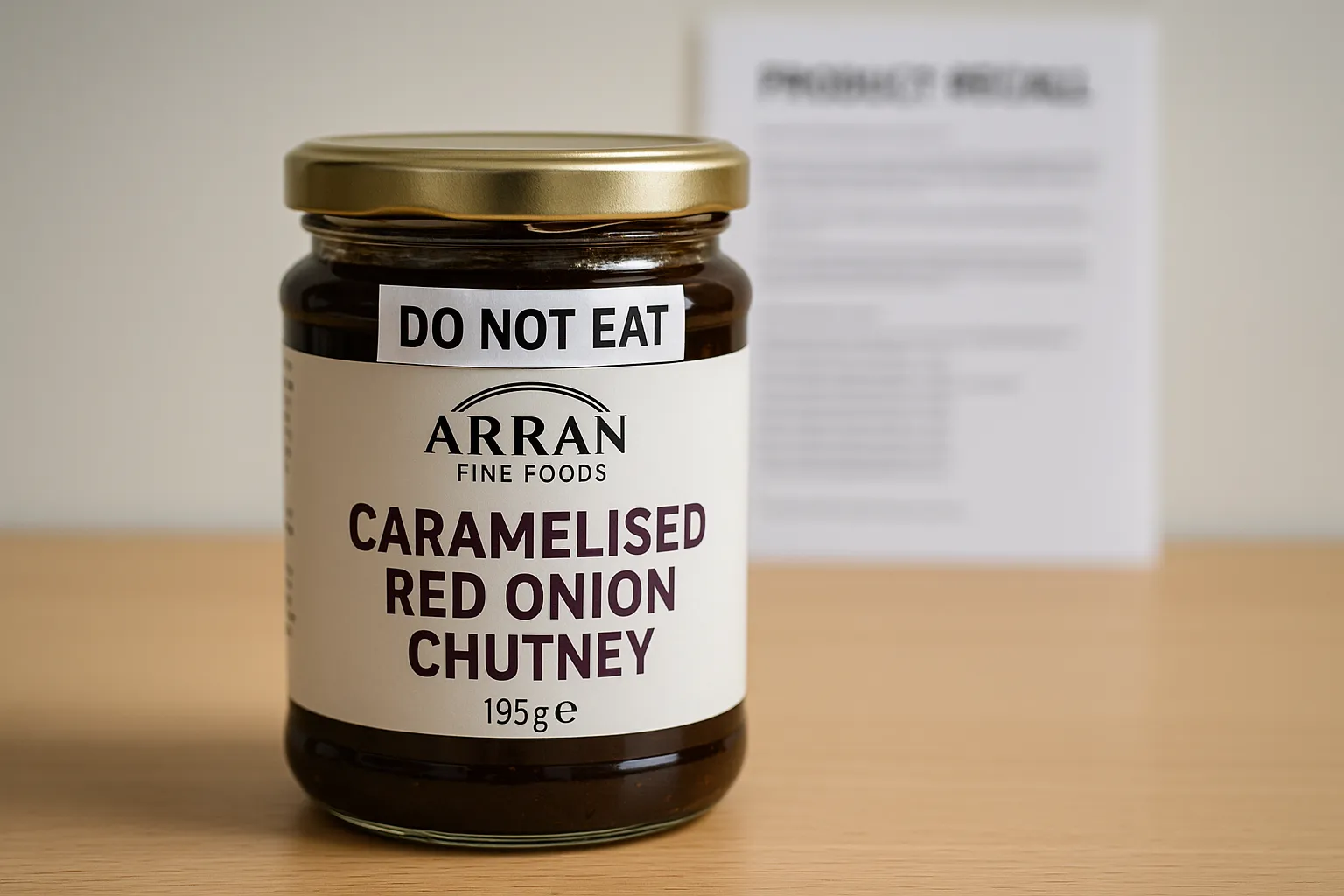
A significant concern arises from a product recall affecting the Arran Fine Foods Caramelised Red Onion Chutney, supplied by Fox’s Burton’s Companies (FBC) UK. This condiment, sold in 195g and 1.35kg packs, is being withdrawn due to possible metal contamination. The affected batches have various best before dates extending into 2029, with guidelines directing customers to return them to their place of purchase promptly.
On May 28, 2026, the FSA articulated its concerns via social media, stating, “If you have bought the above product, do not eat it. Instead, return it to the store from where it was purchased for a full refund.” Individuals requiring further assistance were encouraged to reach out to the company’s careline.
Loudwater Trade & Finance Ltd has expressed regret over the recall and the inconvenience caused to consumers. As a precaution, the product has already been removed from the online inventories of Sainsbury’s and has been marked as “out of stock” on Tesco’s website.
In a separate incident, the FSA has alerted customers regarding Waitrose & Partners, which issued a recall for its 4 Richly Fruited Hot Cross Buns. These buns may pose a risk for individuals allergic to barley, as the allergen was not mentioned on the product label. The recall applies to items with a best before date of June 6, 2026.
A representative from the FSA remarked, “Waitrose & Partners are recalling the above product from customers and have contacted the relevant allergy support organisations to inform their members.” They further advised affected customers to return the product for a refund, even if receipts were misplaced.
Morrisons has also found itself at the centre of a recall due to unsafe products. The supermarket chain has initiated a withdrawal for its Morrisons Savers Cashews, following concerns that they may contain glass fragments. The recall encompasses several packs with best before dates scattered across the months of August and September 2026.
Amid the ongoing health advisories, an FSA spokesperson pointed out, “Morrisons is recalling the above product. Point of sale notices will be displayed in all retail stores that are selling it.” Customers are urged not to consume the product and to seek refunds directly from the stores.
Additionally, the FSA has highlighted safety issues surrounding Gü Double Sea Salted Caramel Frozen Dessert, available at Tesco and Waitrose. The recall was prompted due to undeclared allergens—specifically hazelnuts and soya. This unforeseen risk means that individuals with allergies to nuts or soya should avoid consuming the item. The lot number 126135 applies to the products in question, with a best before date of June 30, 2027.
The FSA reiterated its commitment to consumer safety in this instance, stating, “Gü is recalling the above product from customers and has taken proactive steps to mitigate the issue.” They reassured consumers that the potential problem concerns a limited quantity, but encouraged those impacted to return the dessert for a refund, no purchase receipt required.
The FSA’s directives offer comprehensive information regarding the purchase and consumption of these items, along with contact details for those needing further assistance. Consumers can connect with various carelines for each brand, ensuring concerns are addressed promptly and efficiently.
Product recalls are essential tools for ensuring public safety. When a food item is found to be unsafe, retailers are obliged to remove it from shelves, and the FSA publishes Product Withdrawal and Recall Notices to inform the public and local authorities about the specific actions required. The agency also issues Food Alerts for Action to ensure coordinated measures are taken regarding contaminated or unsafe products.
As noted by public health experts, such proactive measures are vital for protecting consumers from potentially hazardous food products. Enhanced procedures and regulatory oversight ensure that food safety concerns are swiftly addressed, enabling consumers to engage in safer shopping experiences.
For those interested, detailed information related to recalls and specific product guidelines can be found on the FSA’s official website, where updates are frequently posted to keep the public informed about food safety matters.
As shoppers navigate supermarket aisles, staying vigilant and informed about recent recalls is paramount. Monitoring announcements from the FSA and keeping track of product advisories can safeguard against health risks associated with contaminated food items.
Our Thoughts
The incidents highlighted in the article reflect serious breaches of UK health and safety regulations concerning food safety, particularly under the Food Safety Act 1990 and the General Food Law Regulation (EC) 178/2002. To prevent such occurrences, product manufacturers should enhance their quality control systems, employing rigorous checks during production to ensure no foreign objects (e.g., metal or glass) or allergens are present in food products. Regular risk assessments should be conducted to identify potential hazards.
Key safety lessons include the importance of accurate labeling to disclose all ingredients, particularly allergens, to protect consumers with specific dietary needs. Comprehensive staff training in food safety standards and allergen management is crucial.
Improving communication with consumers during recalls can mitigate health risks; companies should ensure clear instructions on how to handle recalled products. Implementing a robust reporting mechanism for defects could lead to quicker responses and a culture of safety.
To prevent similar incidents, stricter regulations governing food safety compliance, alongside frequent audits and inspections by relevant authorities, would reinforce public protection.