















Story Highlight
– Scarlet fever outbreak occurred in Berlin nursery this spring.
– Measles cases doubled in Europe in 2024, alarming officials.
– MMR vaccine highly recommended but vaccination rates declining.
– COVID-19 pandemic disrupted routine childhood vaccination globally.
– Parents prioritize individual safety over collective healthcare responsibility.
Full Story
In early spring, a scarlet fever outbreak emerged at a nursery in Berlin, prompting initial concerns for one parent whose child was enrolled there. The thought of the illness, reminiscent of characters in classic literature, like Beth from *Little Women*, created a sense of unease. However, scarlet fever, caused by Group A Streptococcus bacteria, remains a prevalent childhood illness rather than a relic of the past. Characterised by its high contagion rate, scarlet fever typically responds well to antibiotics, although no vaccination exists to prevent it. The parent felt reassured when another mother shared that they had verified their child’s immunisation status, though inquiries into others’ vaccination details are generally frowned upon.
Fortunately, the infection did not affect their son. Nonetheless, as the family prepared for a trip to the UK, worries started to shift towards the rising incidence of measles, particularly in regions like North London. While their child had received the initial MMR (measles, mumps, and rubella) vaccination, this only provided partial protection against the virus. For immunity to be effective within the community, widespread vaccination is necessary.
Recent statistics have revealed a troubling trend; in 2024, Europe recorded a more than twofold increase in measles cases compared to the previous year, reaching 127,350—a figure not seen since 1997, accounting for nearly a third of global cases and resulting in 38 fatalities. Hans Kluge, the World Health Organization’s regional director for Europe, issued a stark reminder in March 2025: “Measles is back, and it’s a wake-up call. Without high vaccination rates, there is no health safety.”
In parallel, Robert F. Kennedy Jr., the US Secretary of Health and Human Services, articulated an outdated viewpoint on Fox News, recalling a time when measles was a ubiquitous childhood experience that supposedly conferred lifelong immunity. His statements, however, misrepresented both the risks associated with measles and the effectiveness of current vaccines. Furthermore, Kennedy has perpetuated a long-debunked notion linking the MMR vaccine to autism, a claim originally popularised by Andrew Wakefield in a now-retracted 1998 paper. Wakefield’s medical licence was revoked in 2010 following a serious professional misconduct investigation that unveiled significant ethical violations and financial incentives.
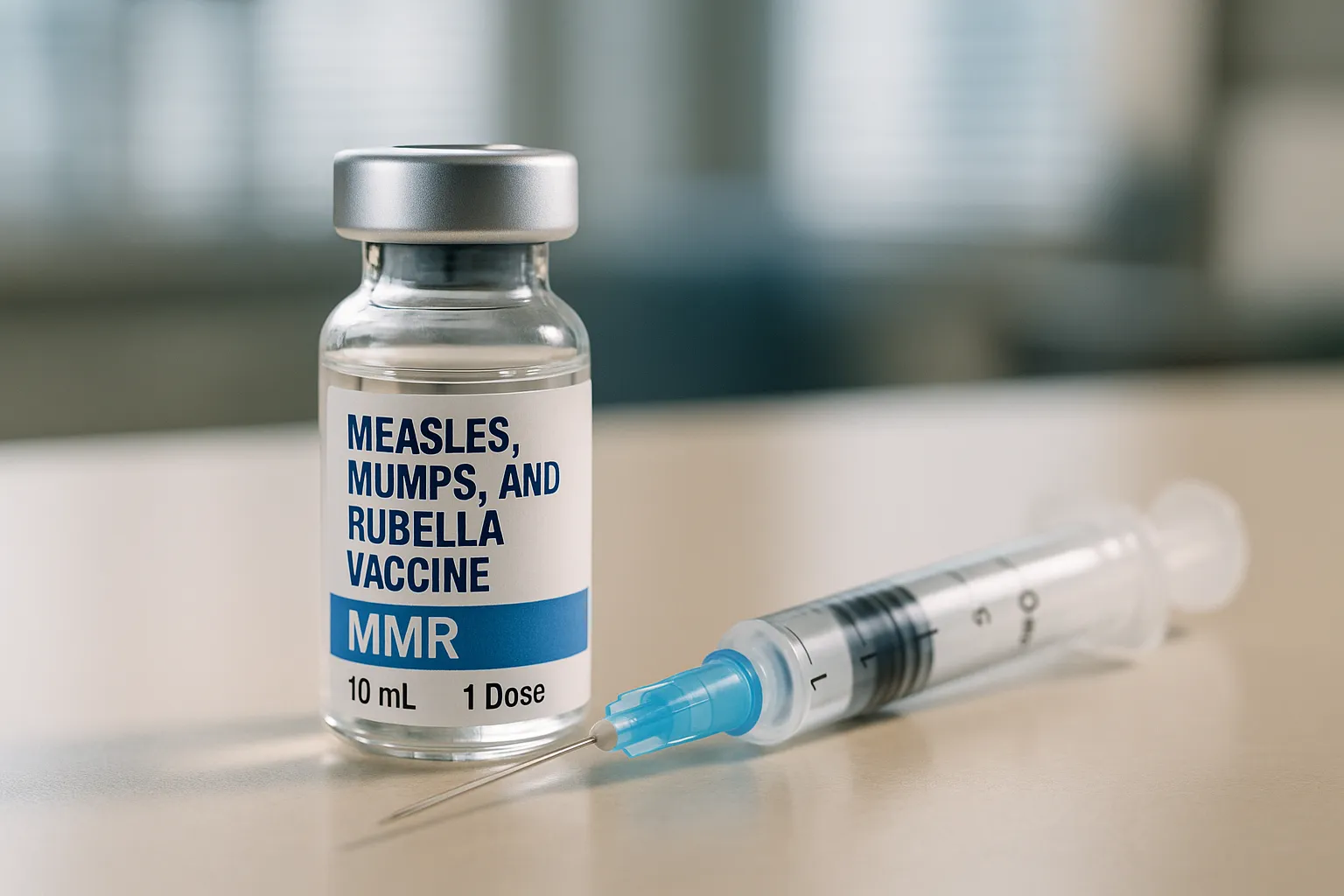
The consensus among health authorities is clear: MMR vaccinations are essential. The CDC, NHS, and WHO advocate for two doses of the MMR vaccine, which has been proven 97 per cent effective in preventing measles, mumps, and rubella. As of this year, the UK’s version has been updated to include a varicella (chickenpox) vaccine, now termed MMRV. Among the unvaccinated population, the consequences of contracting measles are severe: in the US, one in five infected individuals requires hospitalisation; one in twenty develops pneumonia; and one in a thousand suffers from encephalitis, which can lead to long-term disabilities including loss of vision or hearing. Additionally, measles has the potential to cause immune amnesia, effectively erasing the body’s memory of previously encountered pathogens.
Expert Paul Offit, director of the Vaccine Education Center at the Children’s Hospital of Philadelphia, summarises the objective of vaccination as the induction of immunity akin to that achieved through natural infection, without the accompanying health risks.
Despite the threat of outbreaks, there has been a concerning decline in vaccination rates across Europe and North America. Since 2019, vaccination rates have dropped, moving below the crucial 95 per cent threshold necessary to curb virus transmission. Data from the World Health Organization indicates that the UK trails behind other G7 nations in MMR uptake, with only 89 per cent of children receiving their first dose in 2024. In comparison, Germany achieved a rate of 96 per cent, while countries like France, Italy, and Japan reported figures of 95 per cent. The US figures show regional disparities; Connecticut boasts over 98 per cent coverage, while Idaho lags at just 78.5 per cent, where religious exemptions are prevalent.
Paul Prince from the CDC remarked, “The risk of measles remains low for most of the United States, due to high population-level immunity from MMR vaccination. Current outbreaks are largely concentrated in close-knit, under-vaccinated communities, with prevalent international travel raising the risk of measles importation.”
The decline in vaccine uptake cannot solely be attributed to vaccine scepticism. Researchers from Imperial College London have highlighted the COVID-19 pandemic’s adverse impact on routine childhood vaccination programs, with disruptions reported across 170 nations. Additionally, funding cuts in public health services have fragmented vaccination programmes and deteriorated child health outcomes in the UK. Certain areas, like Hackney, report MMR vaccination rates as low as 60 per cent, while Liverpool has a rate of just 75 per cent.
Mary Ramsay, the deputy director of public health programmes at the UK Health Security Agency, acknowledged the complexities involved in maintaining vaccination schedules. “While the majority of parents are vaccinating,” she noted, “we know some parents find it challenging to navigate the booking system and attend all their children’s vaccination appointments.” With competing demands in modern life, many families struggle to manage healthcare appointments effectively.
In response, NHS England officials are implementing strategies aimed at improving vaccination rates. These include establishing more flexible appointment systems, broadening the availability of vaccines in various locations, and tailoring services to meet community-specific needs.
Although the influence of anti-vaccination sentiments has increased since the pandemic, they remain a minority perspective. The majority of parents express a desire to protect their children through vaccination. Nevertheless, a pervasive issue persists: a lack of understanding that vaccination is not only a personal choice but a public health obligation. With an increasing focus on the individual rather than the community, many parents prioritise their child’s safety above collective health considerations. The responsibility for community health requires a unified approach, transcending individual circumstances, to ensure the wellbeing of all children and adults alike.
Our Thoughts
To prevent the outbreak of scarlet fever and the increase in measles cases, several key measures could have been implemented:
1. **Vaccination Campaigns**: Heightened public awareness campaigns promoting the importance of MMR vaccination could have addressed declining rates. Ensuring that parents understand the collective benefits of vaccination can improve uptake.
2. **Accessibility to Health Services**: The analysis indicates that some parents struggle with navigating the vaccination system. Improving the scheduling and availability of appointments, along with offering more locations for vaccinations, would likely enhance participation.
3. **Education on Public Health**: Continuous education regarding vaccine safety and the risks of vaccine hesitancy is crucial. Public health officials should combat misinformation effectively.
4. **Regulatory Compliance**: There is a breach of duty under the Health and Safety at Work Act 1974, which requires employers to ensure the health and safety of employees and others. Proper health education and vaccination opportunities for communities should be prioritized to mitigate health risks.
5. **Combined Efforts**: Collaboration between local health authorities and community organizations can help address barriers to vaccination, ensuring broader acceptance and participation.
By focusing on these areas, the UK could enhance its public health response and prevent similar incidents in the future.