














Story Highlight
– Skipper admits failing to provide food and rest.
– Ghanian workers treated “like slaves” on Sea Lady.
– Allegations revealed in a 2024 BBC documentary.
– Testimonies describe excessive hours and inadequate food.
– Tom Nicholson Jr. will be sentenced in July.
Full Story
A skipper of a Scottish fishing firm has acknowledged his shortcomings in providing proper provisions for foreign crew members amidst serious allegations of modern slavery. Tom Nicholson Jr, aged 38, entered a guilty plea at Hamilton Sheriff Court for violating maritime health and safety regulations during his tenure with TN Trawlers.
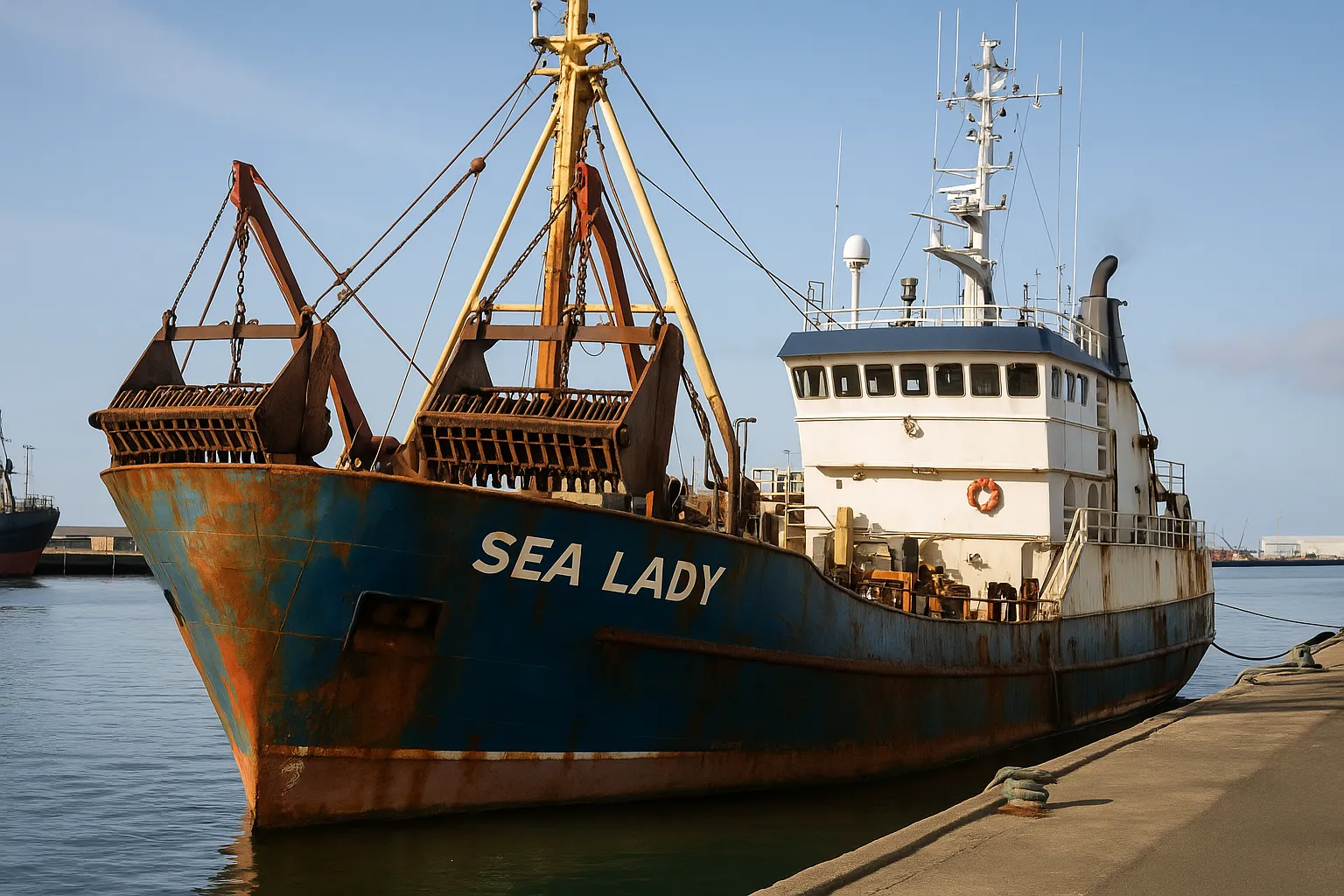
The case comes to light following a BBC Scotland documentary published in 2024 that brought to attention claims of modern slavery practices within the company. Testimonies from migrant fishermen, predominantly from Ghana, outlined their harrowing experiences aboard the Sea Lady scallop dredger, where they alleged they were worked exhaustively and deprived of adequate sustenance.
Nicholson admitted in court to the charge of instructing crew members to engage in excessive working hours without sufficient recovery time. There were also claims that the five Ghanaians employed under his command did not receive necessary training or safety instructions. After three days of evidence, in which testimonies were presented from fishermen through an interpreter, Nicholson accepted his culpability.
The court heard from Augustus Mensah and Joshua Amissah, who recounted their distressing experiences aboard the vessel. Mensah, having joined the company in September 2017, described how he was assigned to various boats, including the Sea Lady, where the conditions were particularly grim. He detailed a systematic lack of rest, stating, “While the harvest was up, it took two hours to sort. Then there’s another cast. By the time you had sorted the harvest, there is another one coming up.” This relentless cycle left the crew unable to rest adequately.
Describing the food situation, Mensah explained, “The food that would be provided lasted up to three days… On the fourth or fifth day there was nothing.” He highlighted the skipper’s strict prohibition against touching his personal food supplies, leading the crew to scavenge for food by consuming fish and octopus caught during their work. “It was for our own survival,” he asserted. The lack of proper nutrition had dire effects on his health, with Mensah noting, “My body deteriorated and I almost died on board.”
Another fisherman, Joshua Amissah, who worked with Nicholson from April to December 2017, corroborated the distressing lack of training received onboard. Upon arrival, he claimed that when he and his colleagues were instructed by Nicholson, “He said we should just get to work… there was no time.” Amissah described the relentless nature of their work, summarising, “It kept coming. There was no rest during the trip.” He further elaborated on the extreme fatigue experienced by the crew: “There was no sleep. This went on until some time in November, and we said if this went on, we would die.”
During cross-examination, fiscal depute Jacqueline Smyth inquired whether Amissah confronted Nicholson regarding the grueling working conditions. Amissah recalled an alarming exchange, stating, “He told me that I was a slave,” revealing that Nicholson relayed a disturbing mindset inherited from his father about how to treat Black workers.
Tom Nicholson Jr is the son of Thomas Nicholson, the owner of TN Trawlers. The BBC’s investigation has unearthed a troubling history of human trafficking allegations against the company that spans more than a decade. Reports indicate that 35 men, identified as former workers from Ghana, India, and the Philippines, have been recognised by the Home Office as victims of modern slavery linked to the firm. In October 2024, a group of Ghanaian fishermen received £20,000 each in compensation from the UK government after being rescued from another vessel owned by TN Trawlers.
Despite these serious allegations, TN Trawlers maintains that the welfare and treatment of its employees are adequate and that the claims of modern slavery and human trafficking are unfounded.
As the legal proceedings continue, Tom Nicholson Jr is scheduled to return to court for sentencing in July, with the outcome promising to cast a long shadow over the fishing industry in Scotland. The case has sparked a broader conversation about the treatment of migrant workers within the sector, and it underscores the need for stringent oversight to ensure that all employees are treated with dignity and respect.
As investigations progress, attention will inevitably focus on the systemic changes required to prevent exploitation within the industry. Advocacy groups are calling for greater transparency and enforcement of worker rights to protect vulnerable individuals in the fishing sector, especially those recruited from countries with limited economic opportunities.
The implications of this case could lead to far-reaching reforms aimed at safeguarding the rights of all workers. The fishing industry, at a critical juncture, is under scrutiny, as it grapples with issues of ethics and accountability in ensuring the treatment of its workforce aligns with modern standards of human rights.
Our Thoughts
The incident aboard the Sea Lady highlights significant failures in compliance with UK health and safety legislation, particularly the Health and Safety at Work Act 1974 and the Working Time Regulations 1998. The skipper’s admission of providing inadequate food and forcing excessive working hours violates these regulations, which require employers to ensure the health, safety, and welfare of their employees, including providing adequate rest and sustenance.
To prevent such incidents, employers should implement robust training and oversight practices, ensuring that all workers are aware of their rights and are provided with appropriate living and working conditions. Regular inspections and audits could reinforce compliance with safety standards.
Additionally, establishing clear protocols for reporting mistreatment or unsafe working conditions may prevent workers from feeling trapped in abusive situations. Strengthening whistleblowing protections for migrant workers would also encourage them to report violations without fear of retaliation.
In summary, enhanced compliance monitoring, worker education, and protective measures against exploitation are crucial to mitigate risks associated with modern slavery and ensure safer work environments in the fishing industry.