













Story Highlight
– Gayathri’s student visa cancelled after university withdrawal mistake.
– University staff confirm her active engagement in studies.
– Health issues contributed to attendance challenges, she claims.
– MP supports her case amidst visa and study uncertainty.
– University offered repeat year but no visa documentation provided.
Full Story
A University of Hertfordshire student faces potential deportation after her student visa was cancelled by the Home Office, a situation that has emerged following her withdrawal from a pharmaceutical science course due to alleged non-attendance. The student, Gayathri Manikandan, originally from India and currently residing in Worthing, insists that her withdrawal is based on a misunderstanding. Just weeks prior to the withdrawal, the university had established a support plan with her to aid her studies.
Despite correspondence from senior university staff affirming her engagement with the course and requesting her reinstatement, the institution has refused to reverse its decision, placing Gayathri in a precarious position as she races against time to secure the necessary documentation to remain in the UK legally. The deadline for her departure is set for July 13.
“I just want to be allowed to finish my degree,” Gayathri expressed, adding, “That is all I have ever asked for.”
Gayathri’s academic journey began positively at the university’s Hatfield campus, where she successfully completed her first year and even secured a placement with a pharmaceutical company, Ethypharm. However, her health issues, specifically non-epileptic seizures, have increasingly affected her studies. She revealed that her condition worsened during her second year, leading to significant medical interventions.
In October 2025, she experienced a severe episode that required her admission to Luton and Dunstable University Hospital. Following advice from doctors to stay in hospital, she chose to self-discharge after two days to return to her studies. During a subsequent hospital stay in December 2025, she remained dedicated to her coursework, submitting assignments while being treated.
“In December, for a whole month, I was in hospital,” Gayathri recounted. “My partner had to take emergency leave. But even in hospital, I was studying.”
In March 2026, acknowledging her condition, the university agreed on a formal Support to Study Action Plan that allowed Gayathri to study remotely. She adhered to this plan diligently, taking part in virtual classes and submitting her assignments as required. However, she was shocked to learn in April 2026 that she had been withdrawn from her course without any prior notification to her.
“I didn’t get any warning,” Gayathri stated, explaining that she discovered her withdrawal by chance when she tried to download a student letter and found notices indicating her status change. She promptly contacted the university, although her inquiries came too late. On May 7, the university formally communicated to the Home Office that it had withdrawn its sponsorship of her visa, citing her non-attendance.
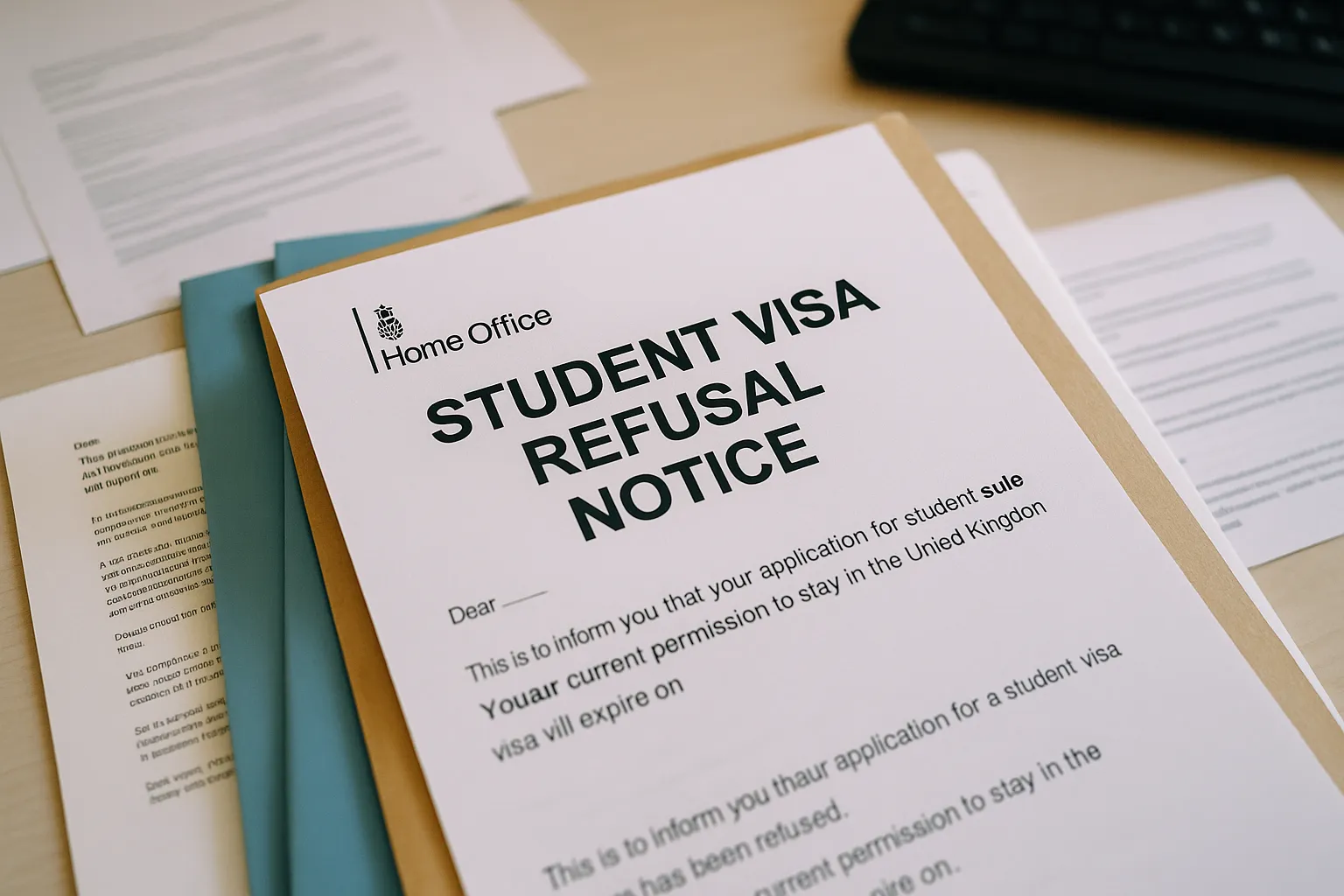
A week later, the Home Office notified Gayathri of her visa cancellation effective July 13, stating she had no rights to appeal or seek an administrative review. Despite a series of supportive statements from four university staff members confirming her active engagement and requesting her reinstatement, the institution has not reconsidered its decision.
The implications of Gayathri’s potential return to India are profound. “The treatment I’m now receiving is helping me a lot,” she stated, highlighting the rapport she has with the medical staff at Worthing Hospital who are familiar with her condition. Should she return to India, she fears having to start her treatment anew.
Furthermore, Gayathri’s background complicates her already challenging situation. With no family support from India, she describes her upbringing as deeply unsafe, having endured abuse and the prospect of an arranged marriage at a young age. She expressed her determination to escape such circumstances, initially considering study opportunities in Georgia and Dubai before choosing the UK.
“I didn’t want to get married,” she clarified. “So I came here. I studied. I worked very hard.” Gayathri independently funded her education, incurring significant tuition fees and balancing her studies while working in a care home.
Local MP Tom Rutland, representing East Worthing and Shoreham, has come to Gayathri’s aid, urging the university to clarify the rationale behind its decision and support her efforts to remain in the UK. He has formally communicated with the university, asserting the urgency of Gayathri’s situation.
“My team and I have been supporting Ms Manikandan with her case,” Mr Rutland stated. “This is clearly an urgent situation, with not only Ms Manikandan’s future as a student at the university in jeopardy, but also her visa.”
Despite offering her a chance to repeat her second year starting September 2026, the University of Hertfordshire has failed to provide Gayathri with the Confirmation of Acceptance for Studies (CAS) document necessary for her to apply for a new student visa while still in the UK. Without this document, the prospect of remaining legally in the country is all but eliminated.
Should she be required to leave the UK and apply for a new visa from India, Gayathri estimates that the financial burden, including flights and accommodation during the wait for a new visa decision, may reach approximately £5,000.
“I have worked so hard throughout this year despite being seriously unwell,” she said, continuing to voice her distress at the potential loss of her visa and degree, attributing the situation to what she describes as an administrative oversight.
In response to the escalating concerns surrounding Gayathri’s case, a spokesperson for the University of Hertfordshire remarked, “The health, safety and wellbeing of our students is our highest priority. While we do not comment on individual cases due to privacy and data protection obligations, we can confirm that we are taking these concerns seriously and are reviewing the matter carefully.”
Our Thoughts
The situation involving Gayathri Manikandan highlights significant lapses in the University of Hertfordshire’s communication and support systems, particularly concerning students with health conditions. To prevent such incidents, the university should have ensured clear and effective communication regarding attendance and course progress, especially in light of the formal Support to Study Action Plan. Timely notifications about administrative actions are crucial to uphold the principles of the Education (Student Support) Regulations 2011, which mandate reasonable adjustments for students with disabilities.
Key safety lessons include the importance of having robust monitoring and reporting mechanisms for students’ health and attendance, ensuring that support plans are adhered to, and maintaining clear channels for students to raise concerns.
In this case, the university may have breached the Equality Act 2010 by not adequately accommodating Gayathri’s educational needs in relation to her health condition, potentially leading to discrimination. To avert similar incidents, institutions should enhance support frameworks, staff training on disability awareness, and regular reviews of policies related to student welfare and communication practices.