















Story Highlight
– UK Athletics fined £350,000 for athlete’s death.
– Abdullah Hayayei killed by falling metal cage in 2017.
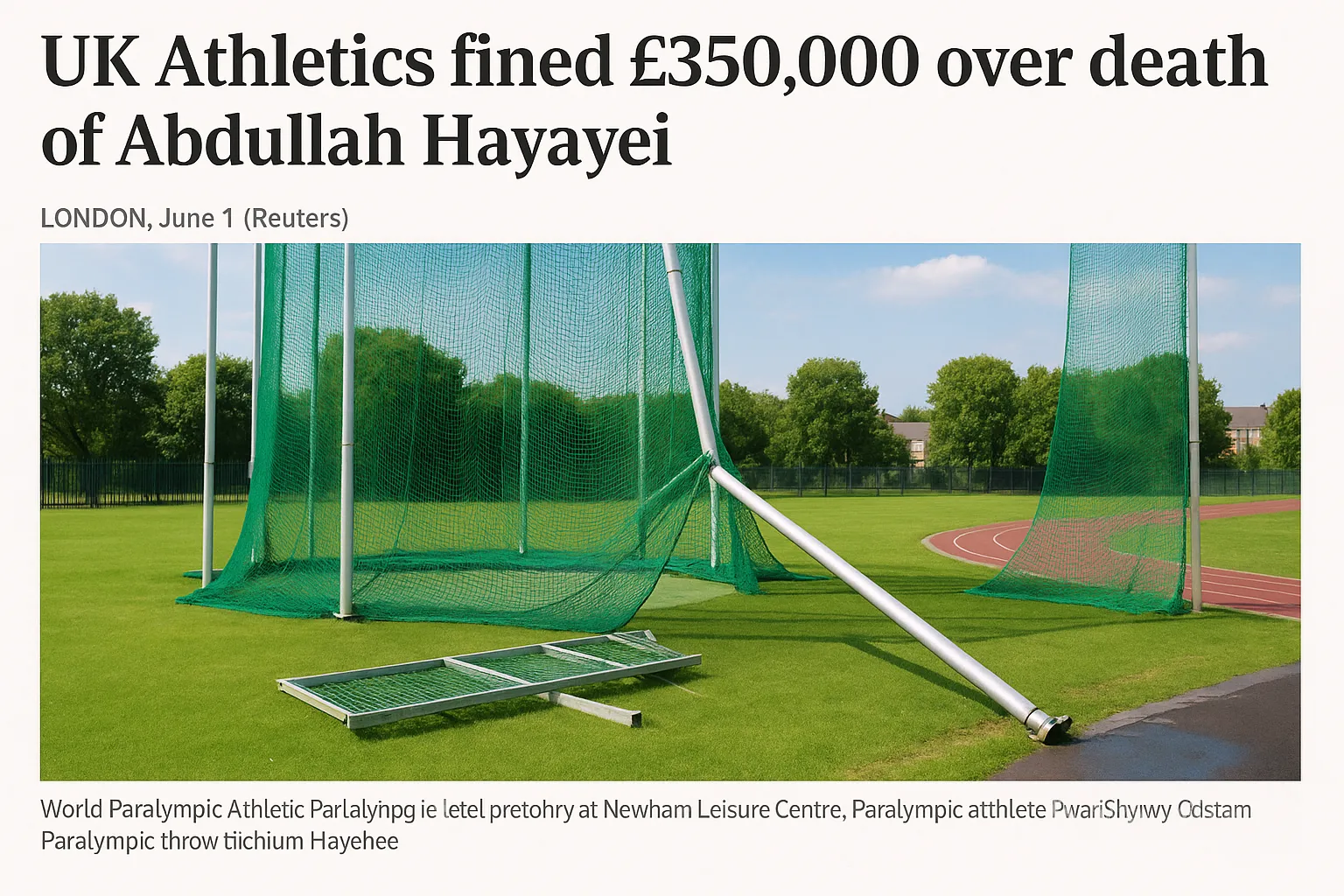
– Missing base plates caused unsafe discus cage conditions.
– UK Athletics pleaded guilty to corporate manslaughter.
– Officials vow to improve safety standards in athletics.
Full Story
UK Athletics has been sanctioned with a significant financial penalty of £350,000 following the tragic death of Paralympic athlete Abdullah Hayayei in 2017. The incident occurred while Hayayei was training at the Newham Leisure Centre in London, where he was preparing for the World Paralympic Athletics Championships. Victimized by an unfortunate accident, the 36-year-old athlete was fatally struck by a metal throwing cage that fell due to safety lapses.
Hayayei, a competitor who had made his mark in the javelin and shot put events during the 2016 Paralympic Games in Rio de Janeiro, died at the scene after the incident. In the subsequent inquiries led by police and health and safety authorities, it became evident that vital stabilising lattice base plates of the discus cage were missing. This critical oversight was identified as a significant factor contributing to the accident.
In light of these findings, UK Athletics entered a guilty plea to charges of corporate manslaughter in February 2023. Following the legal proceedings, the governing body was ordered not only to pay the hefty fine but also an additional £44,000 in court costs for their role in this avoidable tragedy.
Further legal repercussions followed for individuals connected to the case. Keith Davies, aged 78, who served as the head of sport for the World Paralympic Athletics Championships in 2017, also faced legal consequences. He admitted guilt concerning breaches of the Health and Safety at Work Act. As part of his sentence, he was issued a community order mandating 175 hours of unpaid work, demonstrating accountability for the environment surrounding the event.
Colin Gibbs, a spokesperson for the Crown Prosecution Service in Britain, commented on the case, noting the “grossly negligent” nature of UK Athletics’ safety management, which ultimately led to Hayayei’s untimely death. “They left equipment in a seriously unsafe condition, and Mr Hayayei’s death was wholly avoidable,” Gibbs stated, highlighting the urgent need for improved safety protocols within athletic training environments.
In response to the tragedy and the subsequent legal action, UK Athletics expressed profound regret over the incident. A spokesperson for the organisation commented, “We are deeply and genuinely sorry for what occurred. The failings identified in this case should never have happened.” The statement further emphasised a commitment to learning from these grave lapses, pledging to implement stricter safety measures and foster a culture of vigilance to prevent future occurrences.
This incident has sparked a broader discussion regarding safety standards within sports facilities across the UK. Stakeholders and sports bodies are now under increased scrutiny, with calls for enhanced safety regulations to be established and enforced uniformly across all training and competition settings. Many believe that the Hayayei case should serve as a turning point, prompting organisations to proactively reassess their safety policies and practices.
Advocacy groups for athletes’ rights echoed the sentiments raised during the trial, insisting that no athlete should ever be placed in jeopardy due to negligence. They stress the necessity for comprehensive reviews of safety measures, with regular audits and risk assessments becoming integral components of operational protocol at all athletic facilities.
The fallout from Abdullah Hayayei’s tragic accident serves as a stark reminder of the potential hazards that athletes face even during routine training. It calls into question the responsibilities of governing bodies and facility operators to ensure that the environments where athletes compete and prepare are not only conducive to performance but also secure and safe.
Although nothing can alter the events that resulted in Hayayei’s passing, those affected by this tragedy have expressed hope that the lessons learned will instigate a more rigorous approach to safety within athletics. Families of athletes and sports professionals alike are keen for a safer future that prioritises health and wellbeing, ensuring that training environments rigorously adhere to established safety standards.
As UK Athletics moves forward, it does so under the shadow of this grave incident, with an awareness that the consequences of negligence extend far beyond financial penalties. The impact on the sports community and the legacy of Abdullah Hayayei must inspire action to safeguard athletes in all areas of their training and competition.
In conclusion, while UK Athletics has faced the consequences of its failings, the overarching challenge remains — ensuring the health and safety of athletes across the board. Engaging with experts, implementing stricter compliance measures, and fostering a culture of safety will be essential steps toward rebuilding trust and protecting future generations of athletes.
Our Thoughts
The tragic death of Abdullah Hayayei underscores significant failings in safety management by UK Athletics, particularly the absence of essential stabilising components for the throwing cage. To prevent this incident, several actions could have been taken:
1. **Risk Assessments**: Comprehensive risk assessments should have been conducted to identify and rectify any safety hazards related to training equipment.
2. **Equipment Maintenance**: Regular inspections and maintenance of training facilities and equipment are critical under the Health and Safety at Work Act 1974. Proper procedures could have ensured that the metal lattice base plates were in place.
3. **Training and Supervision**: Ensuring that staff and athletes were trained in safety protocols, including reporting unsafe conditions, would have helped mitigate risks.
Key lessons include the necessity for robust safety protocols and accountability mechanisms within sports organizations. The breaches of health and safety legislation demonstrate the consequences of inadequate safety management. To prevent similar incidents, implementation of stringent operational checks and adherence to established safety regulations is essential. Regular training and safety drills can further enhance awareness and preparedness among athletes and staff.