











Story Highlight
– Counterfeit beauty products are a growing health risk.
– Online purchases of fakes increased by 6% by 2025.
– Fake cosmetics often contain harmful, unregulated substances.
– Price and packaging are key to identifying counterfeits.
– Report suspected fakes to Trading Standards or brands.
Full Story
The increasing temptation of securing a luxurious beauty product at a fraction of its retail price, often promoted on social media, can lead consumers to what appears to be a wise financial choice. However, this seemingly small win for one’s budget may actually pose substantial risks to health and safety. The rapid expansion of counterfeit beauty products has emerged as a significant segment within the broader landscape of fake goods, with alarming implications.
According to data from the UK Government’s Intellectual Property Office, the online acquisition of counterfeit cosmetics and toiletries has surged by 6 per cent, with predictions indicating this trend will continue until the end of 2025. Dr Emma Meredith OBE, the director-general of the Cosmetic, Toiletry and Perfumery Association (CTPA), has raised serious concerns regarding these fraudulent goods. She stated, “Counterfeit beauty products might look like the real deal, but that’s where the similarity stops. Behind the copycat packaging, you could be buying something that doesn’t work as promised and could even put your health at risk.”
In contrast to legitimate cosmetic products, counterfeit items evade compliance with the stringent safety standards mandated in the UK. All genuine cosmetics sold in Britain are required to align with the UK Cosmetics Regulation, which involves comprehensive assessments of ingredient safety and adherence to strict manufacturing practices. Each item must undergo a thorough safety evaluation by qualified professionals and include a designated “Responsible Person” from the UK on its packaging. Counterfeit items, however, completely sidestep these necessary measures.
Meredith elaborated on the dangers posed by counterfeit goods, noting, “We don’t know what is in the fakes and counterfeits, nor how or where they have been made. They are highly unlikely to have been through the thorough safety requirements which are mandatory for legally compliant cosmetic products.” This lack of transparency and regulation is particularly troubling in a market where consumers are increasingly turning to online sales.
The shift towards online shopping has accelerated since the pandemic, and counterfeiters have adeptly capitalised on this online boom. Digital marketplaces and social media platforms provide a veil behind which these sellers can operate, allowing them to utilise stolen imagery and marketing tactics that can mislead consumers. Economic factors also contribute to this phenomenon. Rising living costs are prompting many to explore cheaper alternatives, often without realising that they may be purchasing counterfeit items in the belief they are securing good deals.
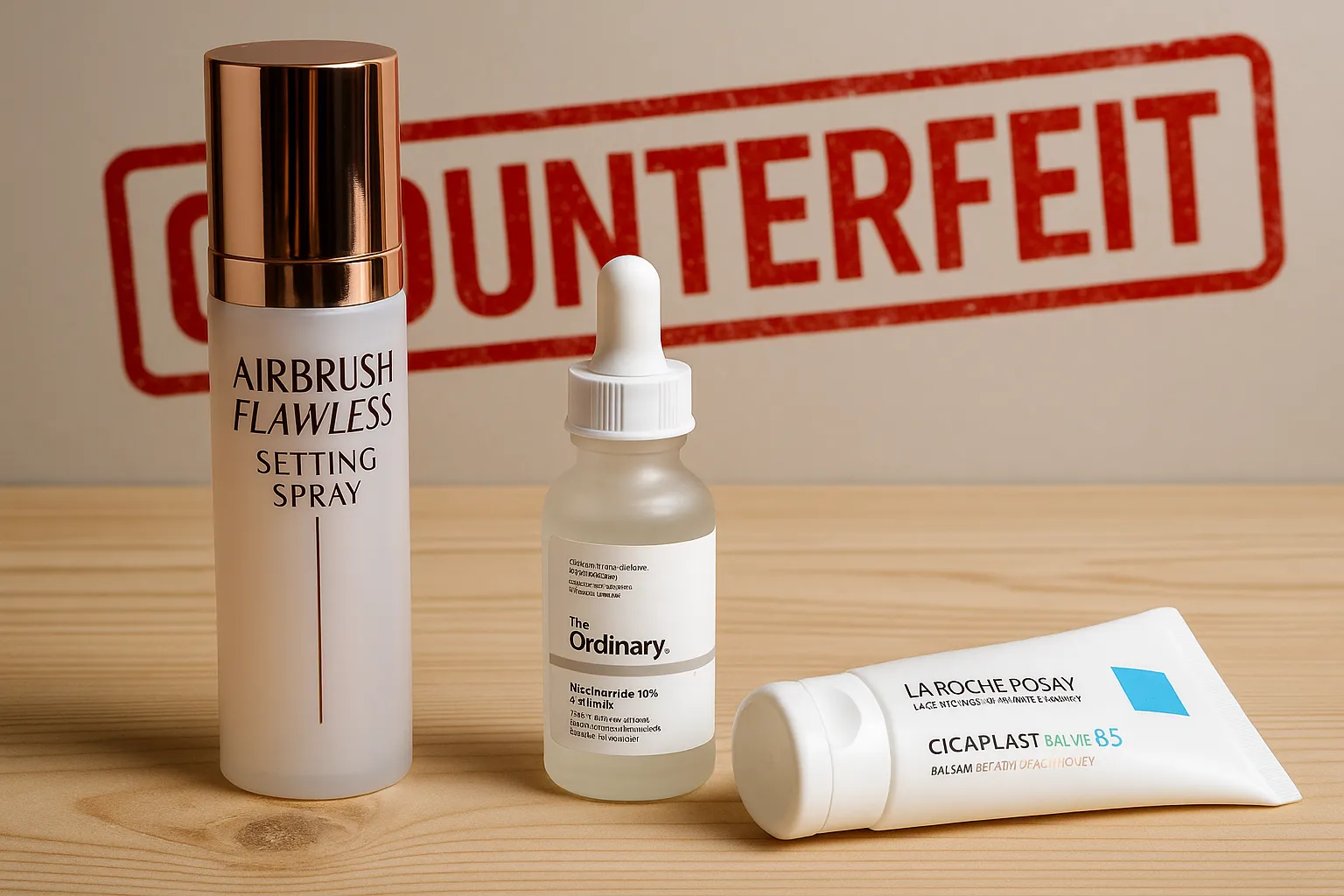
These fraudulent products are deceptively convincing, leading consumers into a market brimming with replicas masquerading as brand-name cosmetics. Investigations by the UK Intellectual Property Office, as part of its “Choose Safe Not Fake” campaign, have revealed appalling contents within a range of fake beauty and hygiene products. Tests conducted on counterfeit setting sprays, moisturisers, and serums uncovered dangerous chemicals, including carcinogenic substances such as beryllium oxide and forbidden heavy metals like arsenic, lead, and mercury. Disturbingly, some samples even revealed traces of rodent urine and horse faeces, highlighting the unsanitary conditions in which these imposters are produced.
The health repercussions of using such products can be severe, including allergic reactions, chemical burns, infections, and even long-lasting skin damage. Additionally, counterfeit fragrances often omit ingredient listings, leaving those with allergies vulnerable. The risks associated with counterfeit make-up extend further, with reports of skin burns and significant irritation upon use.
The industry is adamant that safety is not merely a marketing strategy but an integral aspect of the law governing cosmetics in the UK. To avoid falling into the counterfeit trap, consumers should remain vigilant while shopping, especially in online spaces. While there is no infallible method to guarantee the authenticity of products before purchasing, several indicators can provide clues.
Key factors to scrutinise include the price, the sale venue, and packaging details. If the price of a product appears significantly lower than that of its competitors, caution is advisable. Meredith cautioned, “If the product is being offered at a very cheap price, the chances are that it is an untested and unsafe look-alike that’s not worth the potential cost to your health.”
Moreover, packaging irregularities can reveal counterfeit goods. Common indicators include misspelled brand names, logos that seem slightly off, flimsy packaging, and a lack of vital information such as a comprehensive ingredients list or assigned UK Responsible Person. Online, consumers should be wary of “flash sale” advertisements that create a false sense of urgency, as well as social media accounts masquerading as official brand pages without verified links.
If there is any suspicion of purchasing a counterfeit product, individuals should cease use immediately. Symptoms such as unusual scents, poor performance, or skin irritation are red flags. In such cases, consumers can report concerns to Trading Standards via the Citizens Advice consumer helpline or notify the brand directly, as many companies actively monitor counterfeiting.
To simplify the purchasing process and ensure safety, experts recommend buying from established retailers or directly from brand websites. Reputable names, such as Boots, Cult Beauty, and Space NK, provide clearer customer service and return policies compared to lesser-known online sellers.
In summary, while the prospect of snagging a luxury beauty product at a bargain price may be appealing, consumers must navigate this treacherous terrain with caution, always prioritising their health and safety over discounts that could ultimately prove costly.
Our Thoughts
The surge in counterfeit beauty products poses significant health risks, largely due to non-compliance with UK Cosmetics Regulation, which mandates safety assessments and ingredient transparency. To mitigate such risks, better education for consumers on identifying counterfeit products is vital. Campaigns like “Choose Safe Not Fake” should be expanded, enhancing public awareness regarding the dangers associated with buying from unverified sources.
Regulatory enforcement could also be strengthened by increasing penalties for sellers of counterfeit goods to deter such practices. The UK should enhance cooperation with digital platforms to identify and eliminate listings of counterfeit products promptly.
Key health and safety lessons from this situation include the importance of adhering to safety laws, such as those outlined in the Cosmetics Regulation, and the necessity for consumers to be vigilant about product authenticity. Clear labeling and transparency must be enforced to ensure consumer safety and accountability from manufacturers.
In summary, enhancing consumer education, regulatory enforcement, and collaboration with online platforms could significantly reduce incidents related to counterfeit beauty products.