








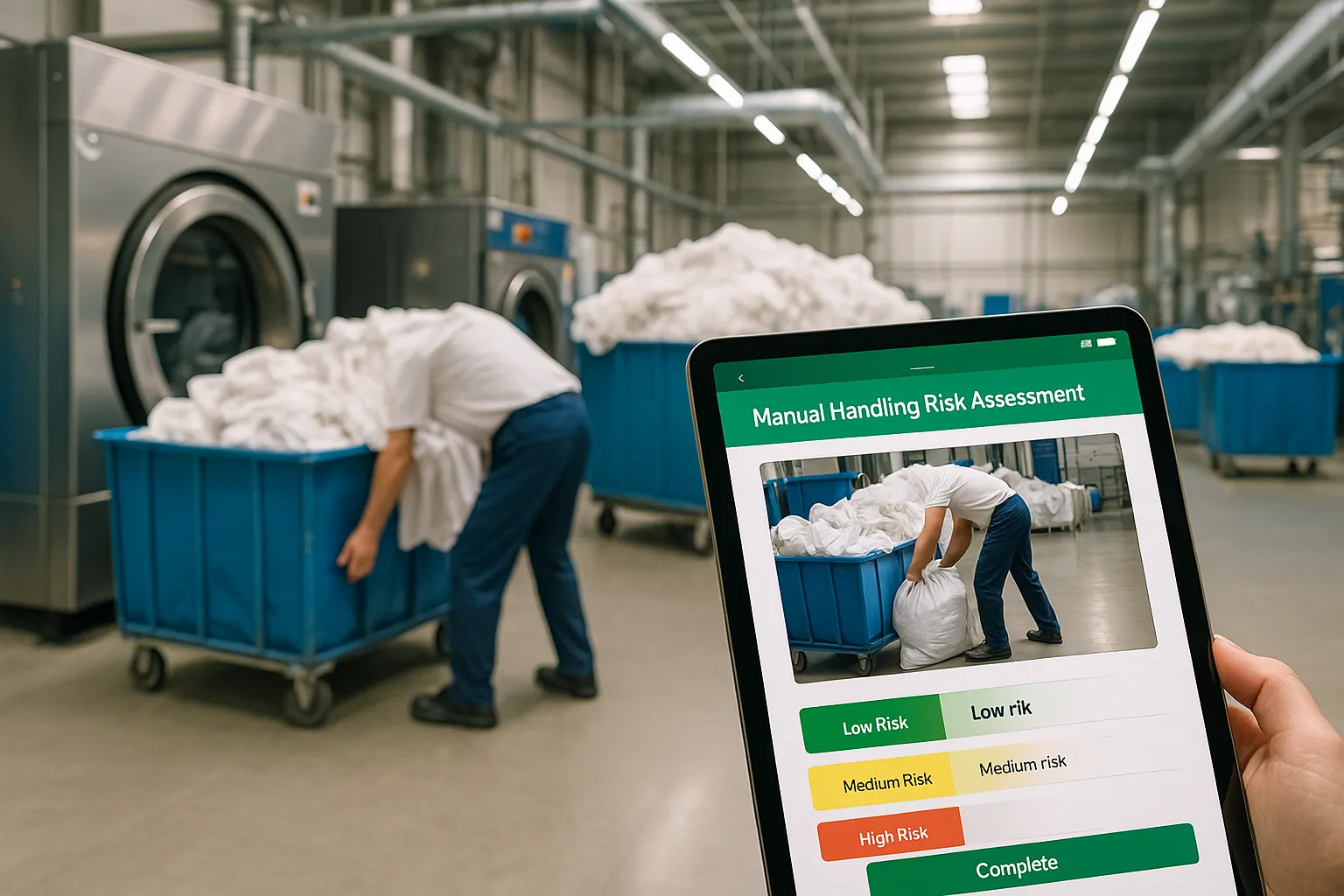
Story Highlight
– Webinar on September 24th introduces new assessment tool.
– RiskAI Tool improves manual handling risk assessments significantly.
– Tool saves time and enhances workplace safety consistency.
– Event features live Q&A with health and safety experts.
– TSA plans further support and training for members.
Full Story
On 24th September, a significant event aimed at enhancing health and safety standards in commercial laundries will take place. The Textile Services Association (TSA) is hosting a webinar to introduce the RiskAI Manual Handling Assessment Tool, developed in partnership with Cardinus, a firm specialising in health, safety, and risk management. This initiative seeks to streamline manual handling risk assessments, which have long posed challenges in terms of time, subjectivity, and consistent application across various sites.
Manual handling remains a leading cause of workplace injuries, necessitating thorough workplace risk assessments as a critical responsibility for employers. Despite improvements in health and safety practices in the commercial laundry sector, the challenge of consistent risk management persists. The TSA’s collaboration with Cardinus marks a step towards addressing this issue, offering the latest technological advancements to support workplace safety.
The RiskAI tool merges artificial intelligence with established assessment methodologies, promising to make the process of evaluating manual handling risks quicker and more effective. Employers will be able to generate detailed risk assessments in a matter of minutes, allowing for more efficient management of safety protocols.
The upcoming webinar, scheduled from 10am to 11.30am, will provide participants an opportunity to learn how to utilise the app effectively. Attendees will receive demonstrations of the tool’s functionality, gain insights into the various assessment options available, and witness live examples of its application in real-world settings. Importantly, there will be a live question-and-answer session with Cardinus experts, providing a platform for direct engagement and discussion about the tool’s potential impact on their organisations.
Emma Kiviniemi Wilson, the TSA’s managing director, highlighted the significance of this technological advancement for the sector. “Health and safety is at the top of the industry’s agenda,” Wilson stated. She emphasised that the RiskAI Manual Handling Assessment Tool is designed to assist members in minimising the risk of injuries within their workplaces, facilitating a safer working environment. Furthermore, she pointed out that the tool is intended to complement professional judgement rather than replace it, enabling health and safety teams to devote more attention to implementing effective improvements instead of becoming inundated with paperwork.
Andrew Glassford, the TSA’s projects director, also underscored the benefits of the RiskAI app. He noted that it promotes a consistent, evidence-based approach to manual handling assessments, equipping managers and health and safety professionals with the data needed to make informed decisions. The ability to identify and address high-risk areas will ensure that interventions have the maximum possible impact, establishing a solid framework for managing manual handling hazards.
As part of its ongoing support following the launch of the RiskAI app, the TSA plans to collaborate with health and safety specialists from Pristine Condition. Together, they aim to create further resources, including guidance and training documents, to provide comprehensive support to members. This initiative reflects a commitment to not only implement new tools but to ensure that users understand and effectively leverage them in their respective environments.
The introduction of the RiskAI tool comes at a crucial time as industries continue to adapt to the evolving landscape of workplace safety. In light of increasing regulations and heightened awareness surrounding health and safety, employers are under growing pressure to implement effective risk assessments. The TSA’s proactive approach to equip its members with cutting-edge resources reflects a dedication to maintaining high standards across the sector.
Those interested in participating in the webinar can register through the provided link. This event represents an opportunity for organisations within the textile services industry to explore innovative solutions to common safety challenges, ensuring that they remain at the forefront of health and safety practices.
As the commercial laundry sector continues its upward trajectory in health and safety, the introduction of such advanced tools is likely to play a pivotal role in reducing workplace injuries and fostering a culture of safety. The collaboration between the TSA and Cardinus exemplifies a forward-thinking approach to risk management, blending technology with professional expertise to safeguard employees in an essential industry.
The commitment to enhancing workplace safety through initiatives like the RiskAI Manual Handling Assessment Tool underscores the importance of continuous improvement within commercial laundries. With the impending webinar, stakeholders have a valuable opportunity to engage with the tool and glean insights that could transform their approaches to manual handling assessments.
For more details and to secure a place in the webinar, potential participants are encouraged to follow the registration link. This initiative aims not only to inform but also to empower industry professionals to make informed decisions that enhance workplace safety and operational efficiency.
Our Thoughts
The article highlights ongoing issues with manual handling injuries in commercial laundries and the introduction of the RiskAI Manual Handling Assessment Tool. To avoid injuries associated with manual handling, it is crucial that employers carry out thorough and consistent risk assessments, as mandated by the Health and Safety at Work Act 1974.
One key lesson is the importance of leveraging technology, like the RiskAI tool, to enhance the accuracy and efficiency of risk assessments. Employers should also ensure that proper training is provided to staff on manual handling techniques, to comply with the Manual Handling Operations Regulations 1992.
To prevent similar incidents, businesses must foster a proactive safety culture, encouraging reporting of potential hazards and allowing for regular review and updates of risk assessments. Regular audits and monitoring could further ensure compliance with the Safety Management Systems outlined in the Management of Health and Safety at Work Regulations 1999.
In summary, the integration of innovative assessment tools, combined with comprehensive training and a commitment to ongoing safety improvements, can significantly reduce the risk of manual handling injuries in the workplace.