















Choose an AI chat
Worker dies in Cardiff after company fails to maintain industrial door
UK Health and Safety Latest

Worker dies in Cardiff after company fails to maintain industrial door

by Ellie Cartwright
June 19, 2026
0

A Cardiff-based printing company has been fined £400,000 following the death of maintenance worker Anthony Webb while repairing an industrial...

Read moreDetails
Thousands face potential spinal surgery due to implant recall

Thousands face potential spinal surgery due to implant recall

June 19, 2026
Amber alert issued as southern England braces for extreme heat

Amber alert issued as southern England braces for extreme heat

June 19, 2026
Temporary mobility issues may lead to Blue Badge eligibility in Scotland

Temporary mobility issues may lead to Blue Badge eligibility in Scotland

June 18, 2026
Patients face unprecedented NHS medicine shortages

Patients face unprecedented NHS medicine shortages

June 17, 2026

Archives

  • June 2026
  • May 2026
  • April 2026
  • March 2026
  • February 2026
  • January 2026
  • December 2025
  • November 2025
  • October 2025
  • September 2025
  • July 2025
  • August 2009

Categories

  • Health and Safety Help
  • News
  • Policies
  • UK Health and Safety Latest
  • About
  • Advertise
  • Policies
    • Privacy Policy
    • Editorial Policy
    • Corrections & Complaints policy
  • Useful Documents
    • Understanding RIDDOR
    • 10 Workplace Safety Failures
    • A Complete Guide to Reporting Safety Incidents in the UK
    • Fire Risk Assessment: Meeting the Regulatory Reform (Fire Safety) Order
    • COSHH Basics: A Practical Guide to Control of Substances Hazardous to Health
    • Working at Height in the UK: The Essentials (WAH Regulations 2005)
    • Asbestos in the Workplace: Control of Asbestos Regulations 2012 (CAR) Essentials
    • Managing Contractors Under CDM 2015: Roles, Duties & Controls
    • DSE & Ergonomics: Healthy Workstations for Office & Hybrid Teams
    • Lock out Tag out LOTO
    • Workplace Transport Safety: Forklifts, Pedestrians & Traffic Management
    • Noise & Vibration at Work: Practical Controls (2005 Regulations)
    • Confined Spaces in the UK: Safe Entry under the Confined Spaces Regulations 1997
  • Contact
  • Agent
Friday, June 19, 2026
16 °c
London
17 ° Sat
15 ° Sun
17 ° Mon
  • Login
UK Safety News
  • Home
  • News
    • All
    • UK Health and Safety Latest
    Worker dies in Cardiff after company fails to maintain industrial door

    Worker dies in Cardiff after company fails to maintain industrial door

    Thousands face potential spinal surgery due to implant recall

    Thousands face potential spinal surgery due to implant recall

    Amber alert issued as southern England braces for extreme heat

    Amber alert issued as southern England braces for extreme heat

    Temporary mobility issues may lead to Blue Badge eligibility in Scotland

    Temporary mobility issues may lead to Blue Badge eligibility in Scotland

    Patients face unprecedented NHS medicine shortages

    Patients face unprecedented NHS medicine shortages

    Patients face record NHS medicine shortages

    Patients face record NHS medicine shortages

    Medicine shortages pose life-threatening risks to patients in the UK

    Medicine shortages pose life-threatening risks to patients in the UK

    Residents oppose council’s warning against flag displays during World Cup

    Residents defend flag displays as council warns against public displays during World Cup

    Residents defend flag displays as council warns against public displays during World Cup

    UK issues amber heat health alerts as temperatures soar

    UK issues amber heat health alerts as temperatures soar

    Trending Tags

    • Donald Trump
    • Future of News
    • Climate Change
    • Market Stories
    • Election Results
    • Flat Earth
No Result
View All Result
UK Safety News
No Result
View All Result
Home News UK Health and Safety Latest

Drug watchdog warns users of GLP-1 weight loss jabs to watch for severe pancreatitis symptoms

Michael Harland by Michael Harland
January 30, 2026
in UK Health and Safety Latest
Reading Time: 4 mins read
0
Drug watchdog warns users of GLP-1 weight loss jabs to watch for severe pancreatitis symptoms

Story Highlight

– MHRA warns of rare severe pancreatitis risk with GLP-1s.
– Symptoms include severe stomach pain, nausea, and vomiting.
– GLP-1s like Wegovy and Mounjaro are increasingly popular.
– More than a million UK users currently on GLP-1s.
– Patients advised to report symptoms via Yellow Card scheme.

Full Story

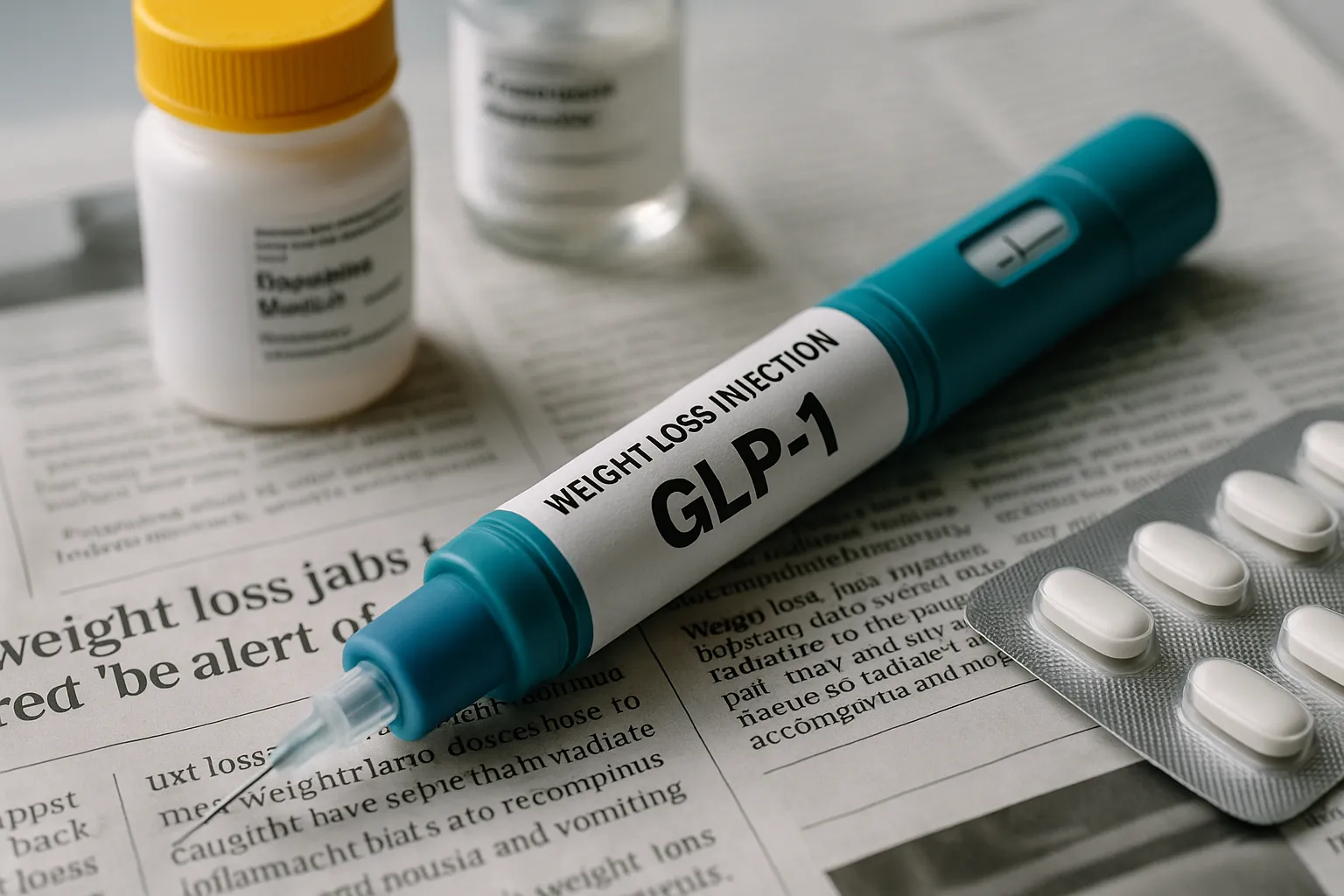
The Medicines and Healthcare products Regulatory Agency (MHRA) has issued a cautionary warning to individuals using GLP-1 receptor agonists for weight management. This advisory comes in response to concerns regarding a rare but serious side effect linked to these medications, which include popular options like Wegovy and Mounjaro. The agency has urged patients and healthcare professionals to remain vigilant for potential symptoms of severe acute pancreatitis, a condition that involves inflammation of the pancreas and can lead to critical complications.

GLP-1 drugs, administered weekly via self-injection into the upper arm, thigh, or abdomen, function by mimicking the action of the naturally occurring hormone GLP-1. This hormone plays a pivotal role in appetite regulation and digestion, signalling the brain to decrease feelings of hunger while enhancing the sensation of fullness. Additionally, these medications are beneficial for managing blood sugar levels, lowering blood pressure, improving cholesterol metrics, and reducing inflammatory responses within the body.

Despite their efficacy, the MHRA emphasised that acute pancreatitis, while uncommon, is a documented side effect associated with GLP-1 usage. In its statement released on January 29, the agency highlighted that the potential complications of this condition can be severe, including risks of organ failure, sepsis, and, in extreme cases, mortality.

Alison Cave, the Chief Safety Officer at MHRA, reassured the public of the agency’s commitment to patient safety. She stated, “Patient safety is the MHRA’s top priority and we continually monitor the safety and efficacy of all licensed medicines. For the vast majority of patients who are prescribed GLP-1s, they are safe and effective medicines which deliver significant health benefits.” However, she also stressed the importance of awareness regarding the rare yet serious risks: “The risk of developing these severe side effects is very small, but it is important that patients and healthcare professionals are aware and alert to the associated symptoms.”

Individuals taking GLP-1 medications are advised to be particularly mindful of severe and persistent abdominal pain that may extend to the back, often accompanied by nausea and vomiting. Should anyone observe these symptoms, the MHRA recommends promptly consulting a healthcare professional and reporting the incident through their Yellow Card scheme.

In the UK, over one million people are estimated to be utilising these weight loss injections, as the appetite-suppressing benefits have been lauded as transformative in the fight against obesity. The NHS has defined specific prescription criteria for these treatments: Mounjaro (tirzepatide) is available for adults with a body mass index (BMI) exceeding 40, or over 37.5 for those from minority ethnic backgrounds, provided they also struggle with at least four related health issues, such as type 2 diabetes, hypertension, heart disease, elevated cholesterol levels, or obstructive sleep apnoea.

Meanwhile, Wegovy (semaglutide) is designed for adults with a BMI of 35 or higher, also necessitating the presence of at least one pre-existing weight-related health concern, such as hypertension. These drugs are thus accessible through various healthcare avenues, including private clinics, NHS specialists, and some general practitioners, making them a critical asset in obesity treatment frameworks.

While the MHRA maintains that GLP-1 medications are generally safe for those who are duly prescribed, it is essential to recognise that no medication is without potential adverse effects. Patients must educate themselves on signs of severe pancreatitis and seek immediate attention if they occur.

The broader implications of this advisory highlight the growing societal shift toward relying on pharmaceutical interventions in weight management. The increasing demand for effective obesity treatments underscores the importance of ongoing research and monitoring of these medications’ safety profiles, as well as education for both patients and healthcare providers about the potential risks involved.

As the healthcare landscape evolves, the role of GLP-1 drugs in weight management continues to spark discussions about obesity, medical responsibility, and the urgency for comprehensive strategies to address this health crisis. The MHRA’s vigilant oversight serves as a reminder of the need for continuous safety evaluations and transparent communication regarding medication use.

In a landscape where more individuals are considering these medications as tools for weight loss, the balance between effective treatment and the understanding of risks is paramount. The MHRA’s advisory does not detract from the positive outcomes many experience but rather reinforces the need for an informed approach to medical interventions in the complex battle against obesity.

Our Thoughts

To prevent incidents related to GLP-1 weight loss drugs, several measures could have been implemented. Firstly, increased patient education on the symptoms of severe acute pancreatitis could enhance awareness, ensuring that users are better informed about potential side effects. This aligns with the requirements under the Health and Safety at Work Act 1974, which mandates employers to provide sufficient information and training.

Furthermore, stricter regulations surrounding the prescribing practices of these medications, particularly in private clinics, could reduce the risk of adverse effects. Healthcare professionals should adhere to the guidelines set forth by the MHRA and ensure thorough screening for candidates eligible for GLP-1 treatments to avoid inappropriate prescriptions.

Relevant regulations such as the Medicines Regulations 2012, which govern the safety and efficacy of medicinal products, may have been insufficiently enforced, highlighting a need for more rigorous compliance checks. This includes ensuring that drug monitoring systems effectively capture and react to adverse events, adhering to the Reporting of Injuries, Diseases and Dangerous Occurrences Regulations (RIDDOR) 2013.

In conclusion, enhancing patient education, tightening prescribing regulations, and enforcing compliance can mitigate risks associated with GLP-1 drugs and safeguard patient health.


SummarizeShare34Share197SendSend
ADVERTISEMENT
Michael Harland

Michael Harland

Related Posts

Rangoli restaurant improves hygiene rating to four stars after inspection

Rangoli restaurant improves hygiene rating to four stars after inspection

by Michael Harland
April 23, 2026
0

Rangoli restaurant in Knotty Ash has marked a remarkable turnaround, improving its hygiene rating from a concerning zero stars to...

UK cold snap prompts safety advice for vulnerable households

UK cold snap prompts safety advice for vulnerable households

by Ellie Cartwright
February 2, 2026
0

As the UK grapples with a sharp cold spell, officials are urging residents to prioritise safe heating practices in their...

Useful Documents

  • Understanding RIDDOR
  • 10 Workplace Safety Failures
  • A Complete Guide to Reporting Safety Incidents in the UK
  • Understanding RIDDOR
  • Fire Risk Assessment: Meeting the Regulatory Reform (Fire Safety) Order
  • COSHH Basics: A Practical Guide to Control of Substances Hazardous to Health
  • Working at Height in the UK: The Essentials (WAH Regulations 2005)
  • Lock out Tag out LOTO

Recent Posts

  • Worker dies in Cardiff after company fails to maintain industrial door
  • Thousands face potential spinal surgery due to implant recall
  • Amber alert issued as southern England braces for extreme heat
  • Temporary mobility issues may lead to Blue Badge eligibility in Scotland
  • Patients face unprecedented NHS medicine shortages

Recent Comments

  1. Piper Douglas on Worker dies due to inadequate machinery safety measures
  2. Natalie Coleman on New housing laws aim to tackle damp and mould crisis in England
  3. Simon Barrett on Honeymoon ruined by illness as newlywed suffers severe infection in Cape Verde
  4. Nolan Barrett on Work-related ill health in Great Britain remains a concern after pandemic peak
  5. Dylan Reeves on Sickness rates among Scottish police officers soar to troubling levels
UK Safety News

Copyright © 2026
UK Safety News

Navigate Site

  • About
  • Advertise
  • Policies
  • Useful Documents
  • Contact
  • Agent

Follow Us

Welcome Back!

Login to your account below

Forgotten Password?

Retrieve your password

Please enter your username or email address to reset your password.

Log In
No Result
View All Result
  • Home
  • News

Copyright © 2026
UK Safety News

This website uses cookies. By continuing to use this website you are giving consent to cookies being used. Visit our Privacy and Cookie Policy.