
















Story Highlight
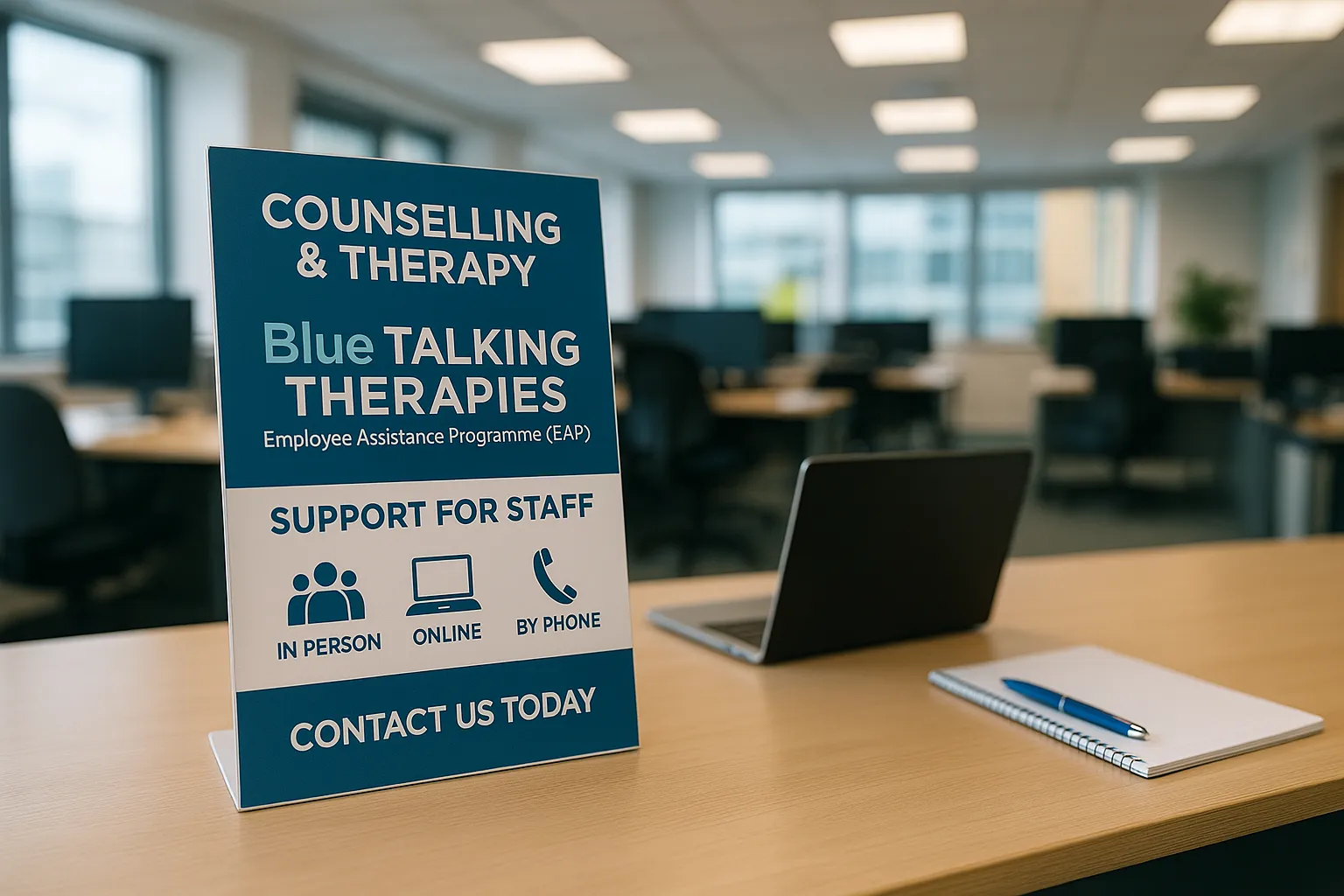
– Blue Talking Therapies launches quick-access Employee Assistance Programme.
– Service offers in-person, online, and telephone support options.
– Aims to reduce delays in mental health support access.
– North East sees rising mental health challenges among workers.
– No retainer fees; individual therapy sessions cost £90 each.
Full Story
Blue Talking Therapies has introduced a new Employee Assistance Programme (EAP), designed specifically to streamline the referral process for employers seeking timely mental health support for their employees. With a commitment to provide initial contact within 24 hours and facilitate the first assessment within one to two weeks, this initiative aims to address the growing demand for effective mental health care.
The programme offers flexible support options, including in-person consultations, online sessions, and telephone support, which are intended to alleviate common delays associated with accessing mental health services. The goal is to ensure that employees receive the necessary counselling and therapy when they need it.
Johnny Morton, the operations director at Blue Talking Therapies, highlighted the prevalent challenges faced by employers in providing timely support to their staff. “Employers want to do the right thing by their staff, but too often support is delayed, fragmented or difficult to access,” he noted. “We’ve developed this service to make high-quality therapy quicker, simpler and more responsive for workplaces across the North East.”
The launch of this programme comes at a critical juncture, as the North East grapples with increasing mental health issues among its workforce. Recent analysis by the Trades Union Congress (TUC), which examined data from the Health and Safety Executive, revealed that around 29,000 workers in the North East reported experiencing work-related stress, depression, or anxiety during the period from 2022 to 2025. Additionally, the NHS Adult Psychiatric Morbidity Survey conducted in 2023-2024 indicates that the North East has one of the highest occurrences of common mental health disorders in England.
The repercussions of these mental health challenges extend beyond individual employees, impacting overall economic productivity in the region. The current economic inactivity rate in the North East stands at 26.3%, surpassing the UK average of 21.1%. Furthermore, data released by the Office for National Statistics shows that employees in this region take more sick days compared to the national average, underscoring the urgent need for effective mental health support.
Compounding these issues are prolonged wait times for talking therapies within the NHS, which frequently fall short of meeting the needs of patients. Reports from the board papers of Tees, Esk and Wear Valleys NHS Foundation Trust reveal that as of February 2025, more than half of patients in County Durham and Tees Valley experienced waits exceeding 90 days for their second therapy appointment. In certain pathways associated with Cumbria, Northumberland, Tyne and Wear NHS Foundation Trust, waiting times can extend for several months.
One of the early adopters of the new EAP is Redu Group, led by CEO Angela Goggins, who shared her positive experiences with the service. “Having already used the service for one of our staff, we’ve been really impressed with both the speed of access and the difference it has made,” Goggins commented. She further observed the substantial benefits of the service, stating, “Not only are the personal positives for our staff member huge for her, but from a workplace perspective, we’ve seen a tenfold increase in productivity and attention to her work. Knowing staff can access confidential support quickly and appropriately makes a real difference.”
In contrast to traditional EAP models, which often require retainer or sign-up fees, Blue Talking Therapies operates on a pay-as-you-go basis. Individual therapy sessions are priced at £90 per hour, making this programme accessible without the financial commitments typically associated with such services. The range of treatments available includes cognitive behavioural therapy (CBT), Eye Movement Desensitisation and Reprocessing (EMDR), and counselling.
Privacy and confidentiality are central tenets of the Blue Talking Therapies EAP. The organisation assures clients that only the essential information required for facilitating next steps will be shared with the referring employers, safeguarding the integrity of therapy conversations.
Leading the efforts at Blue Talking Therapies, Johnny Morton brings over 27 years of experience in mental health, alongside clinical director Rebecca Meagher, who is an occupational therapist and CBT therapist with more than 20 years of expertise in the field. Addressing the significance of timely mental health support, Meagher stated, “Good mental health support should be timely, confidential and clinically robust. Our aim is to help people access the right support early, before difficulties become more entrenched, while giving employers confidence that their staff are being properly supported.”
Employers interested in the new Employee Assistance Programme can reach out to Blue Talking Therapies for further information or to make referrals. They can be contacted via email at enquiries@bluetalkingtherapies.co.uk or by phone at 0191 258 4958.
As the North East continues to confront increasing mental health challenges, initiatives like the one offered by Blue Talking Therapies will be pivotal in enhancing workplace support and ultimately improving the well-being of the regional workforce.
Our Thoughts
To improve mental health support in the workplace and prevent delays in accessing therapy, organizations should adhere to several key UK health and safety regulations. The Health and Safety at Work Act 1974 requires employers to ensure the health, safety, and welfare of their employees, including mental wellbeing. Employers can implement proactive measures such as regular mental health training, promoting the Employee Assistance Programme (EAP), and ensuring that staff know how to access support without barriers.
Failure to provide timely mental health resources can contribute to work-related stress and anxiety, in violation of the Management of Health and Safety at Work Regulations 1999, which mandates risk assessments and the implementation of appropriate control measures for identified risks. The rise in reported mental health issues, highlighted by TUC analysis, indicates that firms must prioritize mental health awareness and support systems.
To prevent similar incidents, organizations should routinely evaluate and enhance their mental health resources, ensuring quick access to therapeutic services as part of their overall health and safety strategy. This can alleviate the economic impact of mental health challenges on productivity and employee attendance.