















Story Highlight
– Three-year-old girl died from bouncy castle accident.
– Eleven people injured; six hospitalized in Montreal incident.
– Strong winds reached 31mph during the church party.
– Previous similar accidents resulted in child fatalities globally.
– Safety guidelines recommend no use in high winds.
Full Story
A tragic incident at a church organized event in Montreal has left a community in mourning after a three-year-old girl lost her life when a bouncy castle was lifted into the air by a powerful gust of wind. The event took place on May 31 at Parc Ouellet located in LaSalle, a borough in the southwest of Montreal. Alongside the youthful victim, eleven other individuals sustained injuries, with six of them requiring hospital treatment.
The atmospheric conditions during the party became perilous as wind speeds reportedly reached 31 mph (approximately 50 kph) on the afternoon in question. Eyewitness accounts describe a chaotic scene, as attendees watched in horror when the bouncy castle, and a tent shelter accommodating the event, were unexpectedly caught by the winds.
Cathy Denis, a local business owner who specializes in the rental of bouncy castles, highlighted the risks associated with inflatable structures in windy conditions. She revealed that her company refrains from setting up inflatables when wind forecasts predict speeds exceeding 24 mph (around 38 kph). “Inflatables have a large surface area that makes them susceptible to sudden gusts,” Denis explained. “Even with proper installations, they can become airborne in high winds.”
This incident is not isolated, as there have been prior occurrences of similar tragedies involving bouncy castles globally. In 2022, an eight-year-old girl died due to an incident at a fair in Mislata, Spain, when winds caused a bouncy castle to be lifted several meters into the air, resulting in injuries to eight other children. Australia’s history reflects a tragic event in 2021, where gusts carried a jumping castle up to ten meters into the air during a school celebration, leading to the deaths of six children and serious injuries to three others. More recently, in 2017, a six-year-old girl was killed when a bouncy castle became airborne in Caldes de Malavella, Spain, raising questions about adherence to safety protocols and equipment handling.
In light of this distressing incident in Montreal, local authorities have begun investigations to uncover the specific causes surrounding the young girl’s death. Coroner Martine Lachance has been appointed to oversee the inquiry, tasked with assessing the circumstances of the event and the safety measures in place at the time.
Health Canada has issued guidance for operators of inflatable structures, advising them to securely anchor these attractions to the ground to mitigate risks associated with unexpected movements or lifting. Similarly, in the UK, the Health and Safety Executive (HSE) has set clear guidelines indicating that no inflatables should be deployed in wind speeds exceeding 24 mph (38 kph). The HSE emphasises the importance of monitoring wind speeds using an anemometer during outdoor operations or adhering strictly to precautions to avoid accidents.
Further underscoring the safety concerns, a 2013 study by the Public Health Agency of Canada revealed that from 1990 to 2009, a total of 674 injuries linked to inflatable attractions were reported through the Canadian Hospitals Injury Reporting and Prevention Program. The study notably indicated that children aged between two and nine constituted the highest number of reported injuries, with fractures making up over one-third of the total incidents.
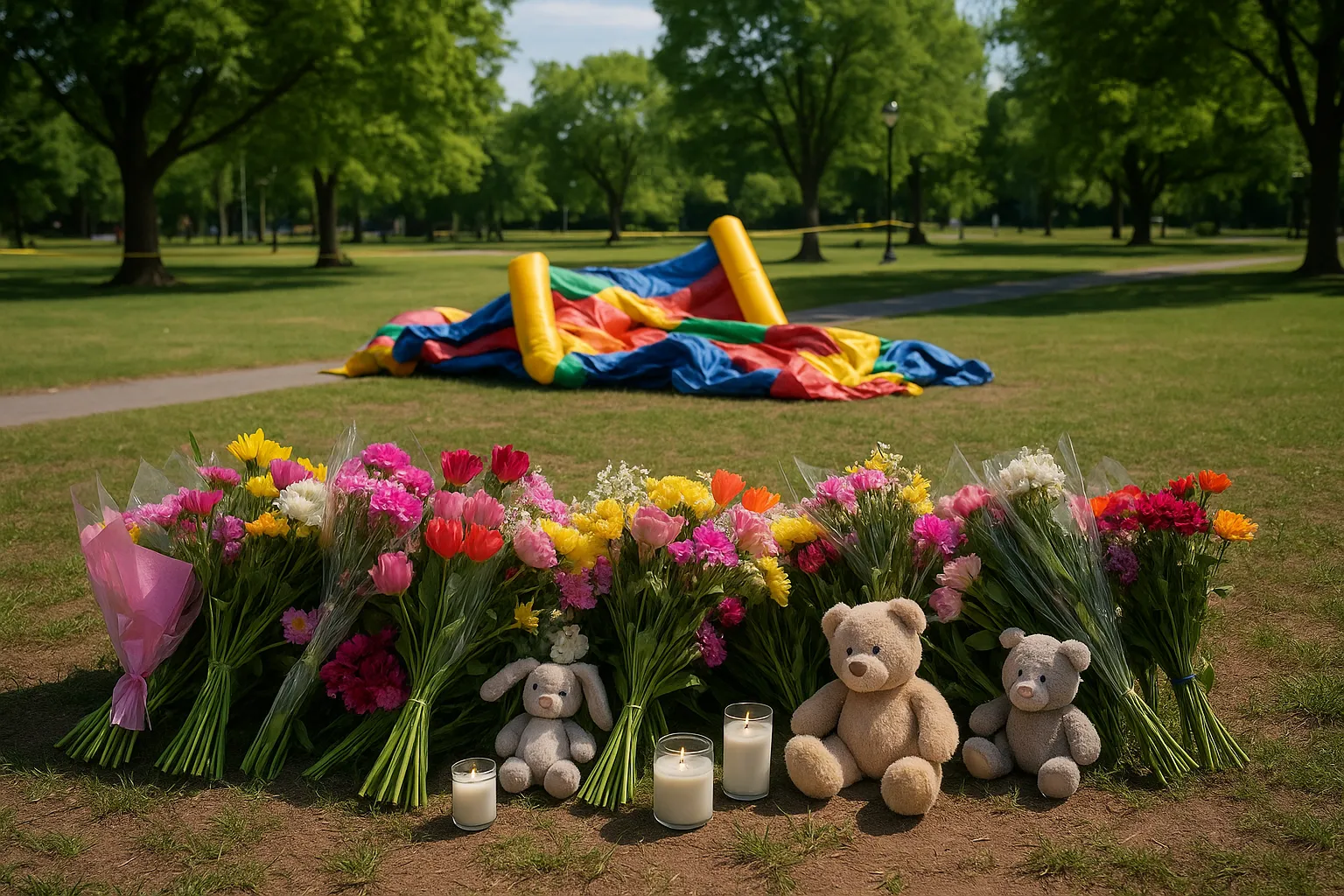
As community members have begun to gather at the scene to pay tribute to the young girl, the impact of this tragedy resonates deeply within the local neighbourhood and beyond. Mourners have left flowers and heartfelt messages at the location, reflecting the collective sorrow felt by all who attended the event or have been affected by the loss.
Local officials have expressed condolences to the family, acknowledging the devastation that has unfolded. “Our hearts go out to the family, and our community is united in mourning this tragic loss,” remarked a representative from the local council, emphasizing their commitment to reviewing safety practices for public events going forward.
As investigations continue, it is anticipated that findings will prompt a re-evaluation of safety regulations for inflatables at outdoor events. Stakeholders in the events and attractions industry are urged to take heed of the potential dangers associated with adverse weather conditions, and to ensure that proper safety measures are consistently implemented to protect vulnerable participants, particularly children.
In conclusion, this incident serves as a poignant reminder of the unexpected dangers posed by seemingly innocuous activities like a bouncy castle. The fun and joy they bring can quickly turn into tragedy without proper vigilance and adherence to safety guidelines. The community’s response following this devastating event indicates a shared resolve to enhance safety measures to protect future generations from similar heartbreak.
Our Thoughts
To prevent the tragic incident involving the bouncy castle, several measures could have been undertaken in line with UK health and safety legislation. Firstly, operators must adhere to the Health and Safety Executive (HSE) guidance prohibiting the use of inflatables in wind speeds exceeding 24 mph (38 kph). An anemometer should have been employed to monitor wind conditions diligently.
Furthermore, rigorous anchoring protocols should be applied, ensuring that inflatables are securely fastened to the ground to mitigate risks from sudden gusts of wind. The tragic history of similar incidents suggests a systemic failure in risk assessment and management, underscoring the need for comprehensive safety training for operators and event coordinators.
Relevant regulations that may have been breached include the Health and Safety at Work etc. Act 1974, which mandates that operators ensure the safety of all users of their equipment. Increased awareness and training on environmental conditions impacting inflatable safety could significantly reduce the likelihood of similar incidents occurring in the future. Regular inspections and adherence to established safety guidelines are crucial for the protection of users, particularly children.