













Story Highlight
– Maintenance worker killed while fixing industrial overhead door.
– Company fined £400,000 for health and safety breaches.
– HSE found prior incidents and lack of maintenance.
– Worker lacked training for high-risk repair tasks.
– Death deemed preventable with proper safety measures.
Full Story
A Cardiff-based advertising printing firm has received a significant fine following a tragic incident that led to the death of an employee during an attempt to repair an industrial overhead door. The case has drawn attention to critical safety regulations and the responsibilities of employers in maintaining a safe working environment.
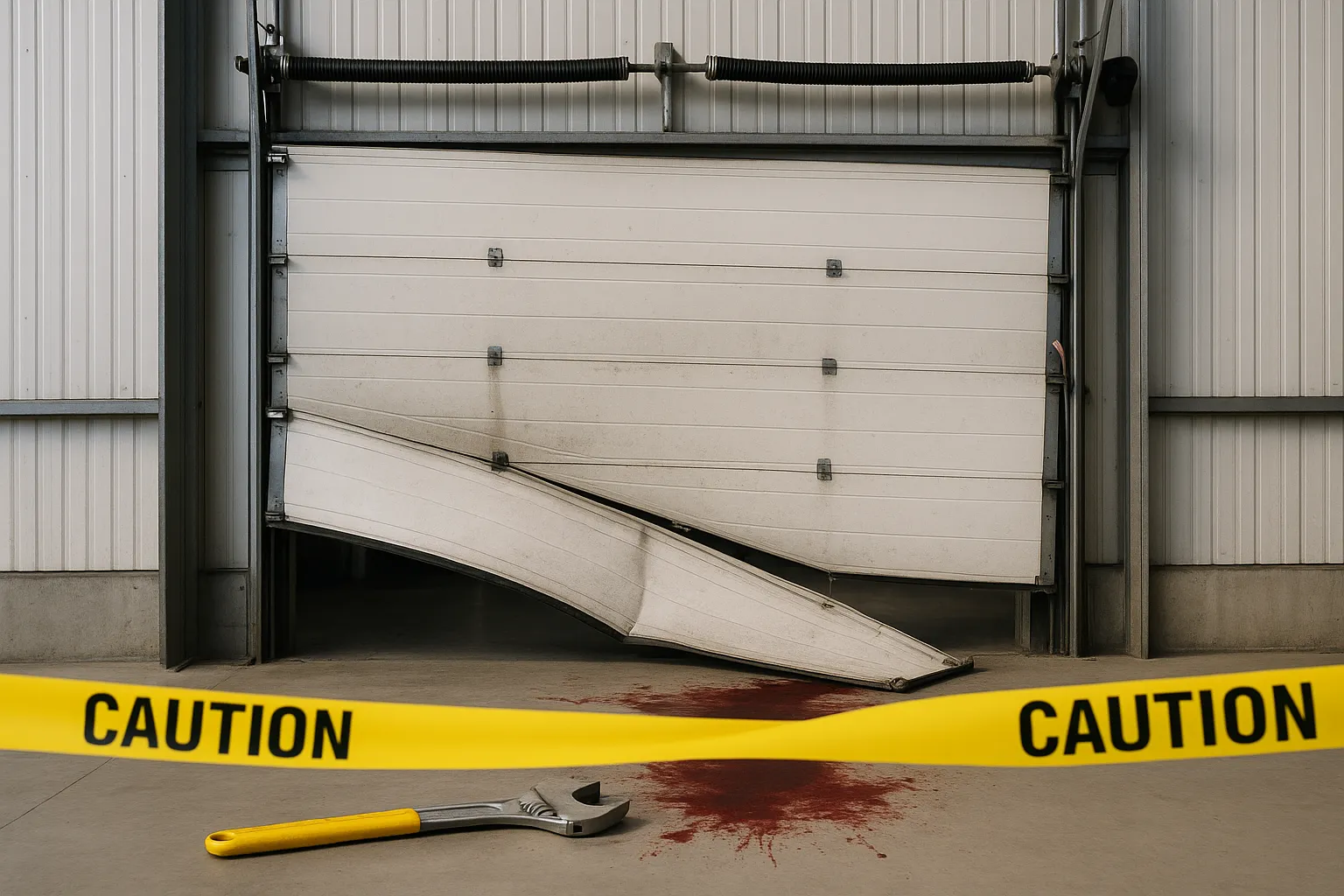
On 5 September 2022, Anthony Webb, a 59-year-old maintenance worker at GNW 2023 Realisations Limited, was engaged in the repair of an electrically operated sectional overhead door located at the company’s manufacturing facility. While using a large industrial wrench to re-tension the door springs, the tool unexpectedly slipped. The sudden release of the spring caused the wrench to be propelled towards him, resulting in catastrophic injuries. Mr Webb succumbed to his injuries the following day.
In a heartfelt personal statement, Anthony’s wife, Ewelina Webb, expressed the profound impact of his sudden loss on their family. Ewelina described the emotional turmoil she continues to face, stating, “It is still very raw, and I feel like I am on a roller coaster. I still find it difficult to talk about Tony without breaking down crying.” She recalled how the couple spent nearly all their time together and highlighted Tony’s passion for fixing things for friends and family. Ewelina further reflected on gatherings with mutual friends, stating, “I find it difficult when we talk about things and Tony isn’t there to experience it,” illustrating the void left by her husband’s absence.
Investigations conducted by the Health and Safety Executive (HSE) revealed significant safety breaches by GNW 2023 Realisations Limited prior to the incident. Despite suffering two previous incidents involving malfunctioning overhead doors that resulted in injuries to employees, the company had neglected to uphold proper maintenance checks or regular inspections of the doors, leading to a deterioration in their condition.
According to HSE findings, the management allowed Mr Webb to carry out repairs without suitable training for handling high-risk tasks. Furthermore, the company failed to conduct an appropriate risk assessment and did not establish a working system that adhered to safety regulations. Essential tools and equipment were not provided, compromising the safety of employees.
The HSE outlined that powered sectional overhead doors are classified as work equipment under the Provision and Use of Work Equipment Regulations 1998 (PUWER). This legislation mandates that such equipment must be maintained in safe operational condition and inspected by qualified personnel. The firm’s disregard for these regulations played a crucial role in the tragic outcome of the incident.
On 17 June 2026, the company was held accountable in the Merthyr Tydfil Magistrates’ Court, where it pleaded guilty to breaches of Section 2(1) of the Health and Safety at Work etc. Act 1974 and Regulation 5(1) of PUWER. The court imposed a substantial fine of £400,000, in addition to £17,854 in legal costs.
HSE Inspector Georgina Bennett provided insight into the preventable nature of the incident. She stated, “This incident was entirely avoidable. The maintenance of industrial doors is a high-risk activity involving stored energy within door springs; it requires specialist equipment and should only be carried out by people who are properly trained.” Bennett underscored that the company’s failure to recognise and address the safety risks associated with the doors ultimately led to Mr Webb’s death. “Were it not for these failures, Tony Webb’s death could have been prevented. Our thoughts remain with his loved ones as they mourn his loss,” she added.
This incident serves as a stark reminder of the importance of diligent safety practices in the workplace, particularly in environments where maintenance of machinery is required. The HSE continues to advocate for stringent adherence to safety regulations in an effort to protect workers and minimise the risk of similar tragedies in the future.
In light of this case, industry experts are calling for employers to reassess their safety protocols and ensure compliance with existing health and safety laws. Implementing continuous training for employees engaged in high-risk operations is essential. Providing regular maintenance and inspections of equipment is not merely a regulatory obligation, but a moral imperative to safeguard the workforce.
In summary, the case involving GNW 2023 Realisations Limited stands as a cautionary tale within the manufacturing sector. It emphasizes the critical need for companies to prioritise health and safety, ensuring all employees are competent and equipped to handle their responsibilities safely. The loss of Anthony Webb serves as a devastating reminder of the human cost of neglecting these responsibilities and highlights the urgent need for reforms to prevent future incidents.
Our Thoughts
The tragic incident involving the maintenance worker at GNW 2023 Realisations Limited underscores several critical failures in health and safety practices in accordance with UK legislation. Key measures that could have prevented this incident include implementing a rigorous maintenance schedule and regular inspections of the industrial overhead doors to ensure their safe condition, as mandated by the Provision and Use of Work Equipment Regulations 1998 (PUWER).
Additionally, the company failed to provide adequate training for employees engaged in high-risk repairs, breaching Section 2(1) of the Health and Safety at Work etc. Act 1974, which dictates the necessity for adequate training and safe systems of work. A thorough risk assessment should have been conducted to recognize the dangers associated with re-tensioning door springs.
To prevent similar incidents, companies must prioritize regular equipment maintenance, ensure that employees receive appropriate training for their tasks, and establish clear, effective safety protocols. Such compliance with regulations would significantly reduce the risk of fatal accidents in the workplace.